€10,000 - €15,000
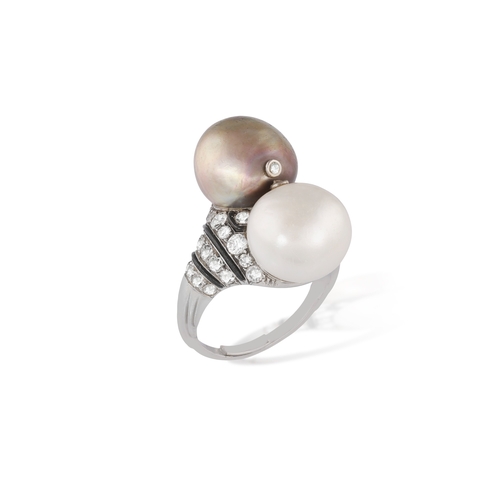
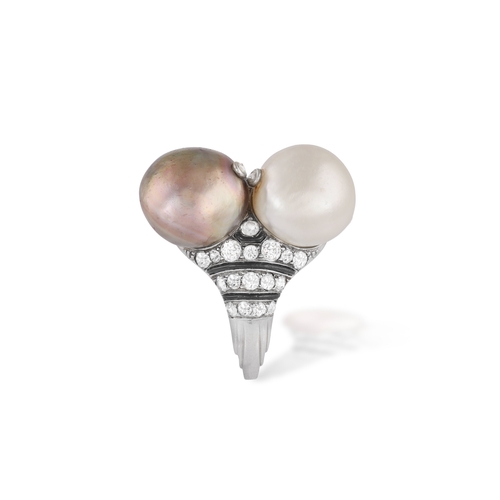
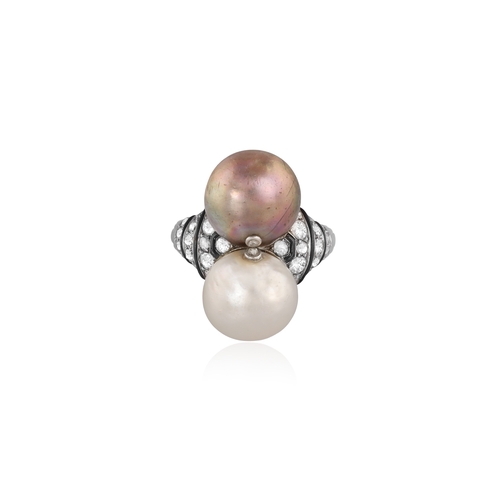
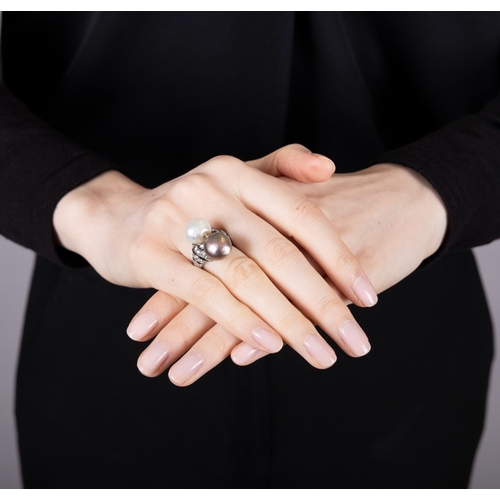
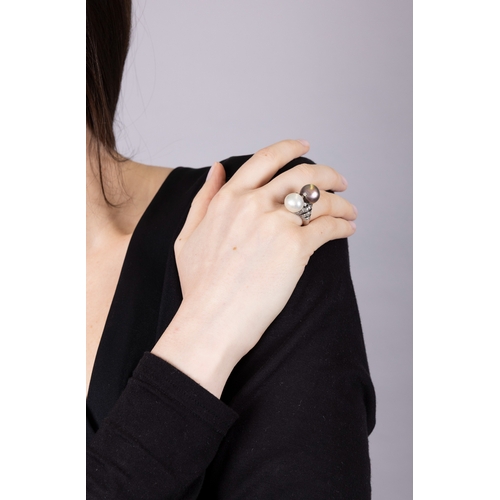
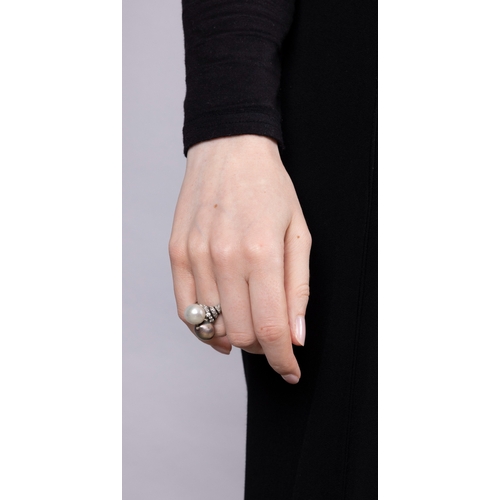
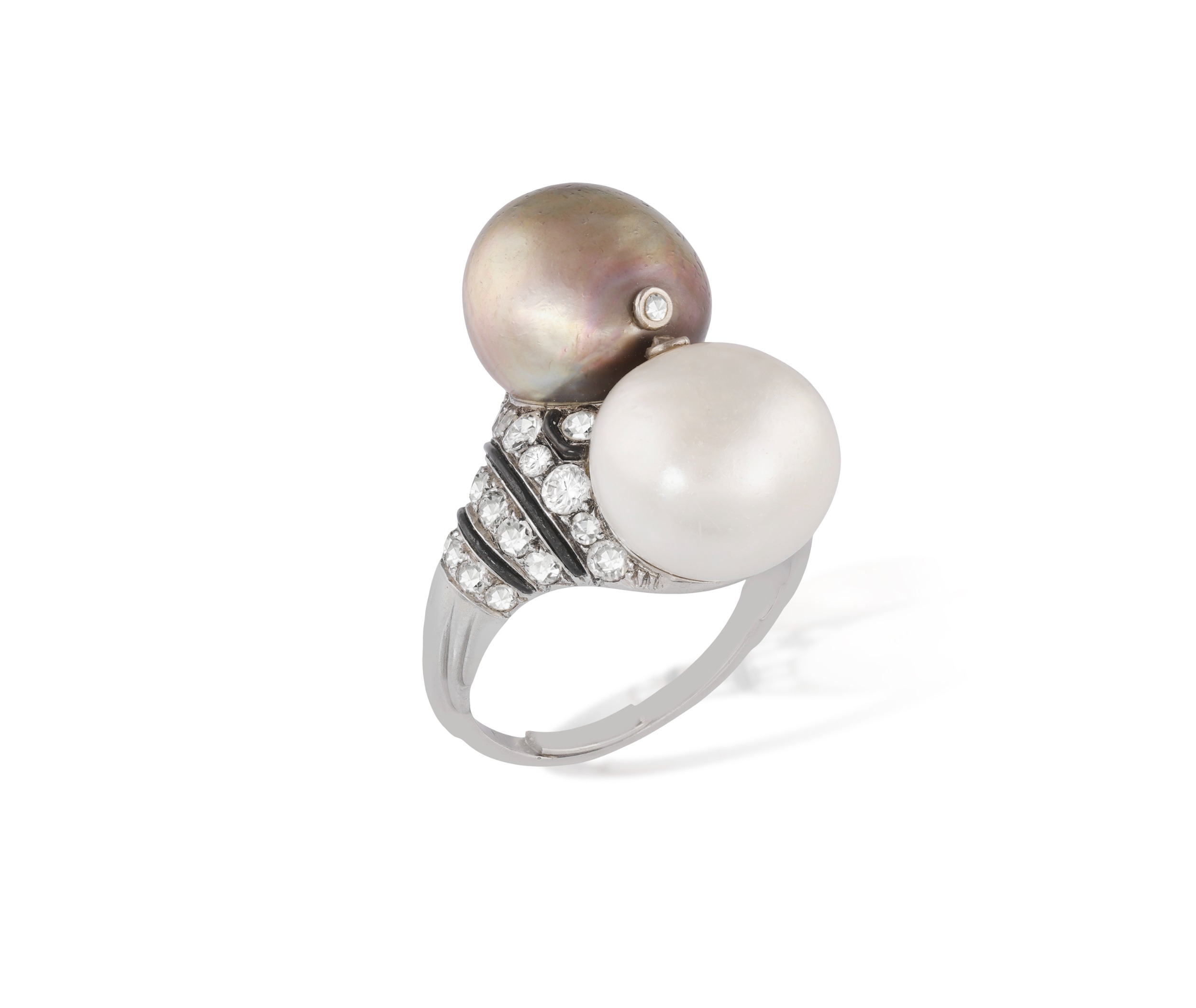
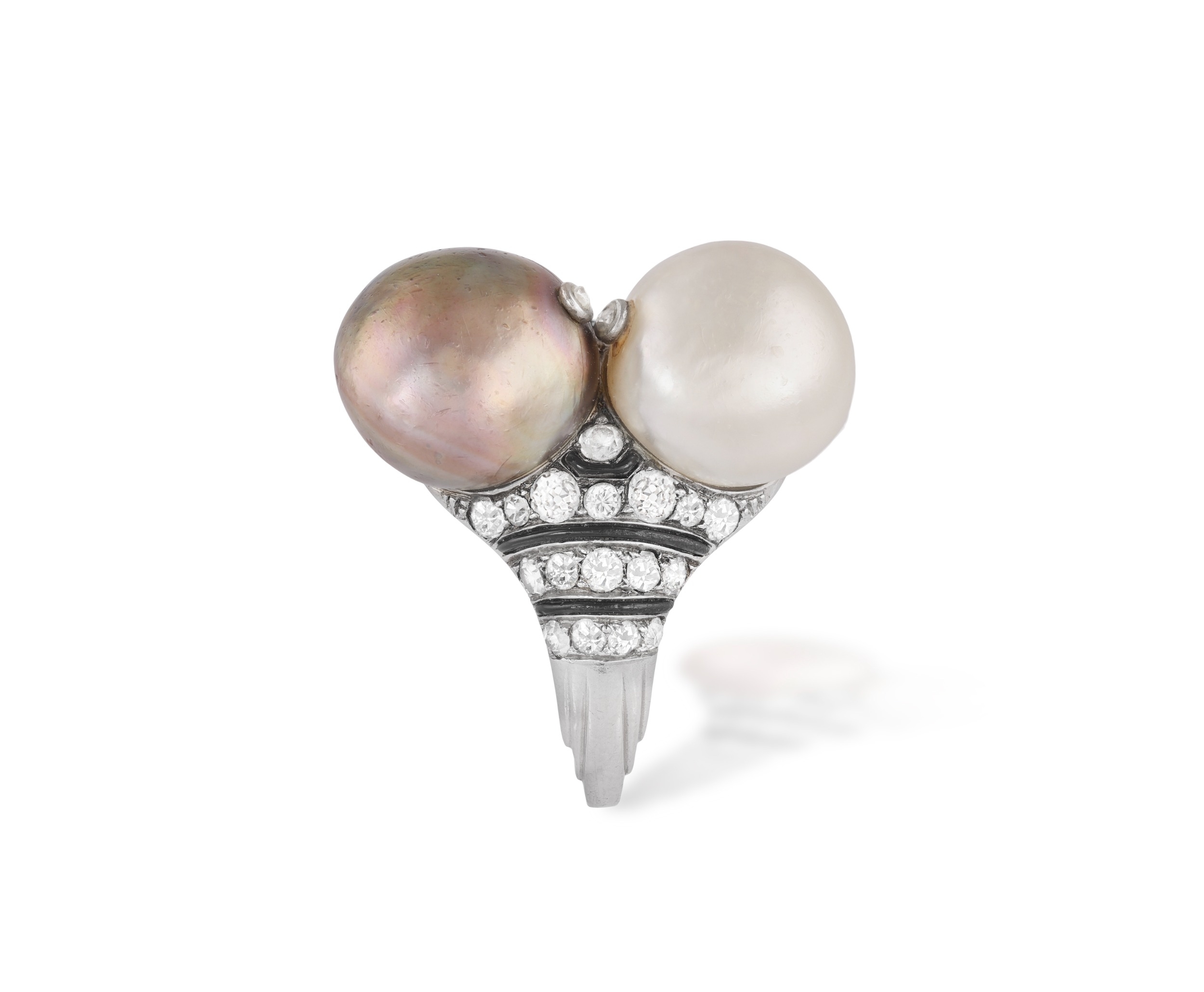
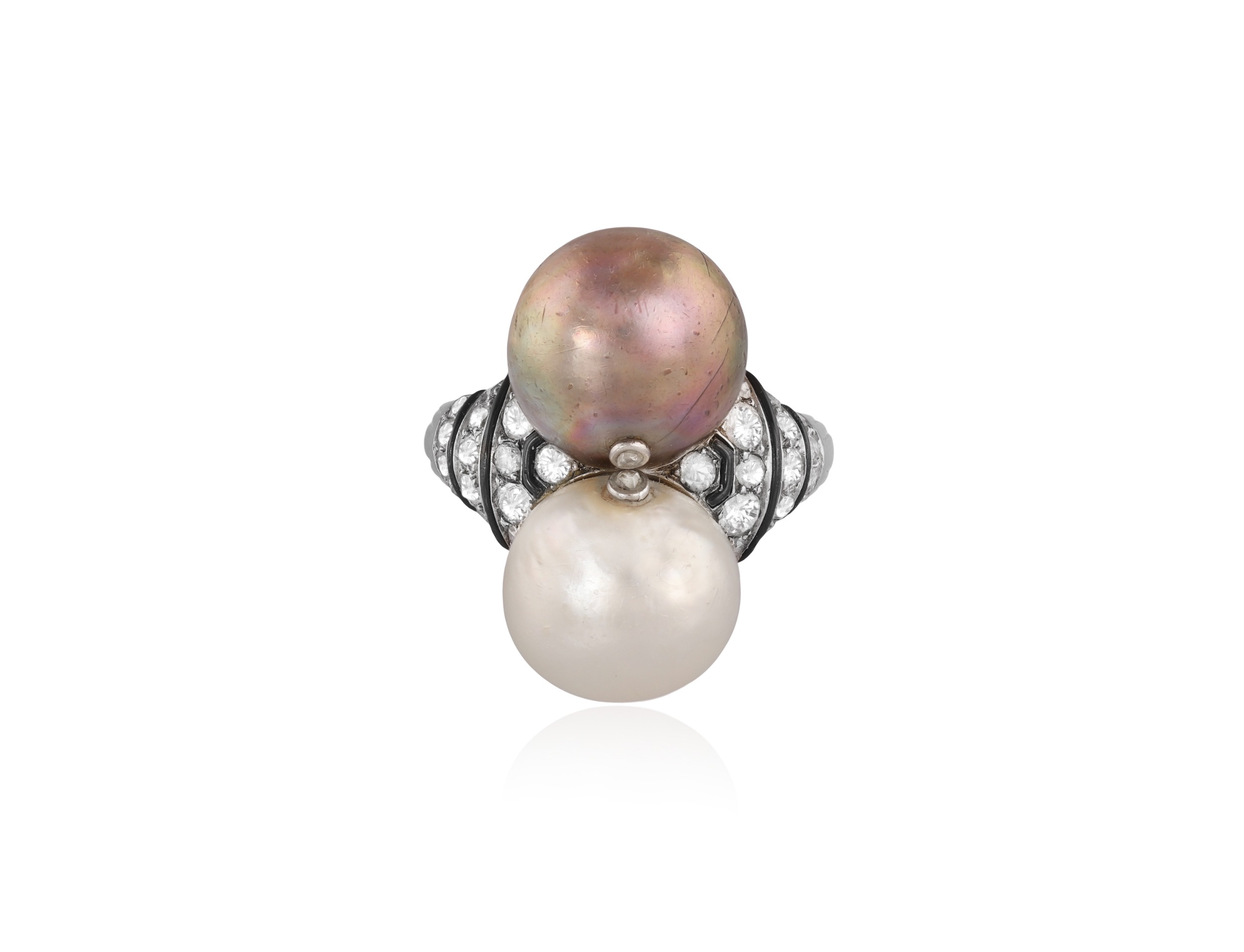
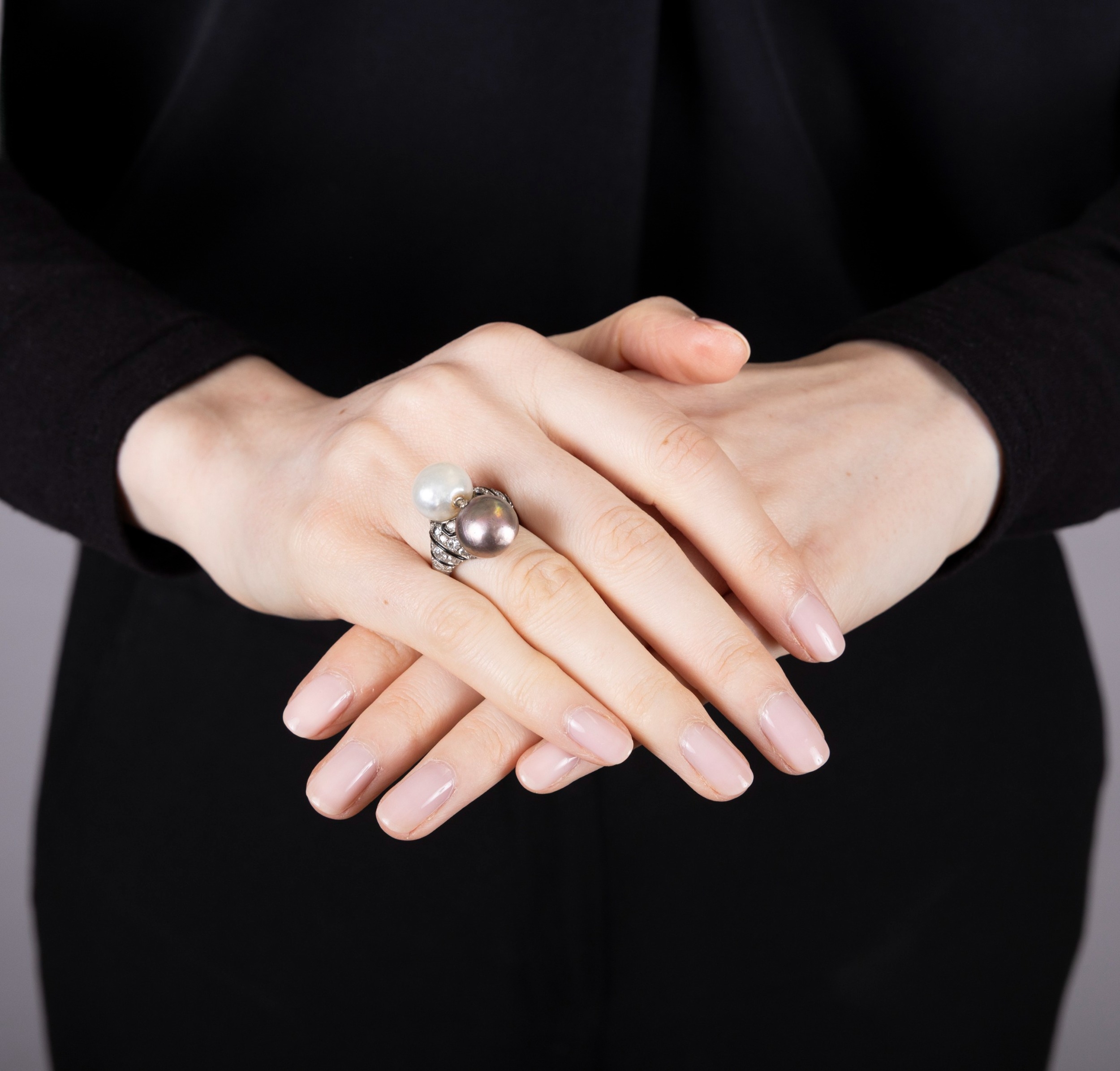
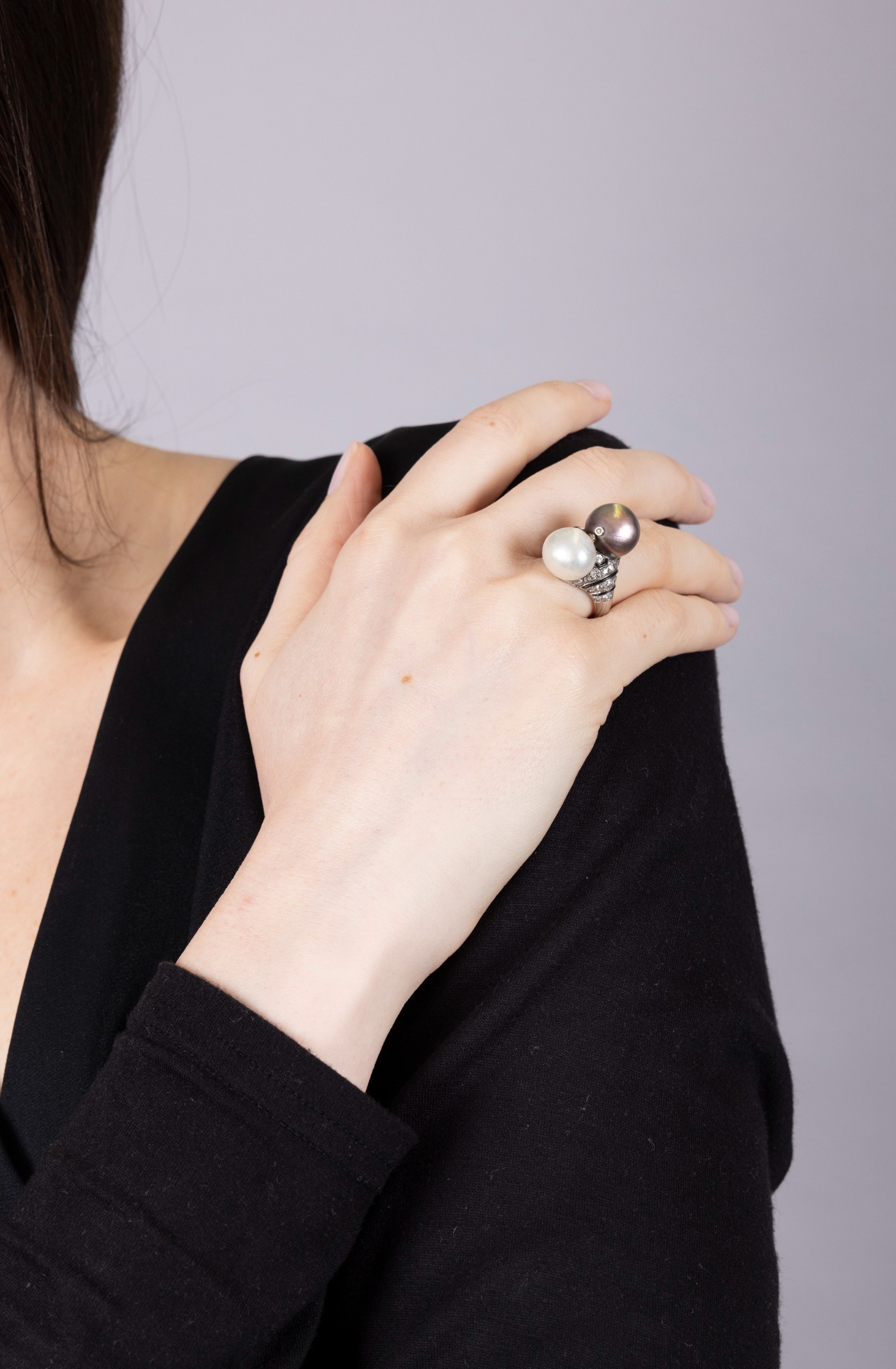
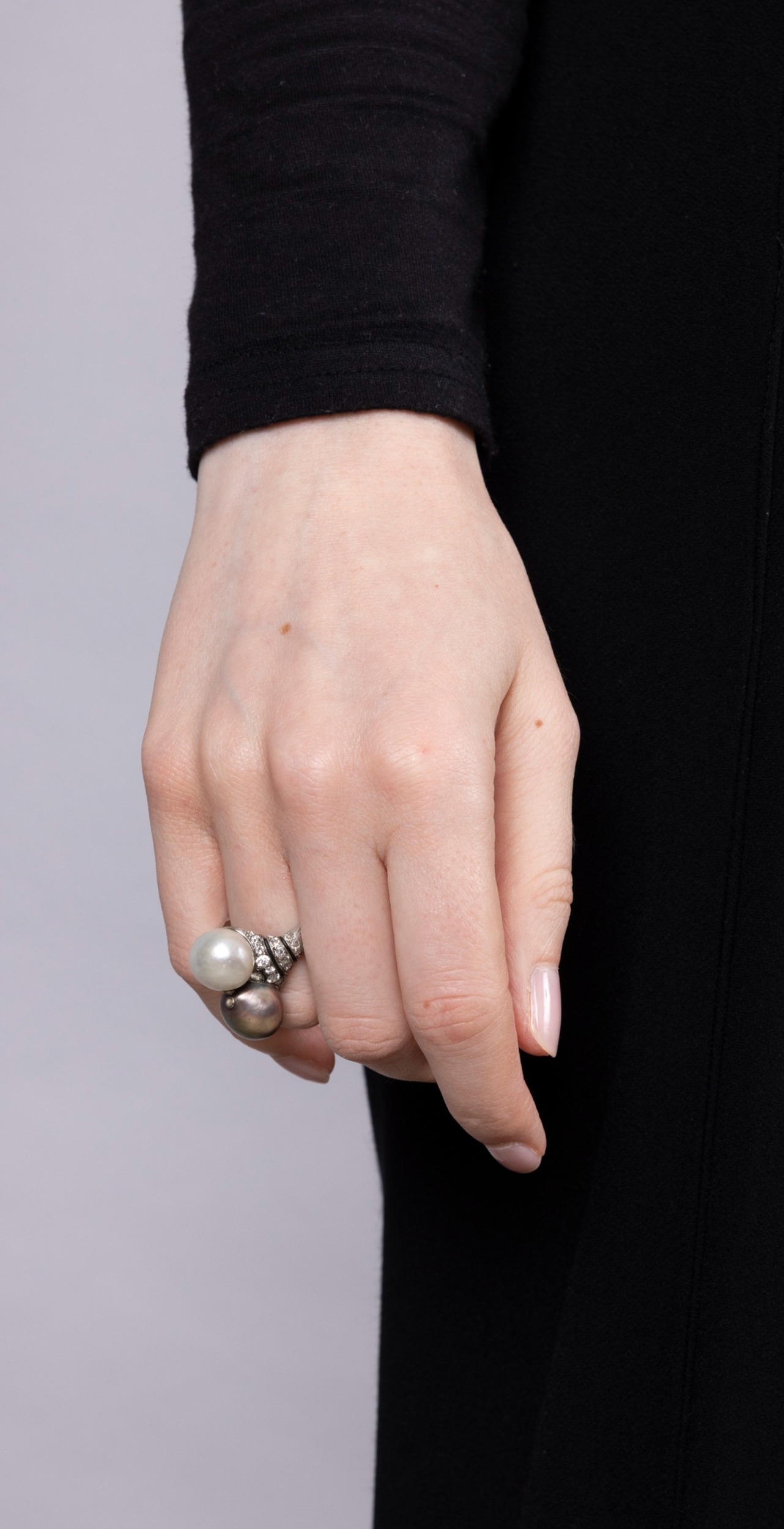
AN EARLY 20TH CENTURY PEARL, ENAMEL AND DIAMOND RING, CIRCA 1920
The private collection of a Continental Lady (lot 67 to 71)
Composed of two button-shaped pearls semi pierced with a collet-set rose-cut diamond accent, to a bombé gallery set with old-cut diamonds between lines of black enamel, mounted in platinum and 18K gold, French import marks, ring size N¼
Accompanied by a report from the LFG laboratory in Paris, stating that both pearls are natural, from saltwater, with no indications of treatment. Report no. 424227, dated March 9th 2026.
Natural pearls were for centuries among the rarest and most coveted treasures on earth.
Unlike other gems, which must be cut and polished to reveal their beauty, the natural pearl emerges from the shell with its lustre already complete. Formed by chance within an oyster or mussel, it was admired not only as a jewel, but as a marvel of nature.
Their significance lay above all in that rarity. Most natural pearls found throughout history were small, often less than a grain in weight, which made the assembling of a well-matched necklace an exceptional achievement and multiple strands rarer still. It was this scarcity, as much as their beauty, that made natural pearls inseparable from wealth, rank and privilege.
The principal historic source of natural pearls was the Persian Gulf, which supplied the world from antiquity until the 1920s. There, hundreds of boats and thousands of divers worked the oyster beds by hand, often at depths of twenty metres or more. Beyond the Gulf, natural pearls also came from southern India, Ceylon, and the rivers of Europe and North America.
For much of history, the natural pearl was a powerful sign of status and refinement. It appears in the royal jewellery of the ancient Persian world, was prized by the Greeks and Romans, and in medieval Europe acquired both regal and sacred significance. During the Renaissance and after, it became central to court display, appearing in portraits of Catherine de’ Medici, Elizabeth I and other rulers as a sign of dynastic wealth and authority.
By the beginning of the twentieth century, fashion favoured ropes and rows of pearls, while fisheries in the Gulf, India, Ceylon and Panama continued to supply royal houses, aristocratic families and the ultra-wealthy. In 1917, their value was so extraordinary that Pierre Cartier acquired the Fifth Avenue mansion in New York from Morton Plant after Plant’s wife, Maisie, fell in love with Cartier’s natural pearl necklaces; the mansion, valued at about $950,000, was exchanged for two natural pearl necklaces valued at $1.5 million, together with $100 in cash.
It is also here that the distinction between natural and cultured pearls becomes essential. In both, the mollusc coats an irritant with nacre, but a natural pearl forms without human intervention, whereas a cultured pearl begins with deliberate human action. In seawater culturing, a bead and a small piece of pearl-producing tissue are inserted into the oyster, which is then returned to the water to grow the pearl under controlled conditions. Natural pearls, by contrast, occur by accident of nature, and it is precisely this that gave them their exceptional prestige.
The commercial success of cultured pearls in Japan soon after the First World War transformed the pearl market. More widely available and competitively priced, they soon eclipsed natural pearls in ordinary jewellery. Yet the rise of cultured pearls did not lessen the appeal of natural pearls; it defined their rarity more clearly than ever.
The fascination of natural pearls is perhaps best expressed through the legendary jewels associated with them. Among the most celebrated were the historic single-strand necklace formerly belonging to Barbara Hutton and the Nina Dyer Necklace, a remarkable three-strand natural black pearl necklace. La Régente passed from Napoleon’s circle to Empress Marie-Louise and later Empress Eugénie, while La Peregrina moved through the Spanish royal tradition before reappearing centuries later in the collection of Elizabeth Taylor. The pearls of Baroda, assembled by the maharajahs into one of the most extraordinary pearl collections in existence, belong to the same world of dynastic splendour, glamour and historic taste.
Natural pearls have long inspired fascination because they unite beauty, rarity and chance in a way no other gem quite does. They were formed not by design, but by nature, and for centuries remained the privilege of rulers, collectors and the highest levels of society. Even after the rise of cultured pearls, natural pearls retained their place as objects of connoisseurship, historical significance and enduring desire, admired as much for the rarity of their formation as for their beauty.
Accompanied by a report from the LFG laboratory in Paris, stating that both pearls are natural, from saltwater, with no indications of treatment. Report no. 424227, dated March 9th 2026. One pearl: of brown body colour with pink and green overtones, good lustre, semi pierced, measuring approximately 11.6 - 12.2 x 10.4mm Other pearl: of white body colour with pink and green overtones, good lustre, semi pierced, measuring approximately 11.3 - 12.1 x 8.8mm Enamel: with pits and nicks visible under 10x magnification Diamonds: bright and lively With French import marks for platinum and 18K gold Normal signs of wear commensurate with age, overall in good condition Total gross weight approx. 11.7g
Fees apply to the hammer price:
Free Registration
28.6% inc VAT*
Flat Fee Registration
25.00% inc VAT*