£800 - £1,500
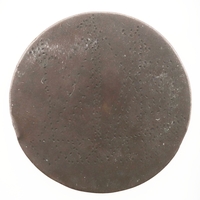
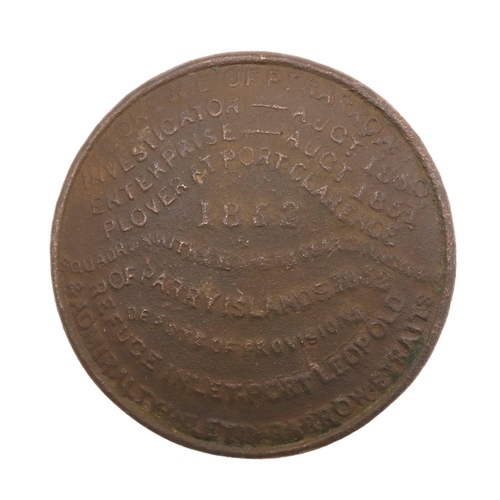
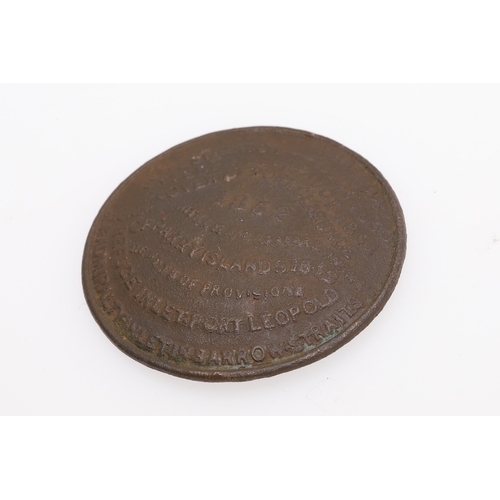
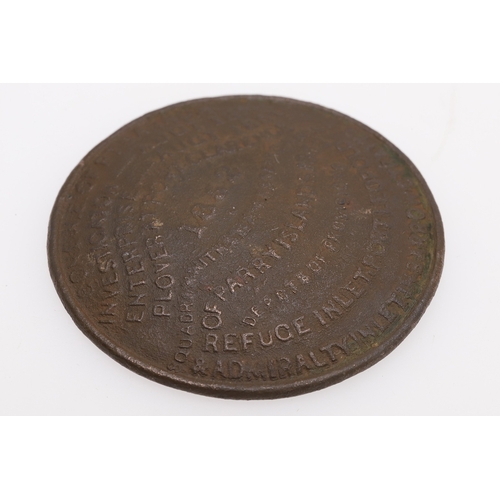
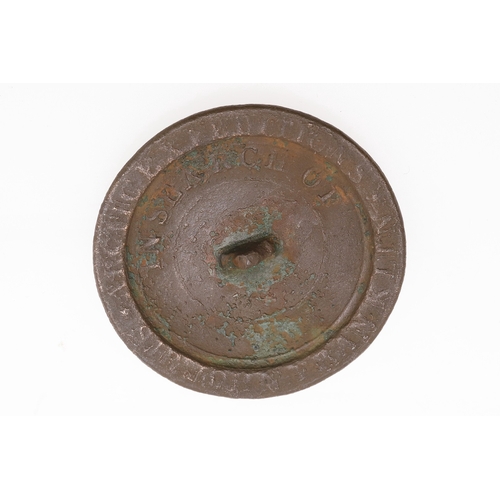
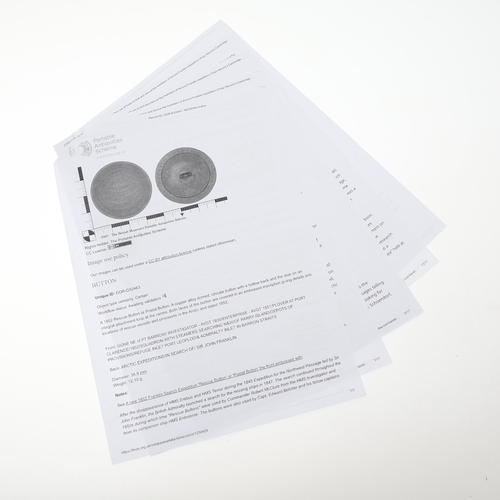
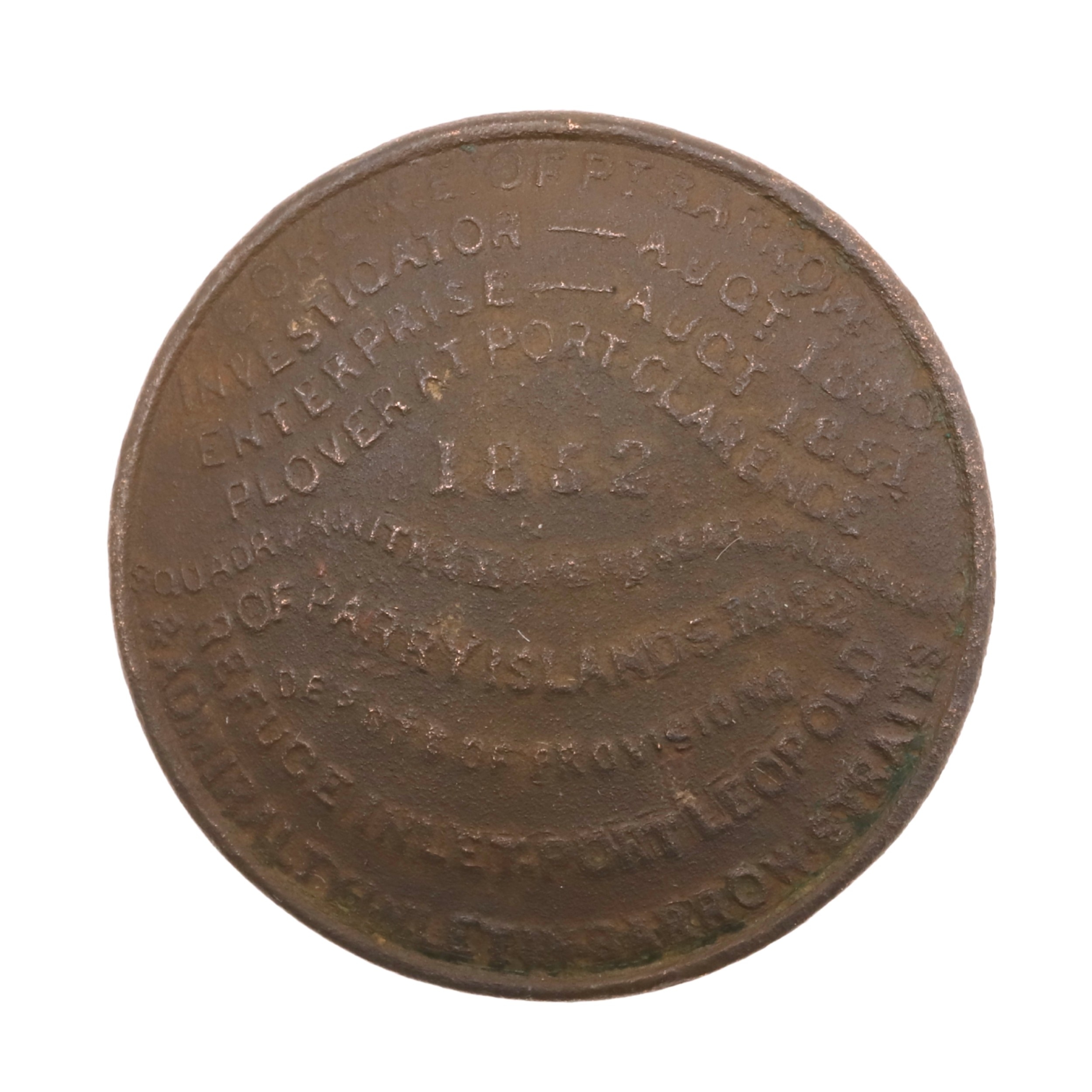
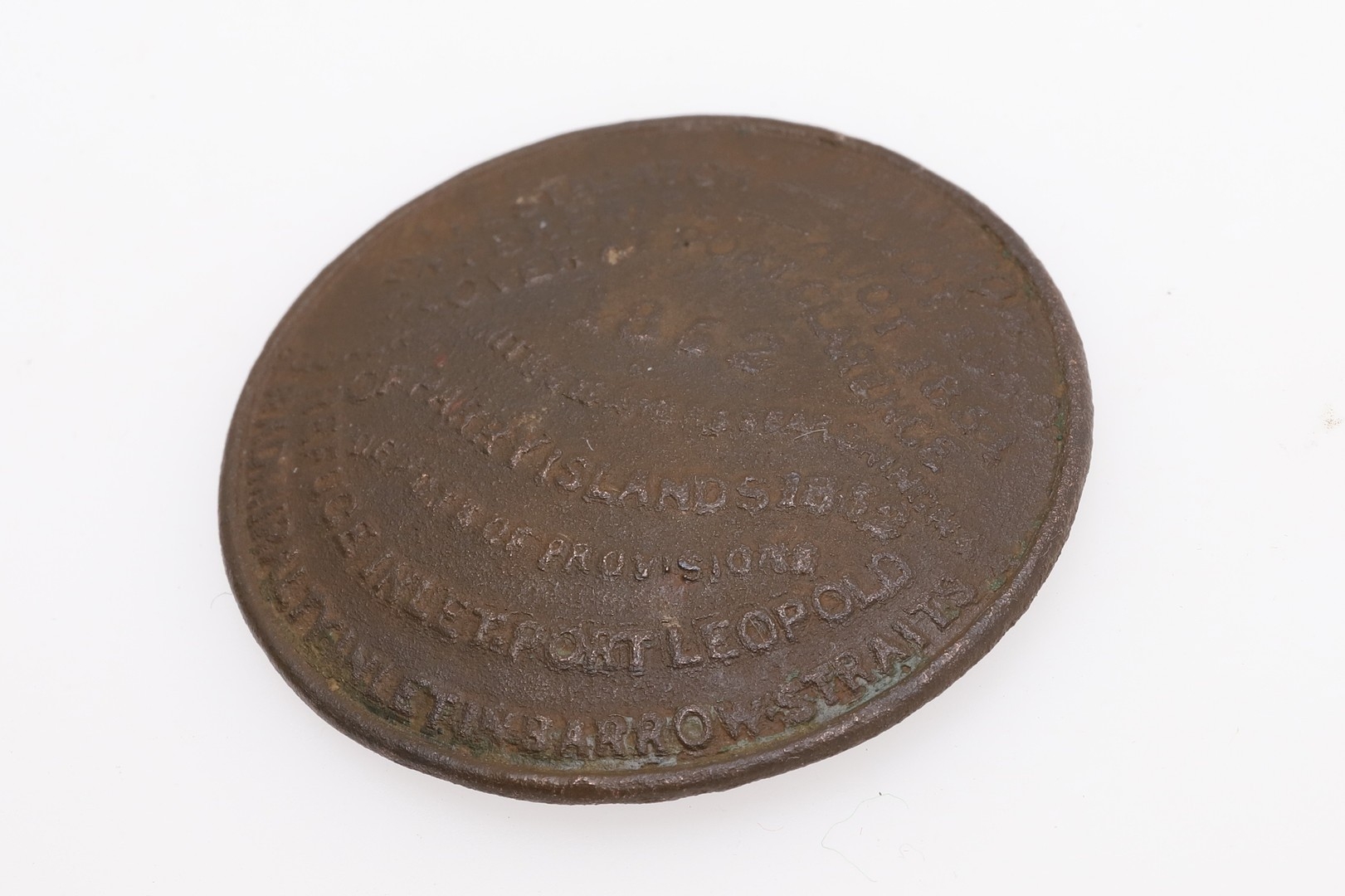
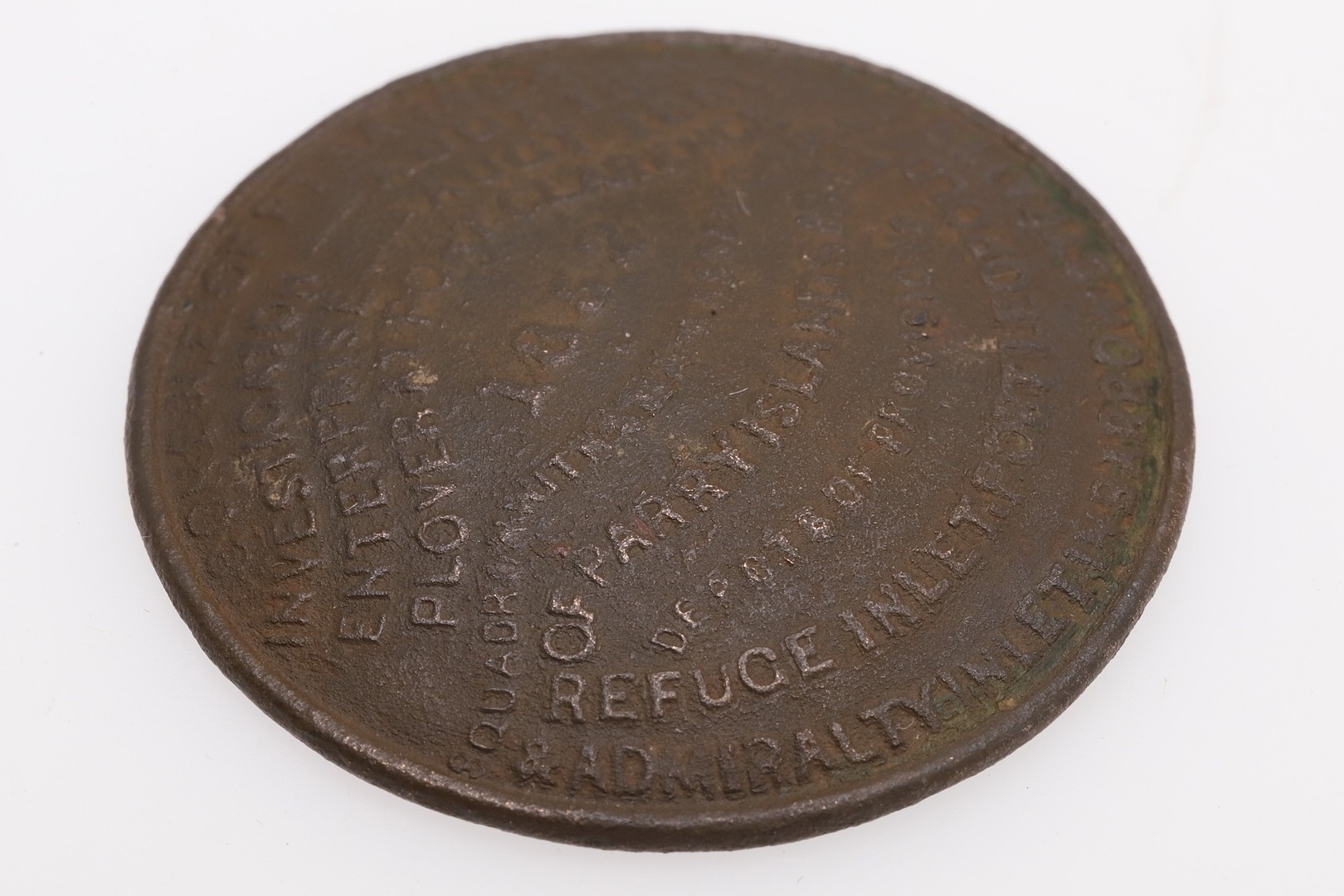
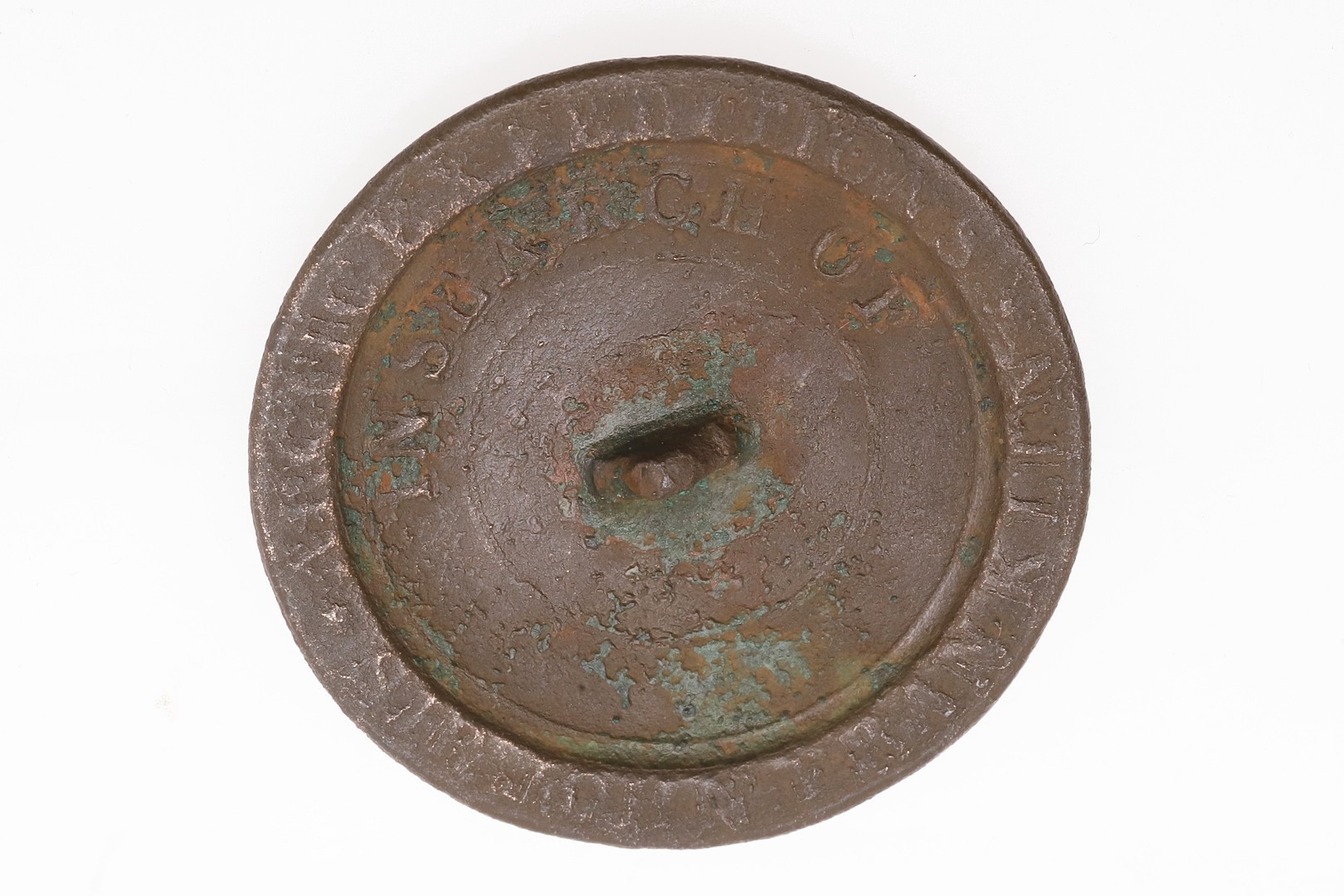
AN 1852 FRANKLIN SEARCH EXPEDITION 'RESCUE BUTTON' OR 'POSTAL BUTTON'. An 1852 'Rescue Button' or 'Postal Button' for Franklin's lost expedition to find the North West Passage of 1845. The button detailing the location of stores of provisions and rescue ships. "1852 Gone N.E. of Pt. Barrow. Investigator - Augt. 1850. Enterprise Augt 1851. Plover at Port Clarence. Squadron with steamers searching N& W of Parry Islands 1852. Depots of provisions. Refuge inlet. Port Leopold & Admiralty inlet in Barrow Straits." The reverse "Arctic Expeditions in search of Sir John Franklin." 3.4 cm Following the end of the Napoleonic Wars the Admiralty needed new goals for its most ambitious Captains, and Arctic exploration was to be one of these. Specifically the search for the North West Passage and to journey to the North Pole. Franklin's was one of the most celebrated of these expeditions, and fuelled by the efforts of his wife, the search for his ships and crew was almost more famous than the expedition itself. The expedition took two ships, HMS Erebus and HMS Terror captained by Francis Crozier, the most modern and best equipped ships of their time. Sir John Franklin, an experienced Naval Officer who had fought at Trafalgar, felt the discovery of the North West Passage might be the crowning achievement of his career. An experienced polar explorer he was known to the public as 'The man who ate his boots' following problems on a previous voyage, there were few better candidates to lead the expedition. At the time a voyage which was considered 'the greatest single expedition of discovery Britain had ever mounted'. With 129 men and supplies for three years the two ships headed north to complete some of the last few unexplored gaps on the Victorian map. Heading into the otherworldly Arctic where the risk of frost-bite, scurvy, being trapped by the ice, polar bear attack, or the numerous other perils of exploration in such inhospitable parts of the world, it is easy to understand the public's interest in such a voyage. The ships were last sighted in July of 1845 and rescue parties were sent as early as 1847. For such expeditions to spend several winters in the ice was not uncommon. John Ross, for instance, was rescued two years after he had been feared dead when he failed to return from his explorations. The numerous rescue expeditions, over thirty in total, began to search from 1848 with three relief ships from the Admiralty, and eventually a £20,000 reward being offered. Unfortunately none were totally successful and all led to further loss of life. Hundreds of balloons spread the message, thousands of printed despatches, rockets, gunshots, drums, messages attached to Arctic foxes, flashing lights and these extraordinary buttons, were all used to try and communicate with the missing men. The buttons were given to Inuit hunters who, it was hoped, might pass them on to the men. Believed to have been used between 1852-54 by Commander Robert McClure of HMS Investigator and its companion ship HMS Enterprise, and by Captain Belcher and others during the multi-ship squadron's search the buttons were disseminated far and wide. How many buttons were produced is not known. This is probably only the 5th example known of this extraordinary artefact, almost unbelievably a detectorist find from West Dorset (DOR-D32A63). The other four include one in the Smithsonian Institution which has been used as a pipe bowl on an Inuit pipe, and most recently an example was sold by Bearnes in Exeter. An image of this button is to be included in Brian Read's forthcoming work on buttons.
A detectorist find.
Fees apply to the hammer price:
Free Registration
33.6% inc VAT*
Flat Fee Registration
30.00% inc VAT*