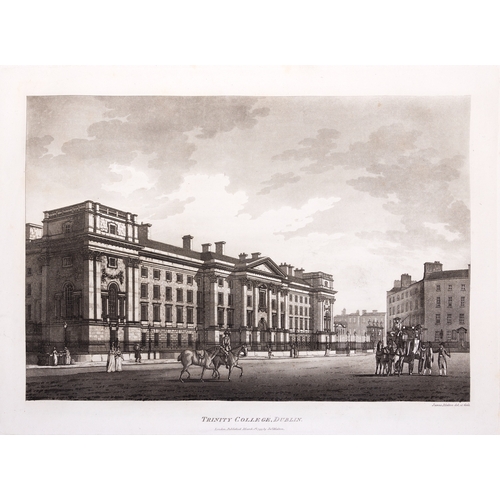
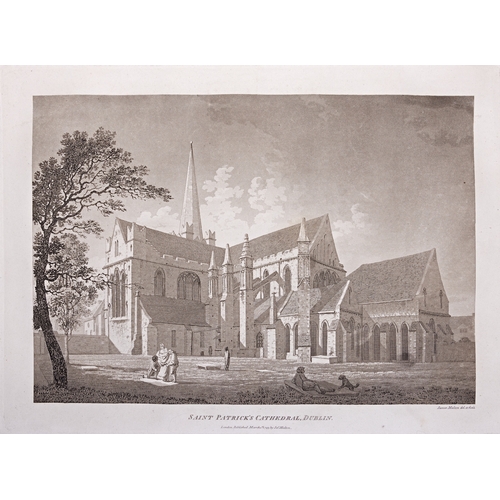
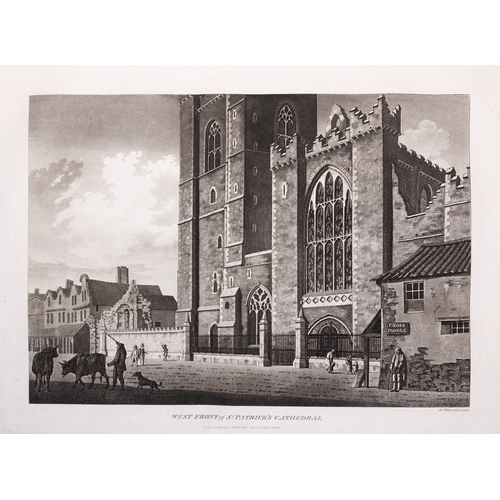
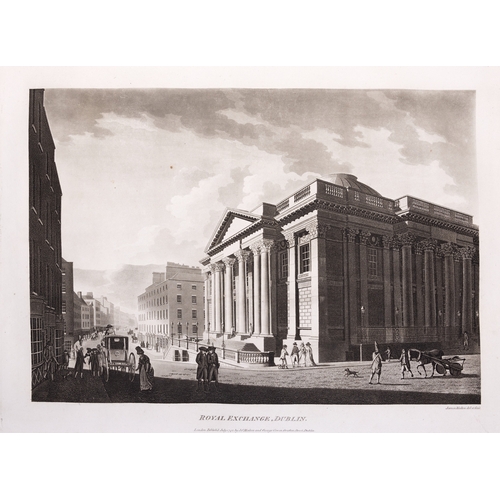
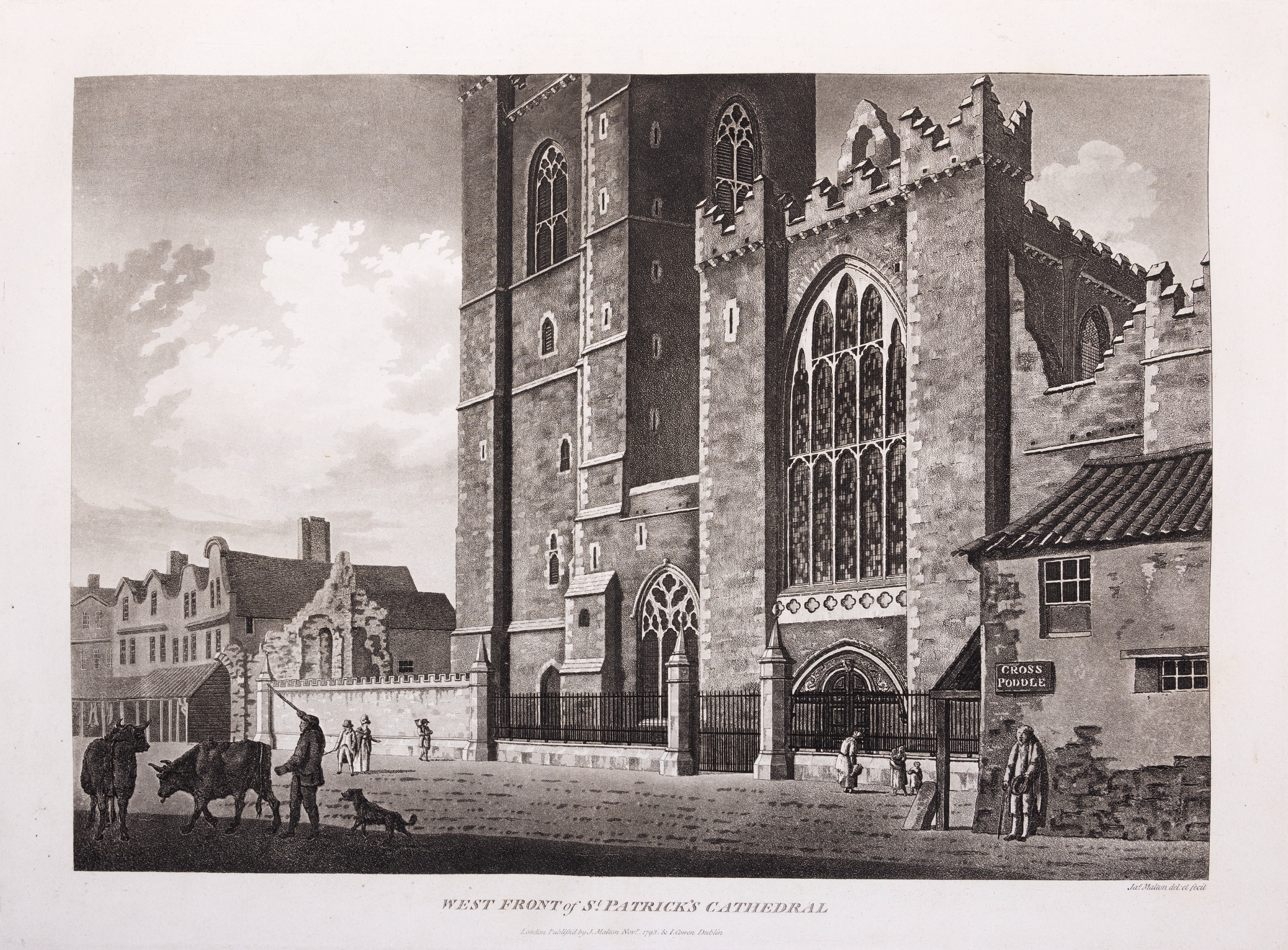
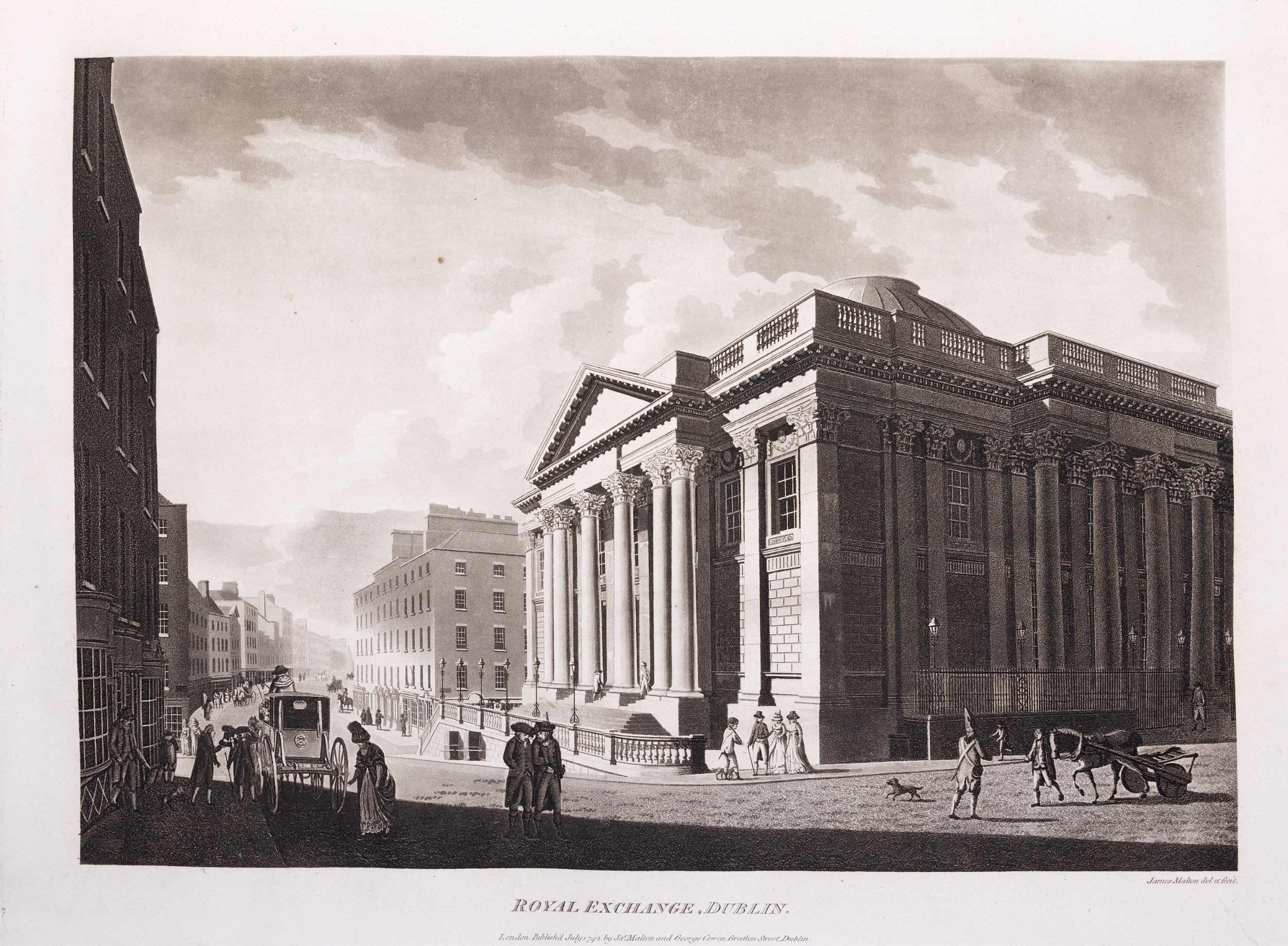
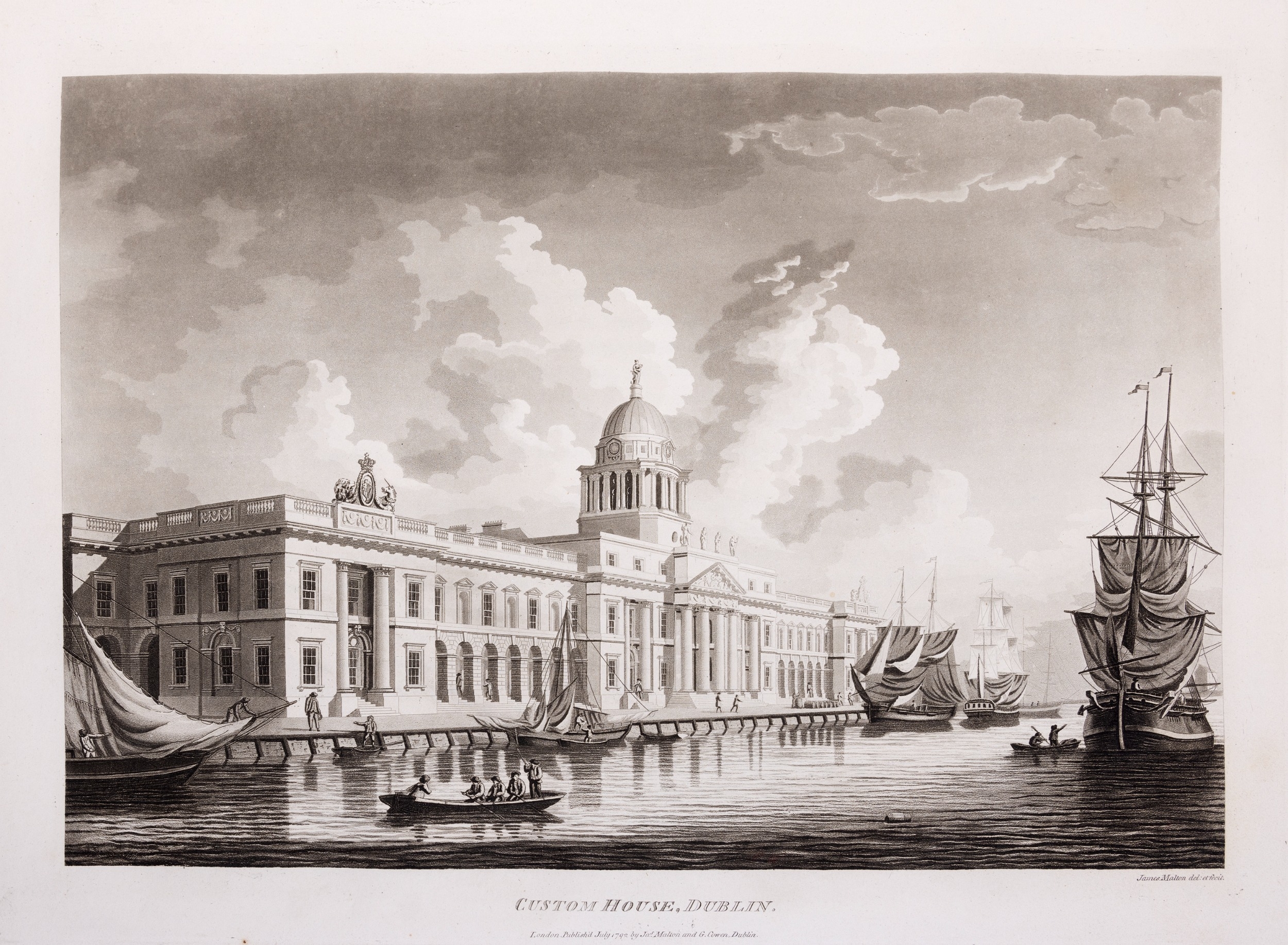
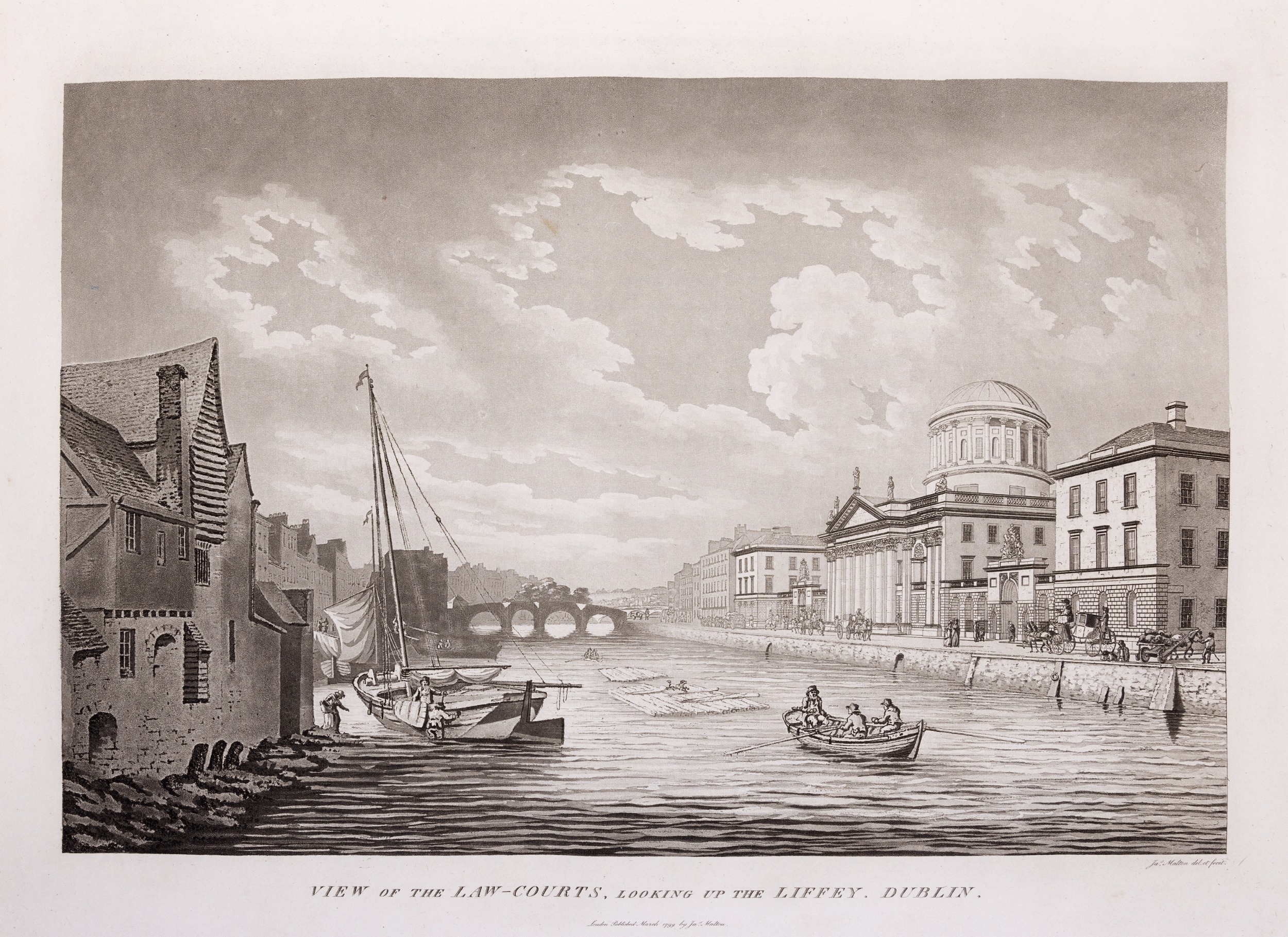
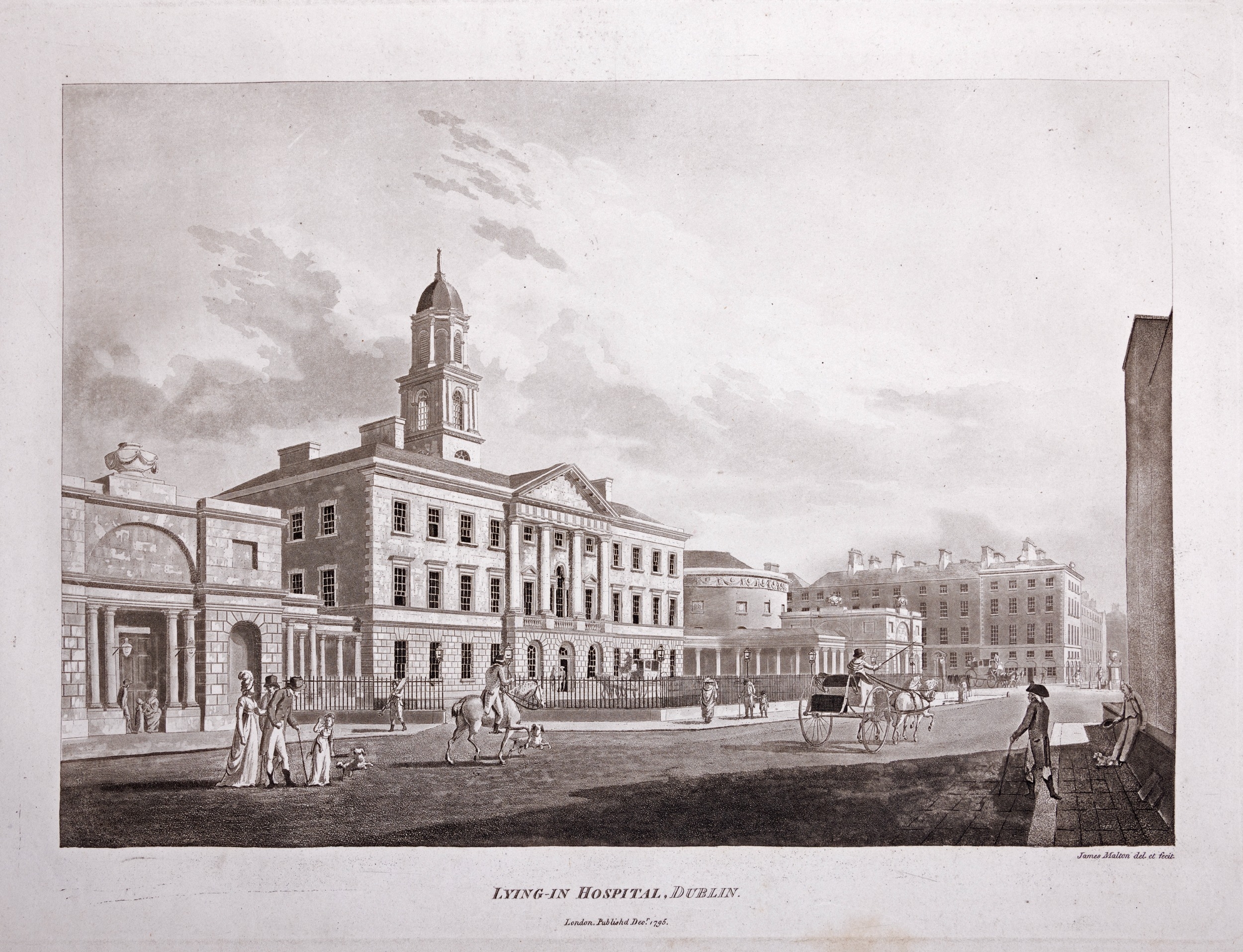
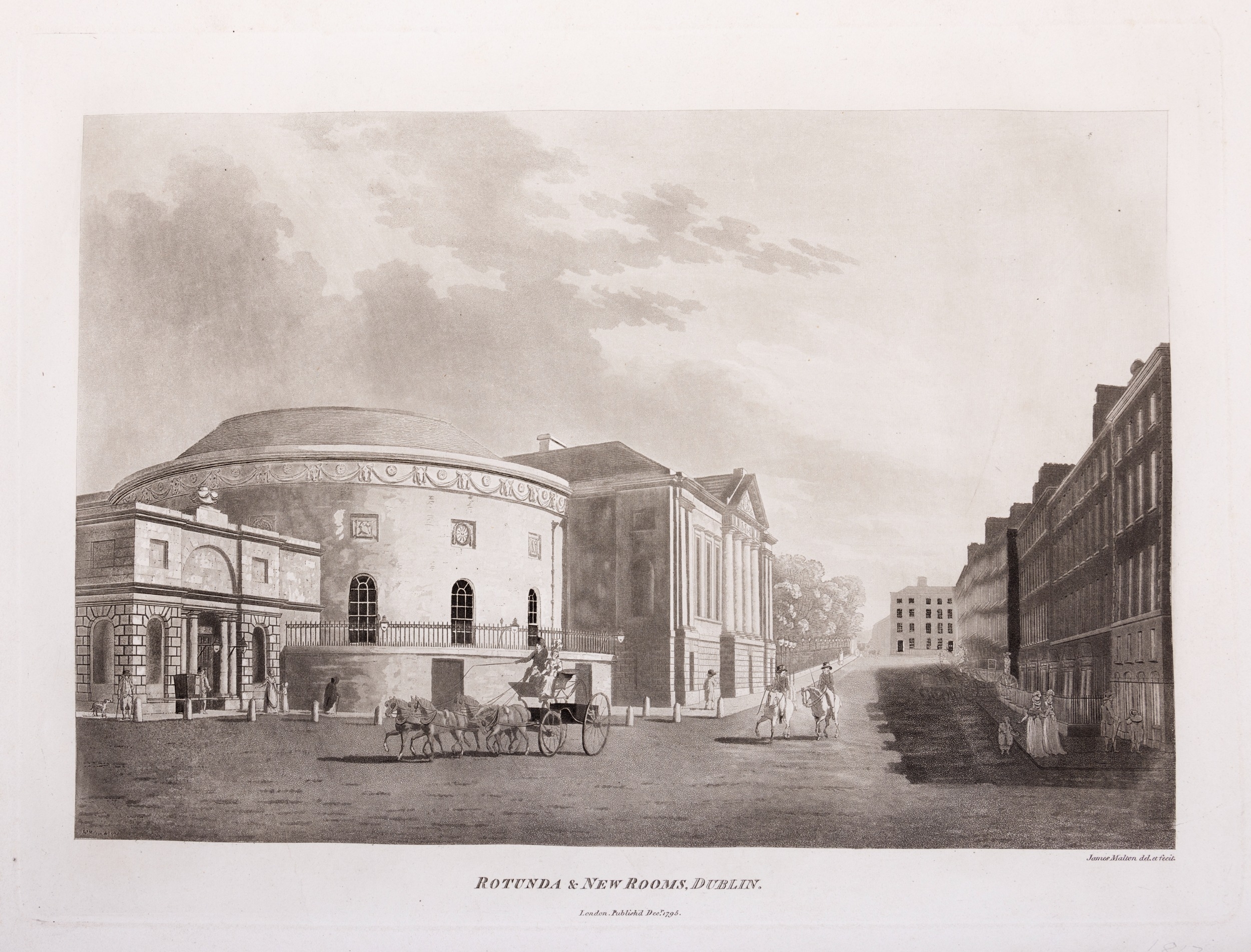
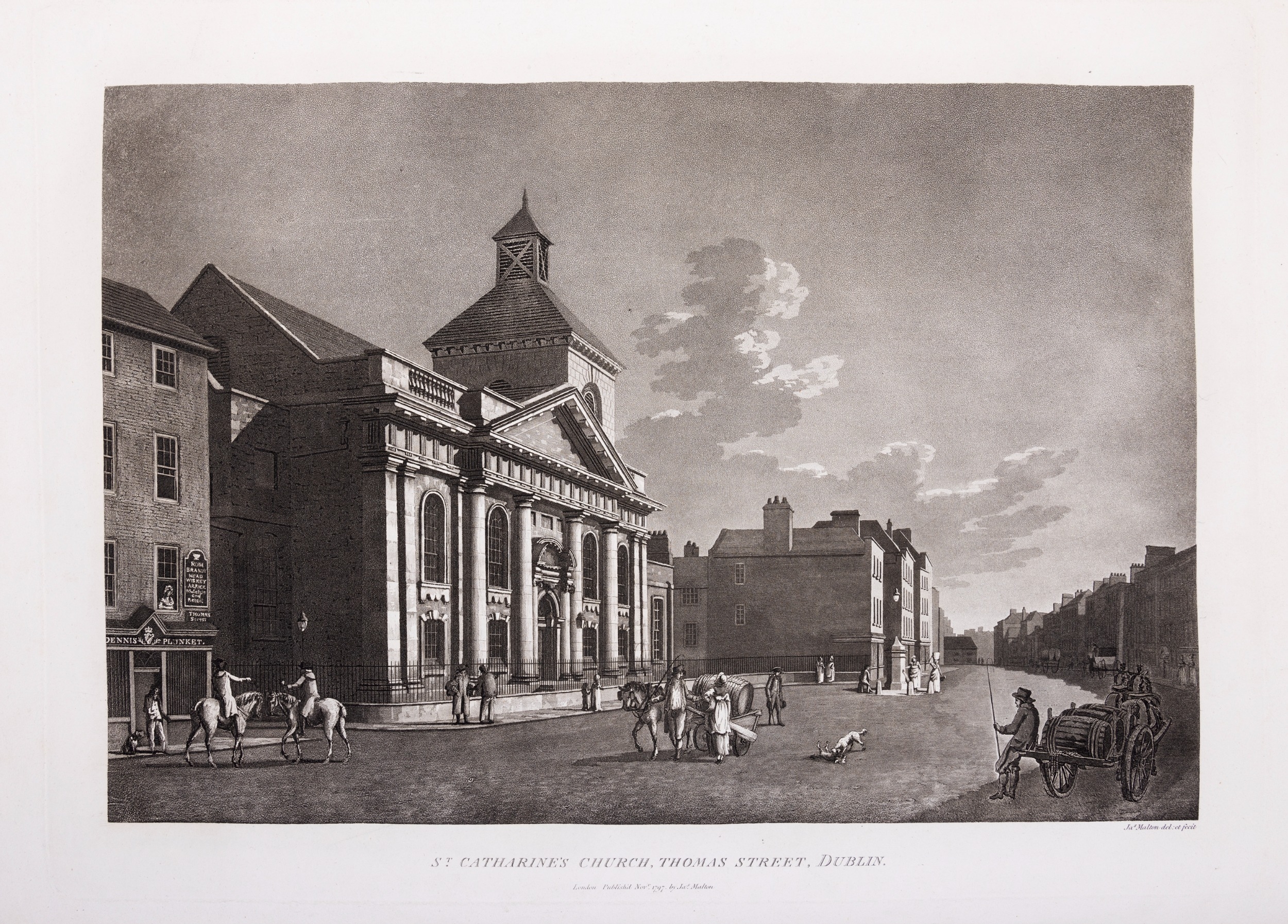
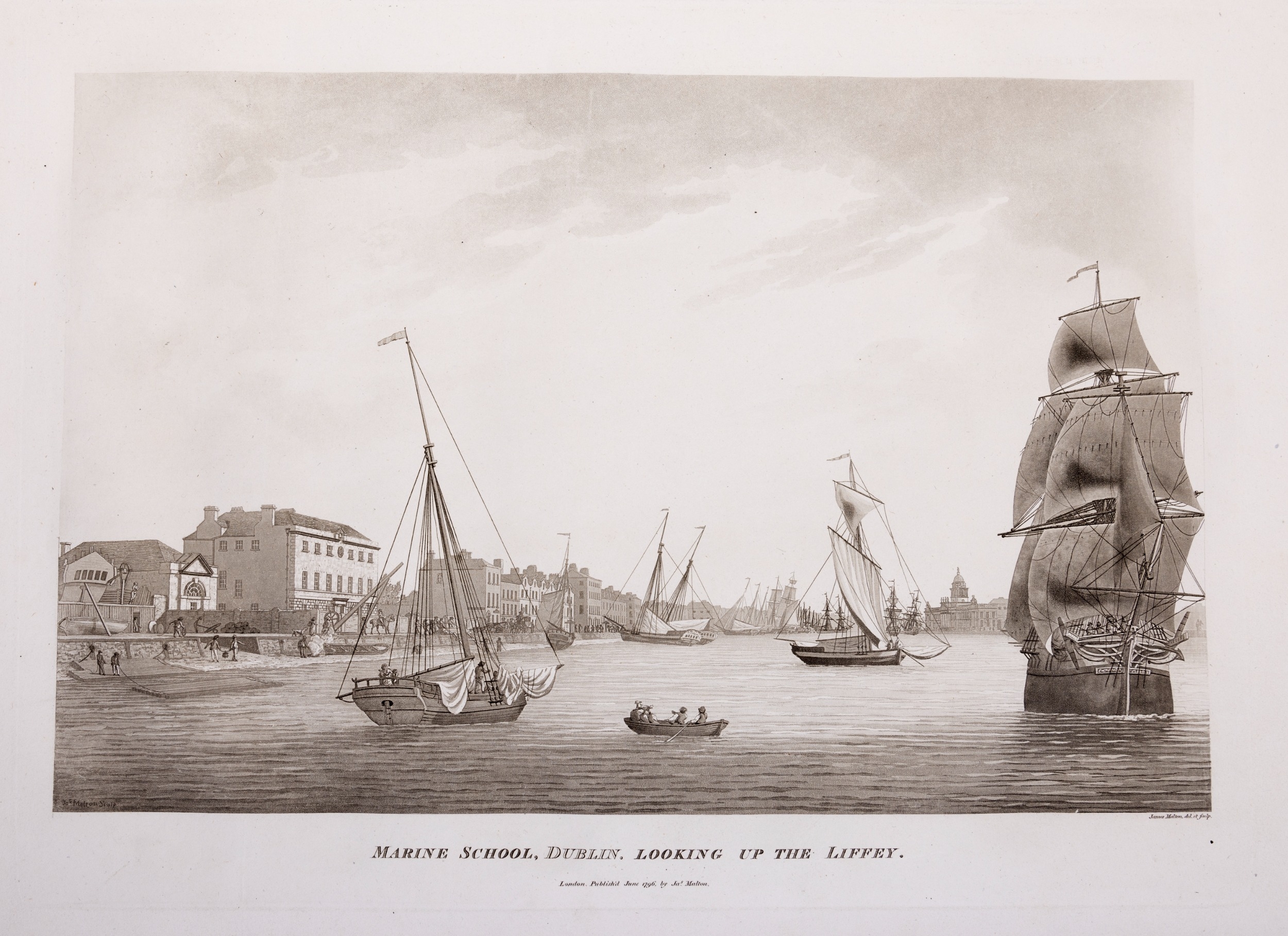
€8,000 - €10,000
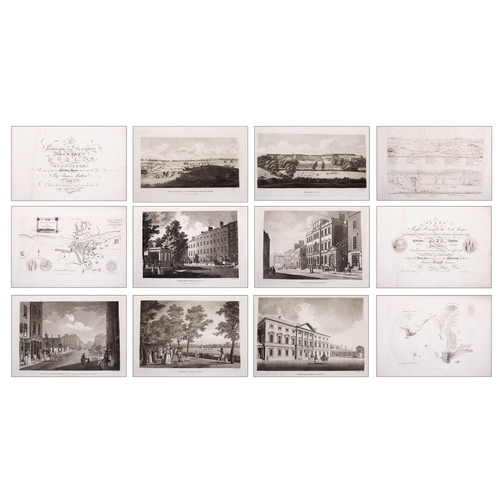
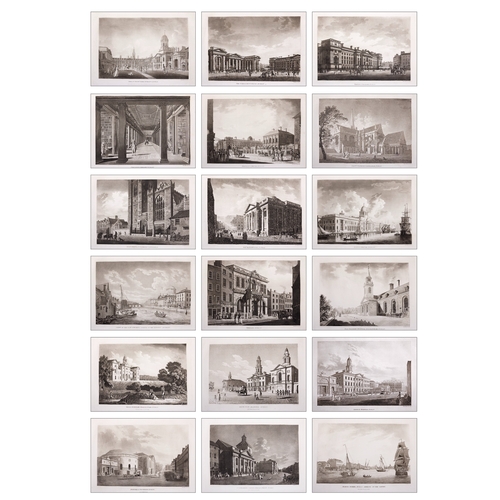
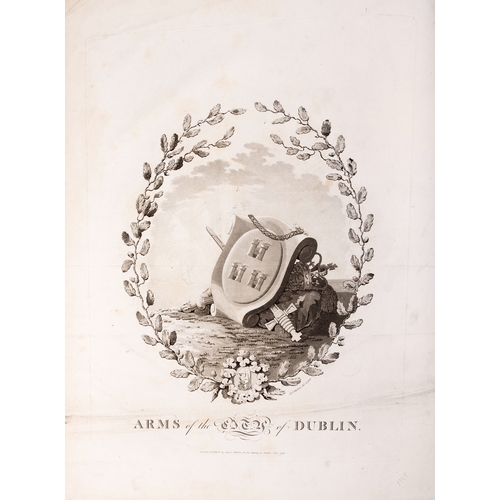
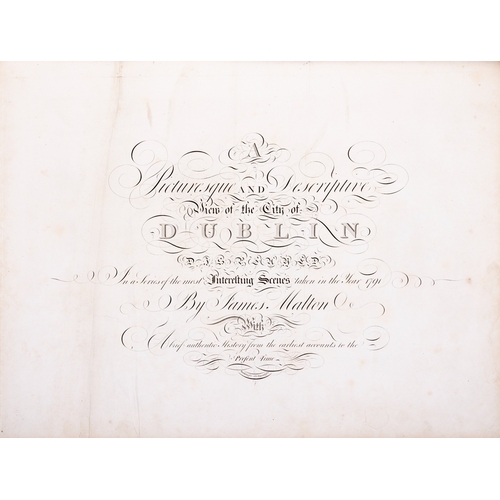
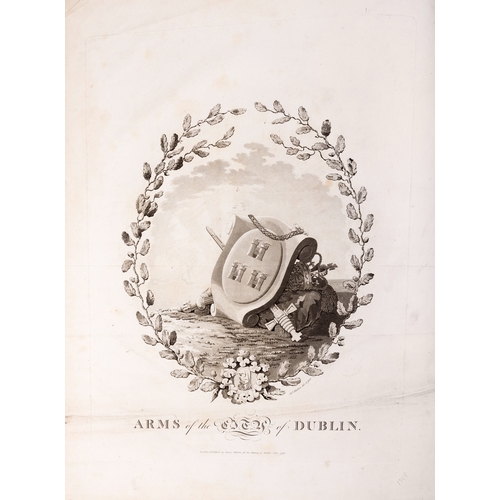
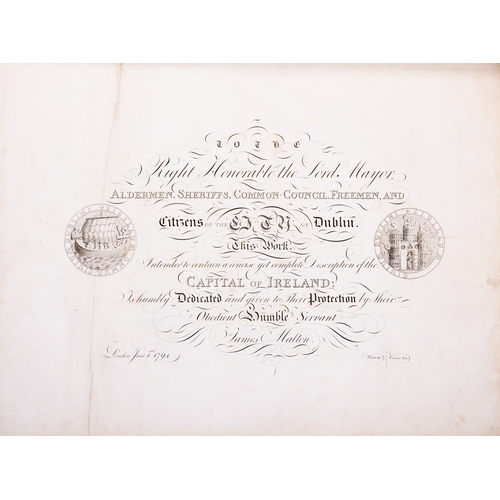
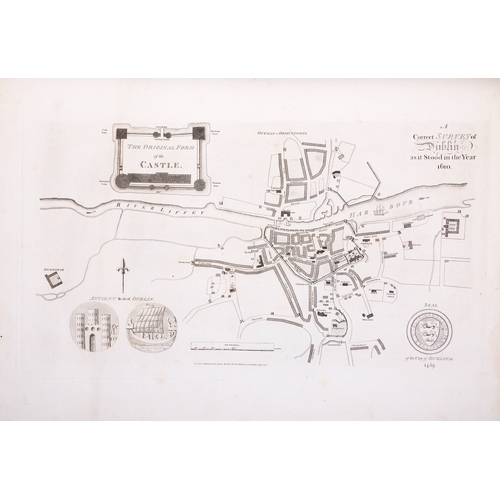
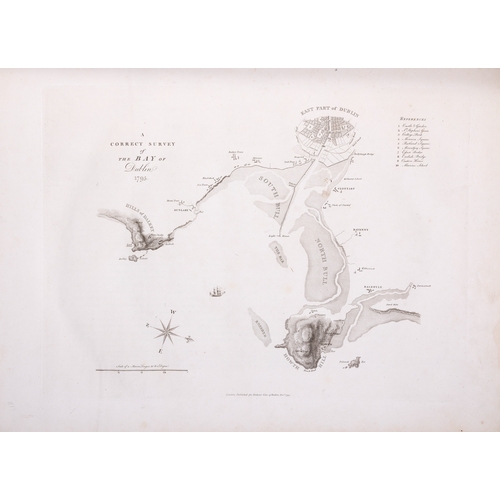
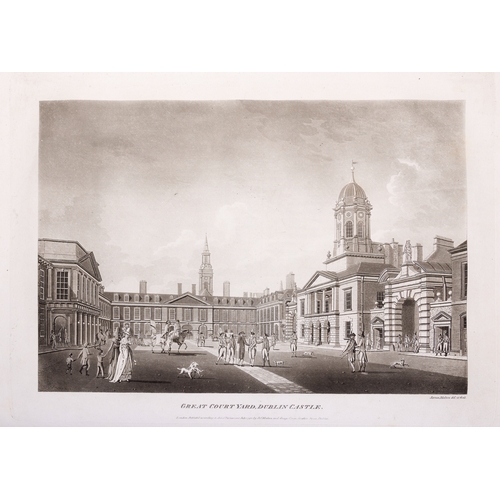
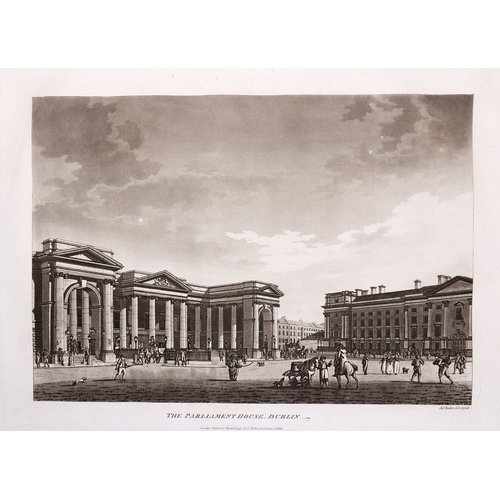
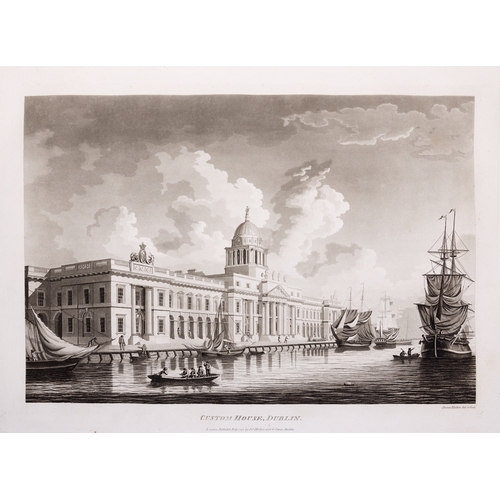
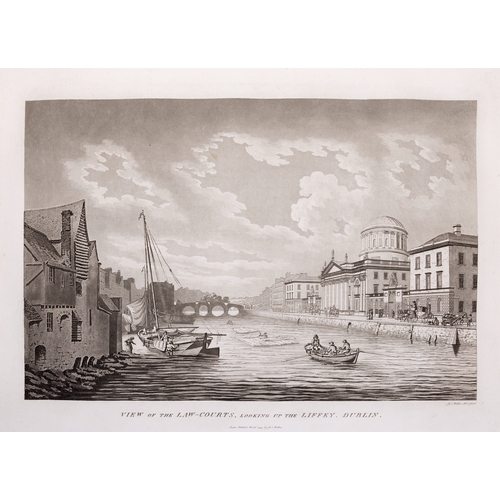
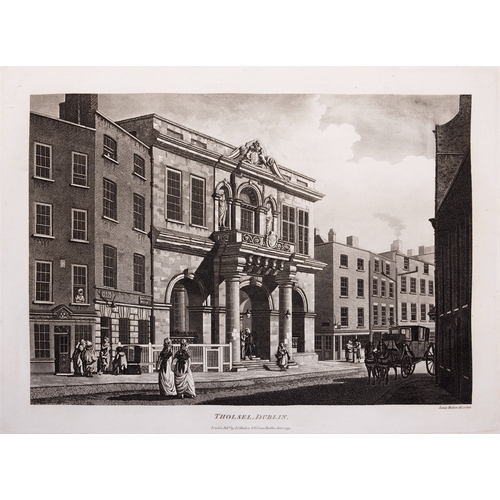
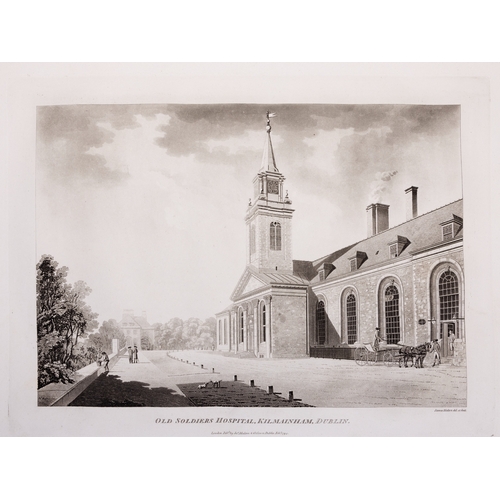
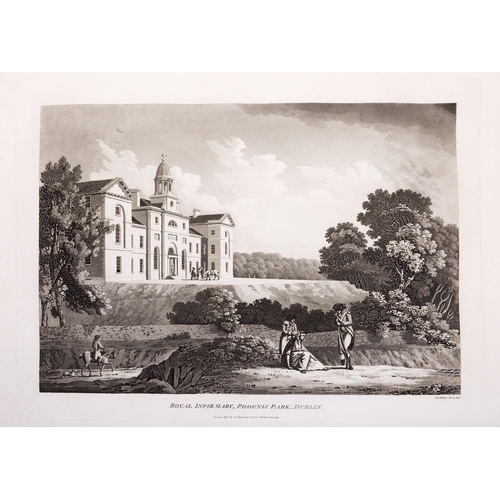
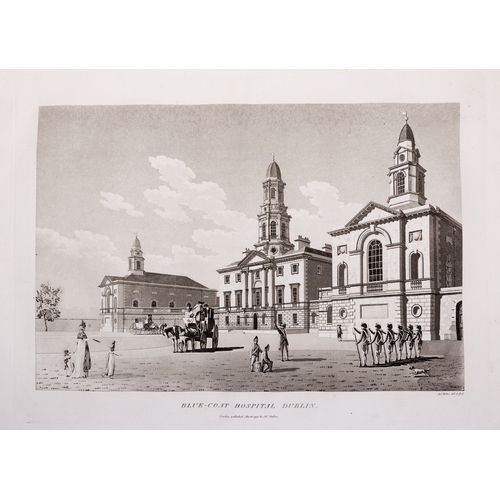
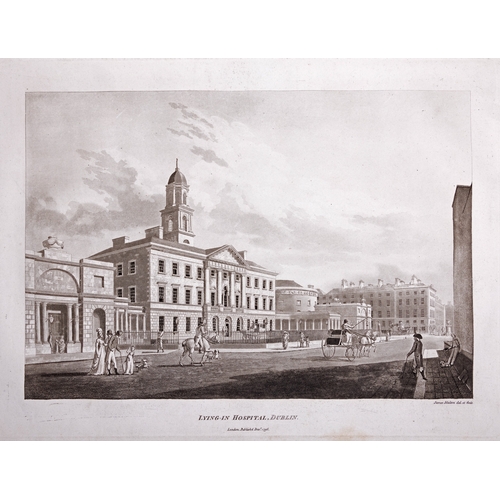
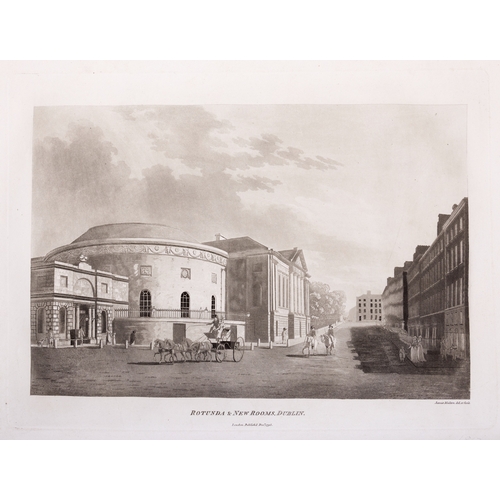
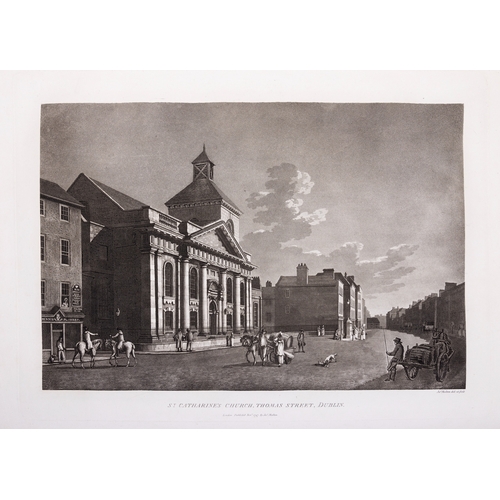
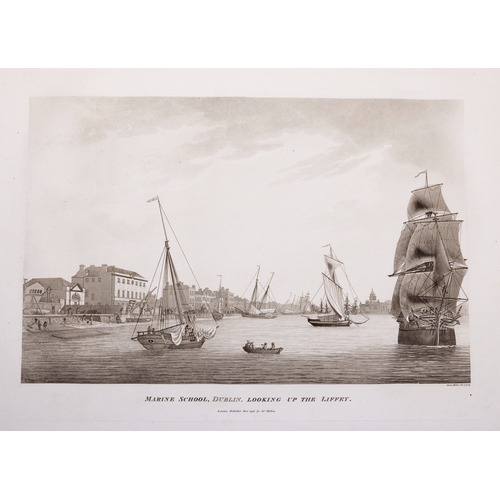
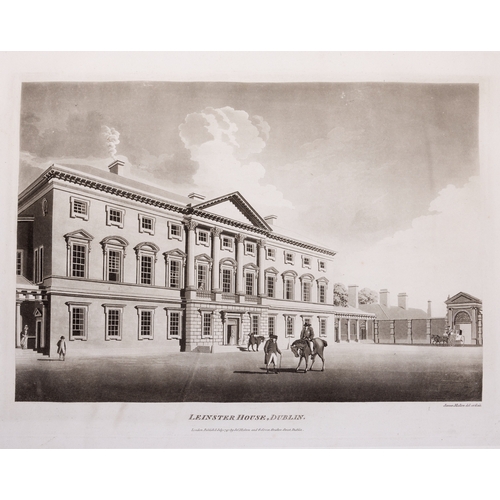
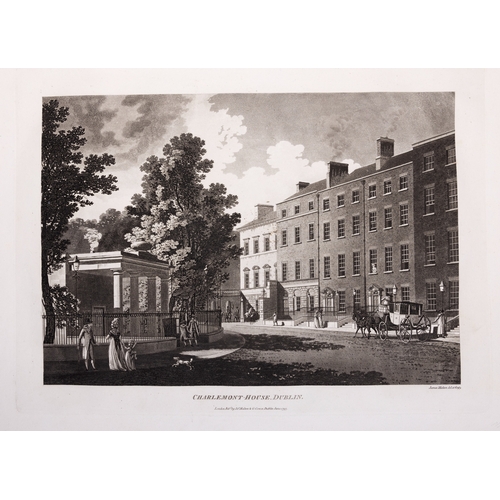
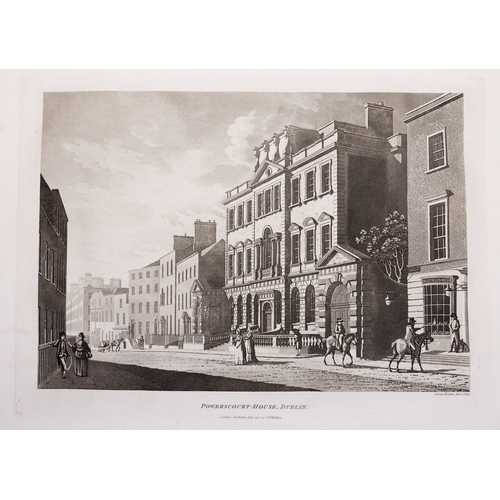
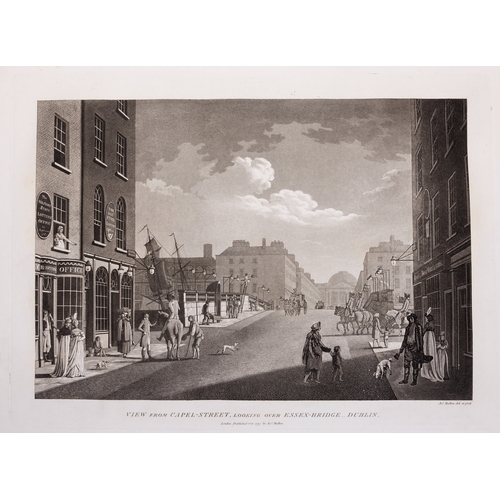
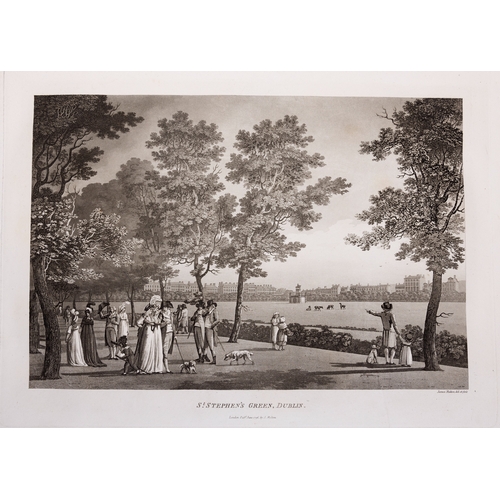
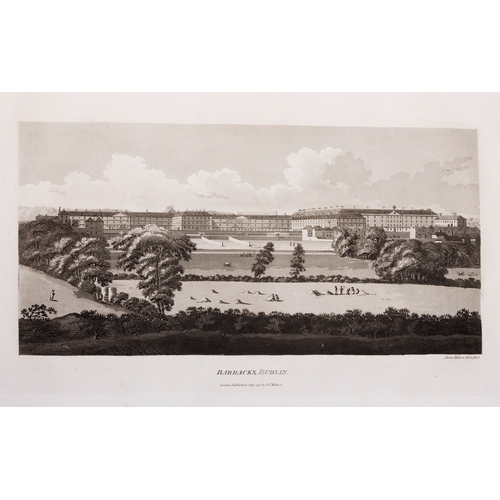
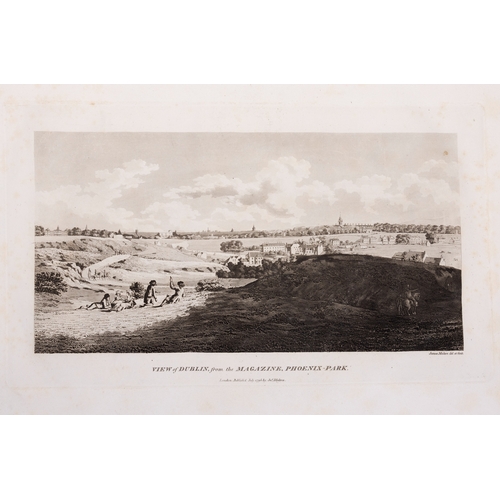
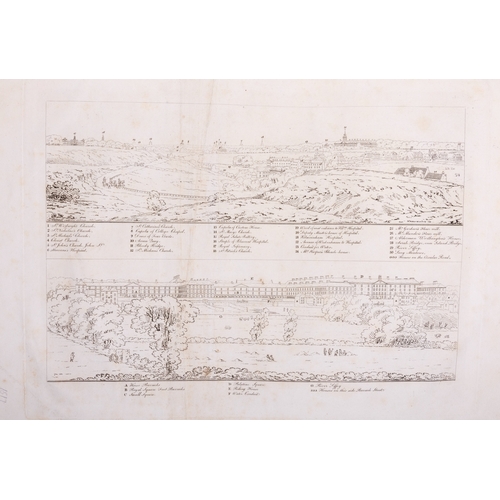
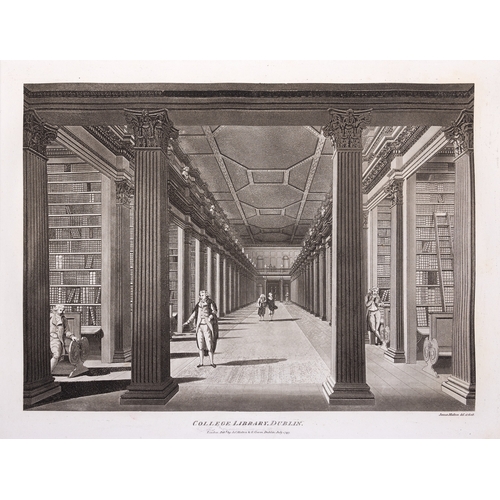
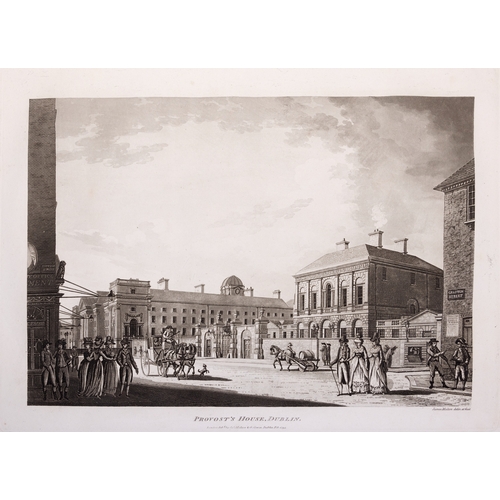
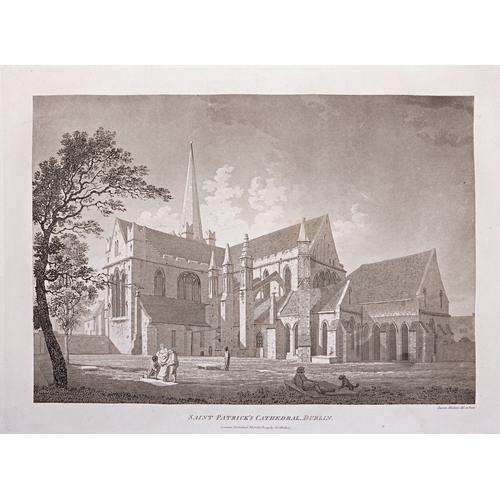
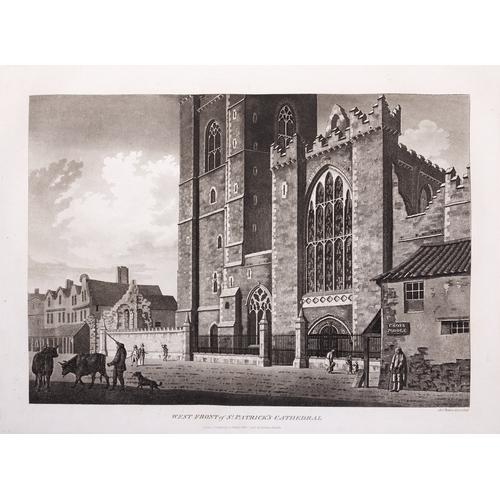
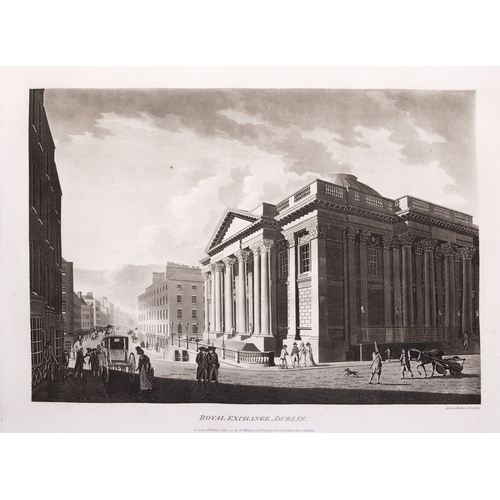
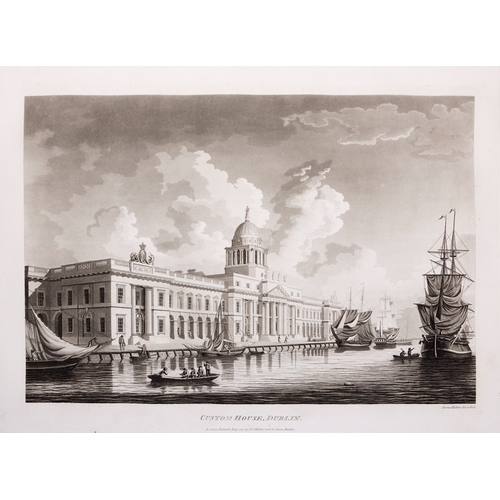
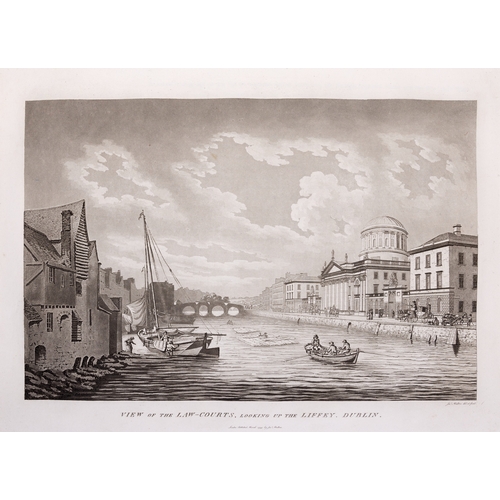
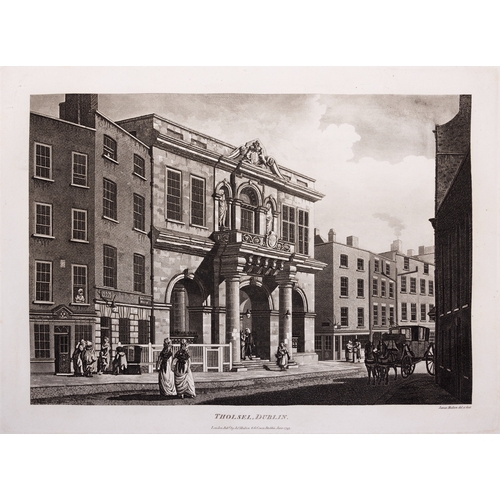
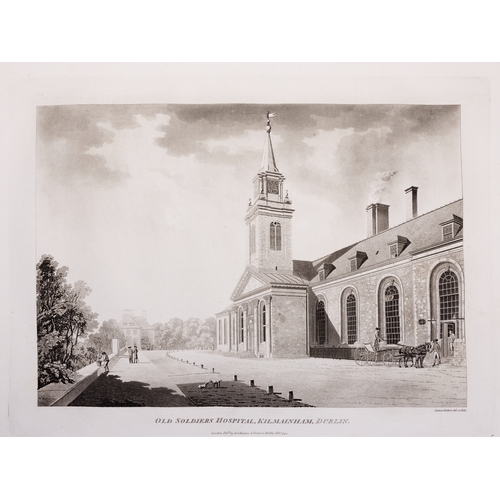
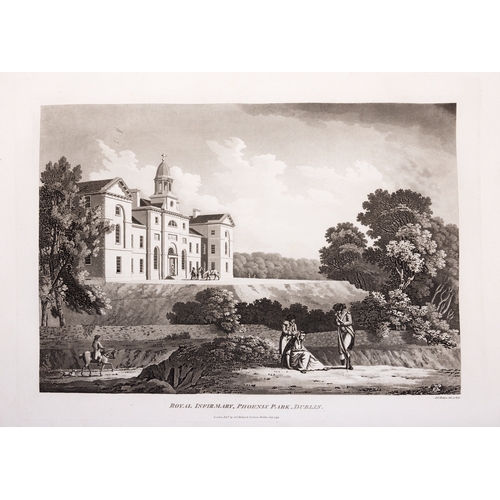
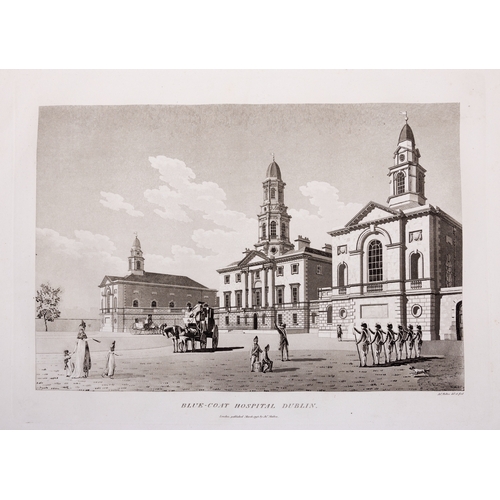
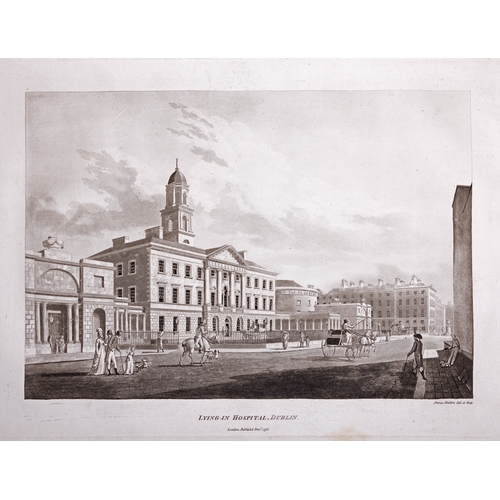
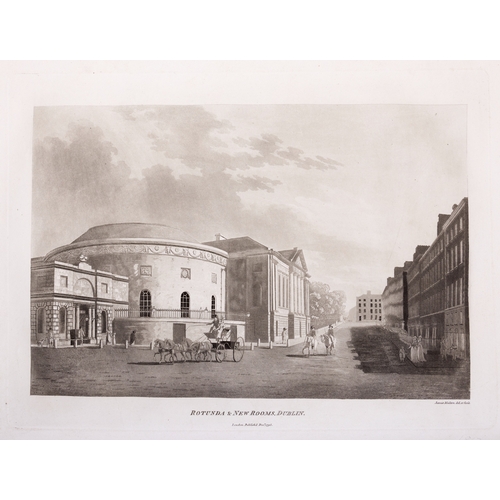
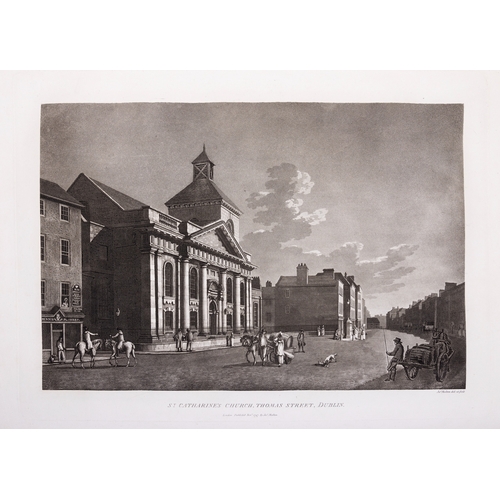
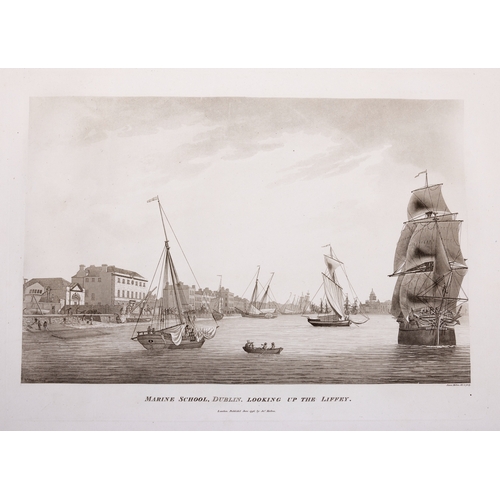
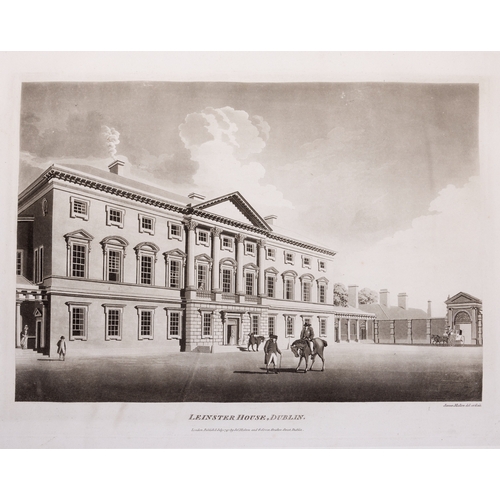
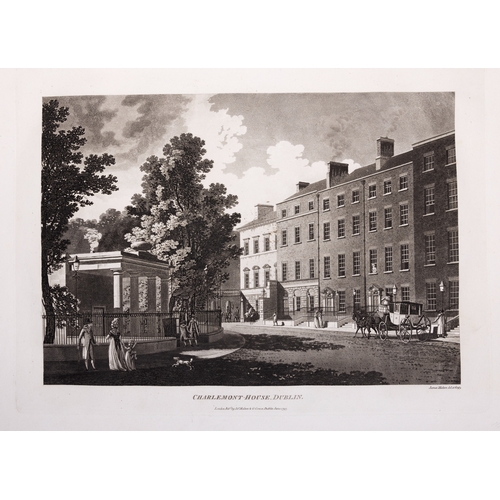
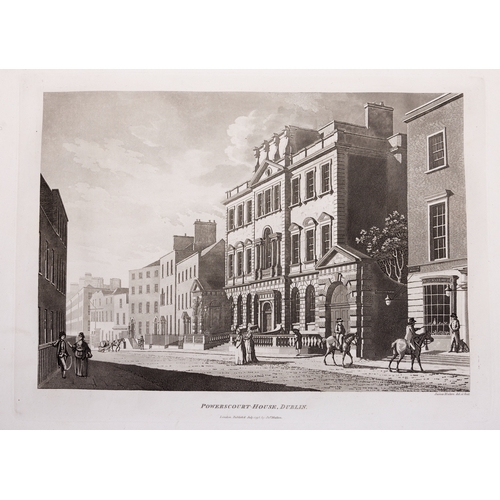
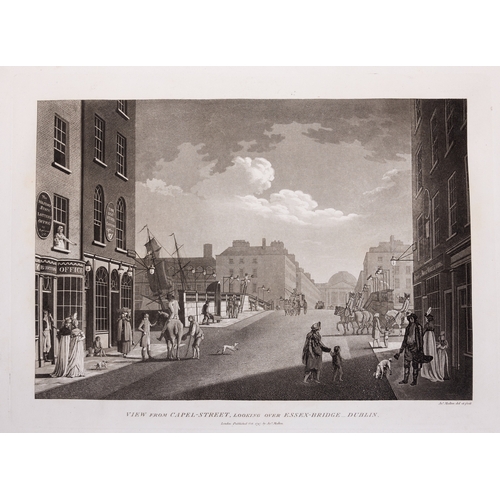
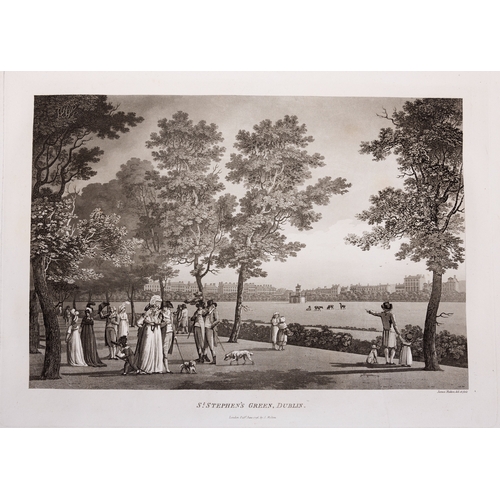
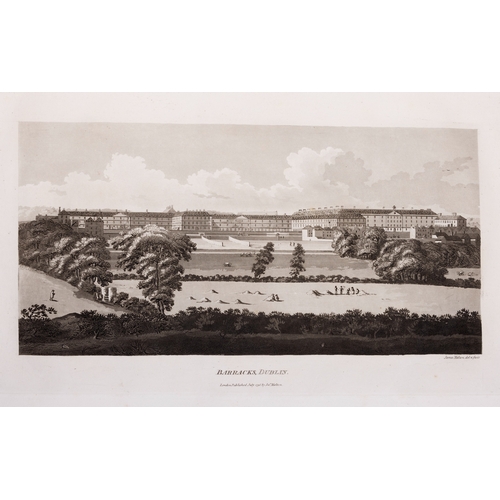
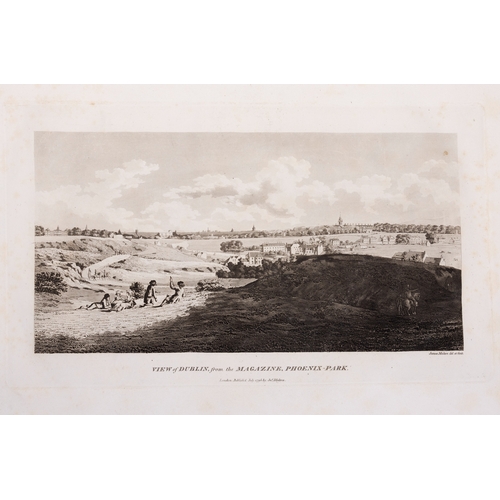
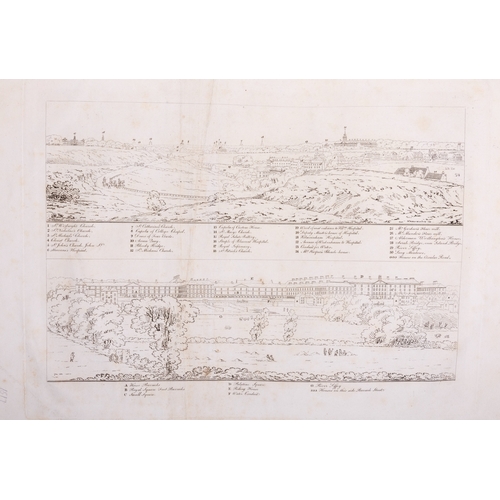
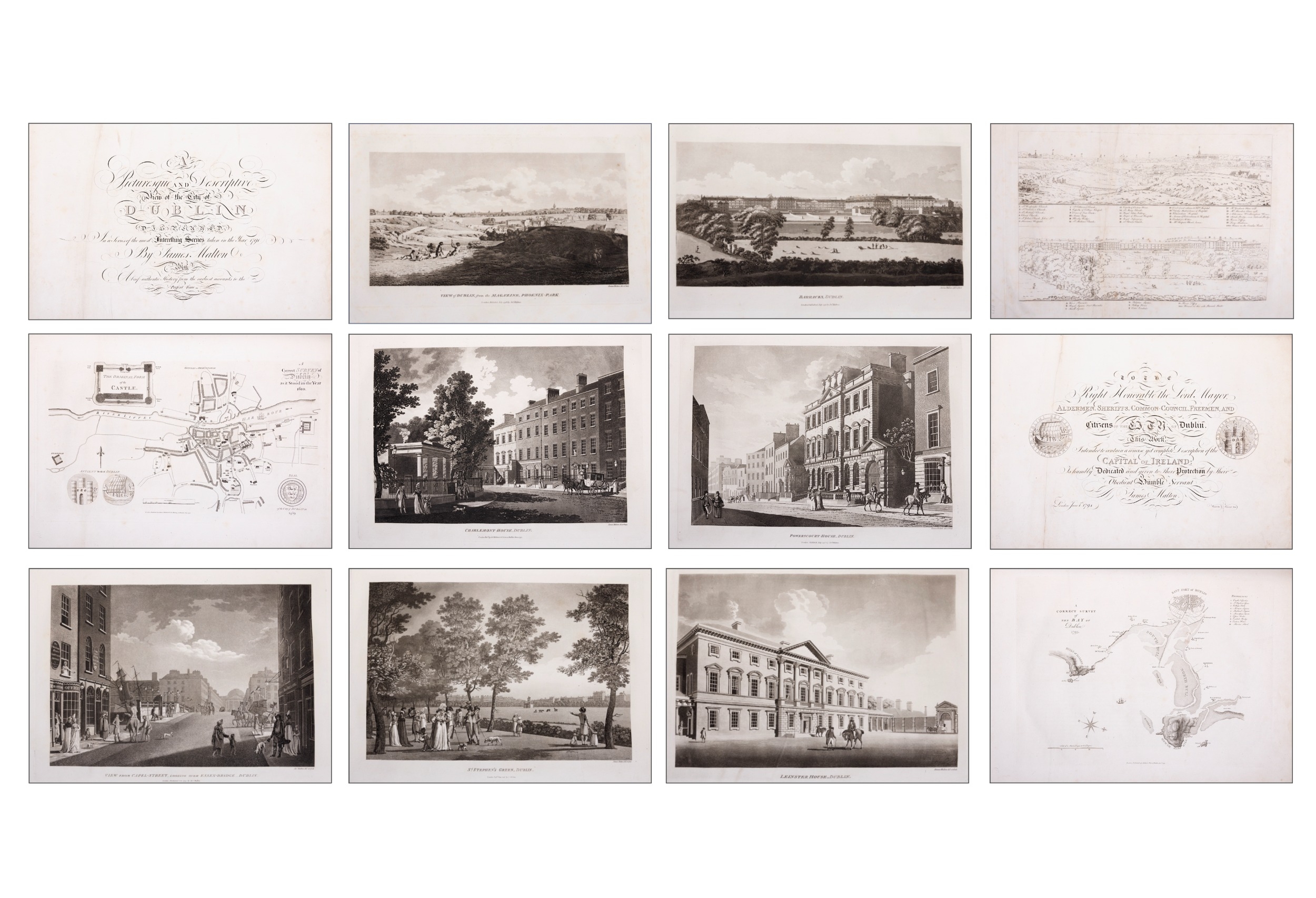
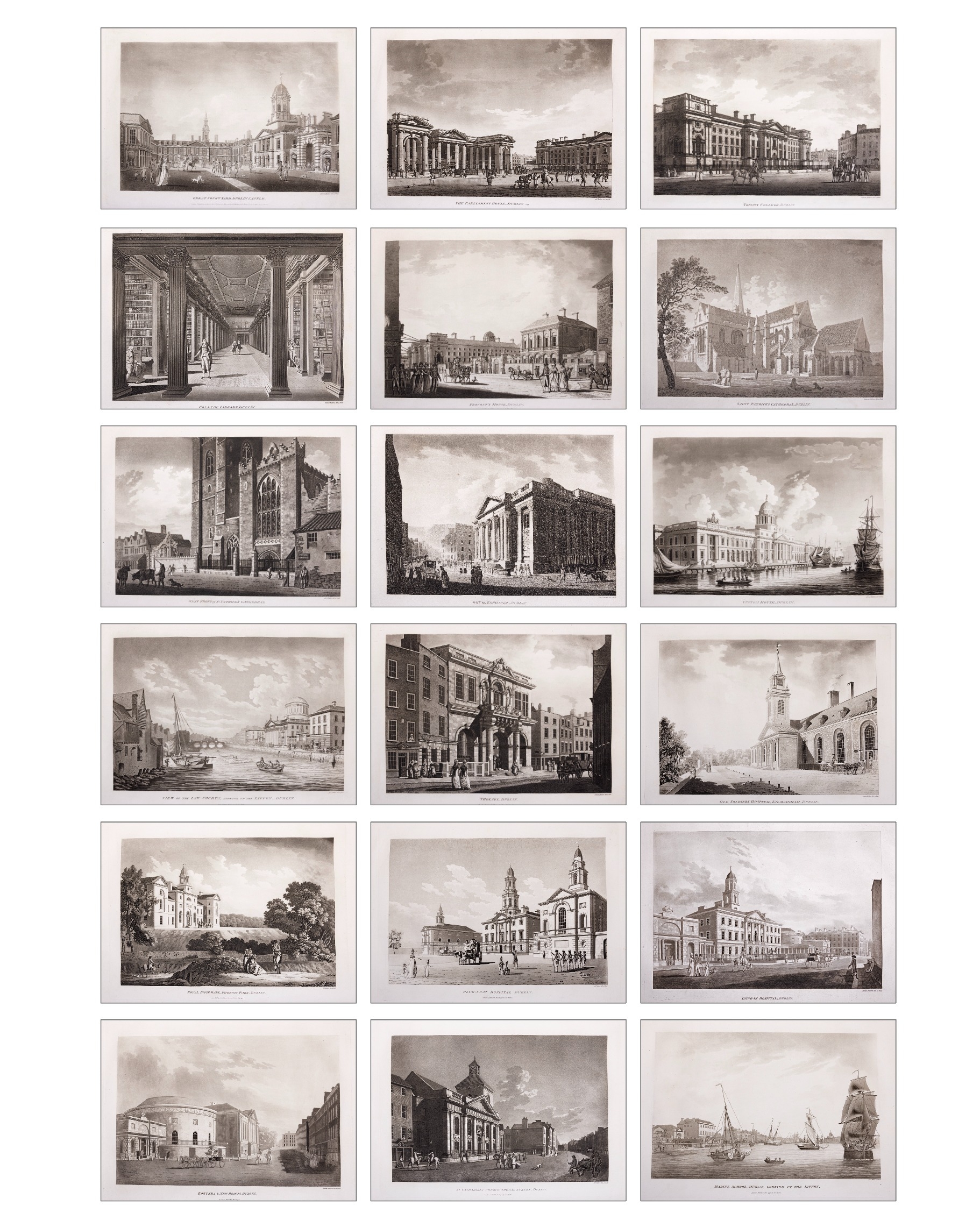
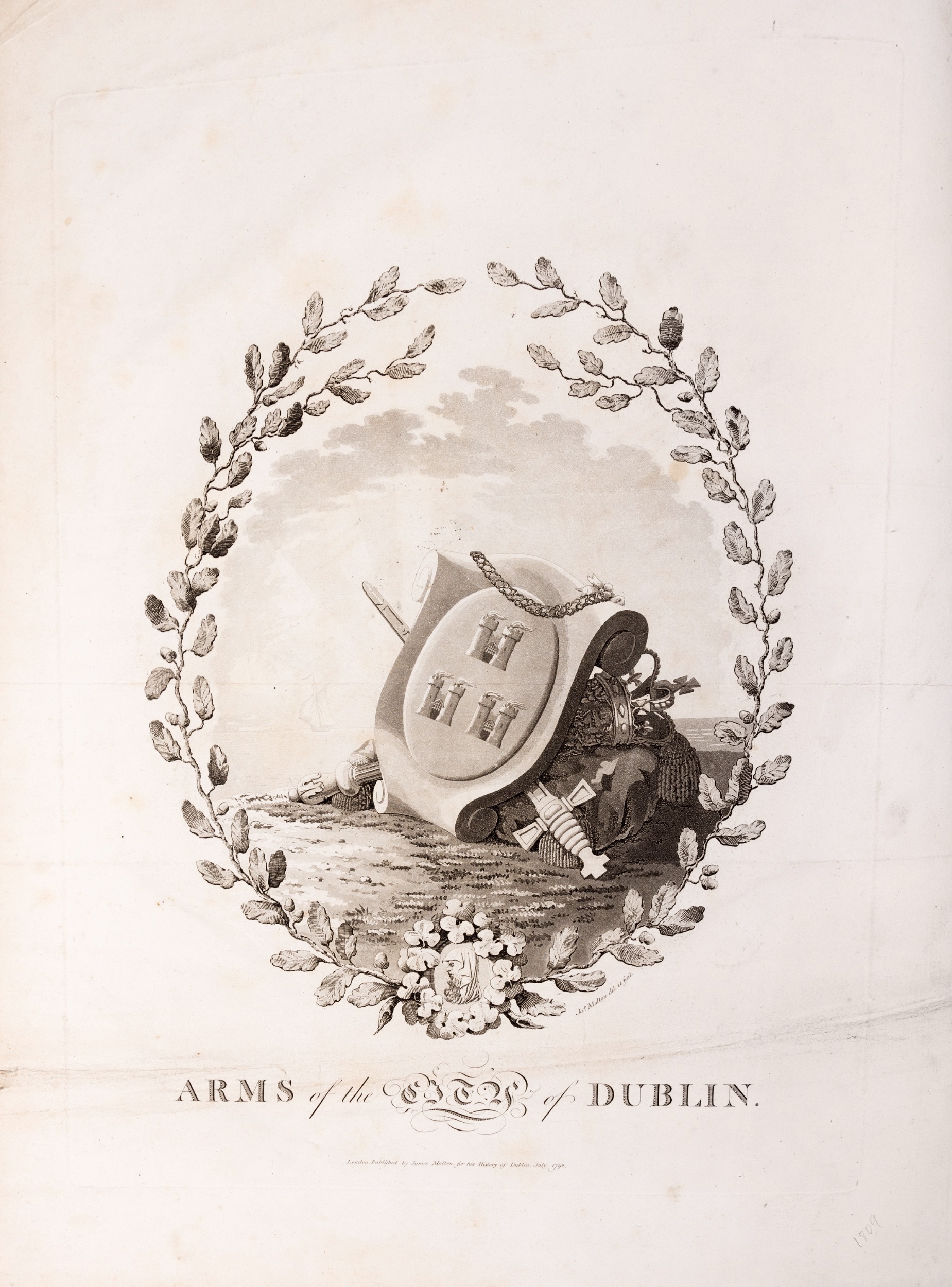
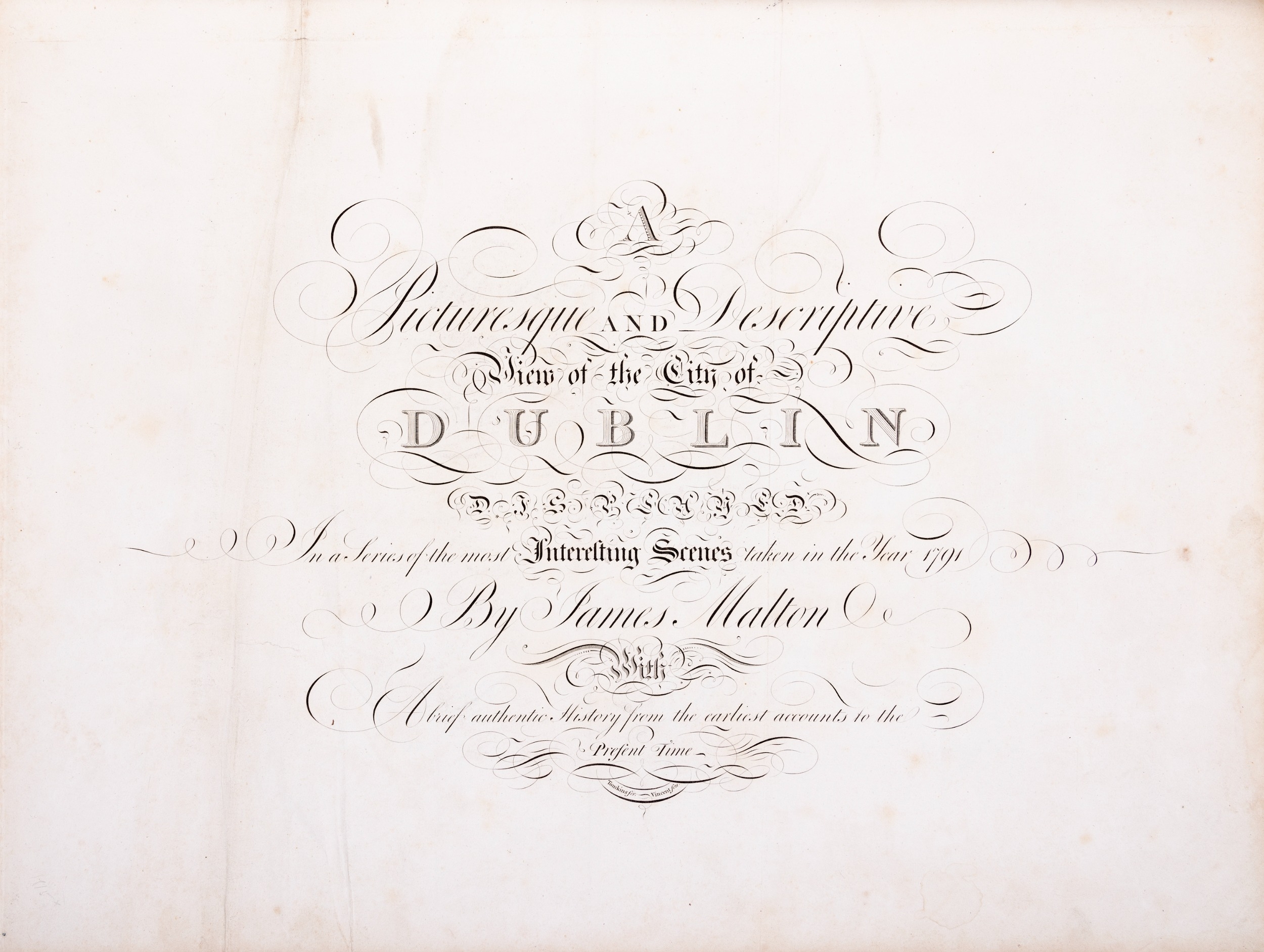
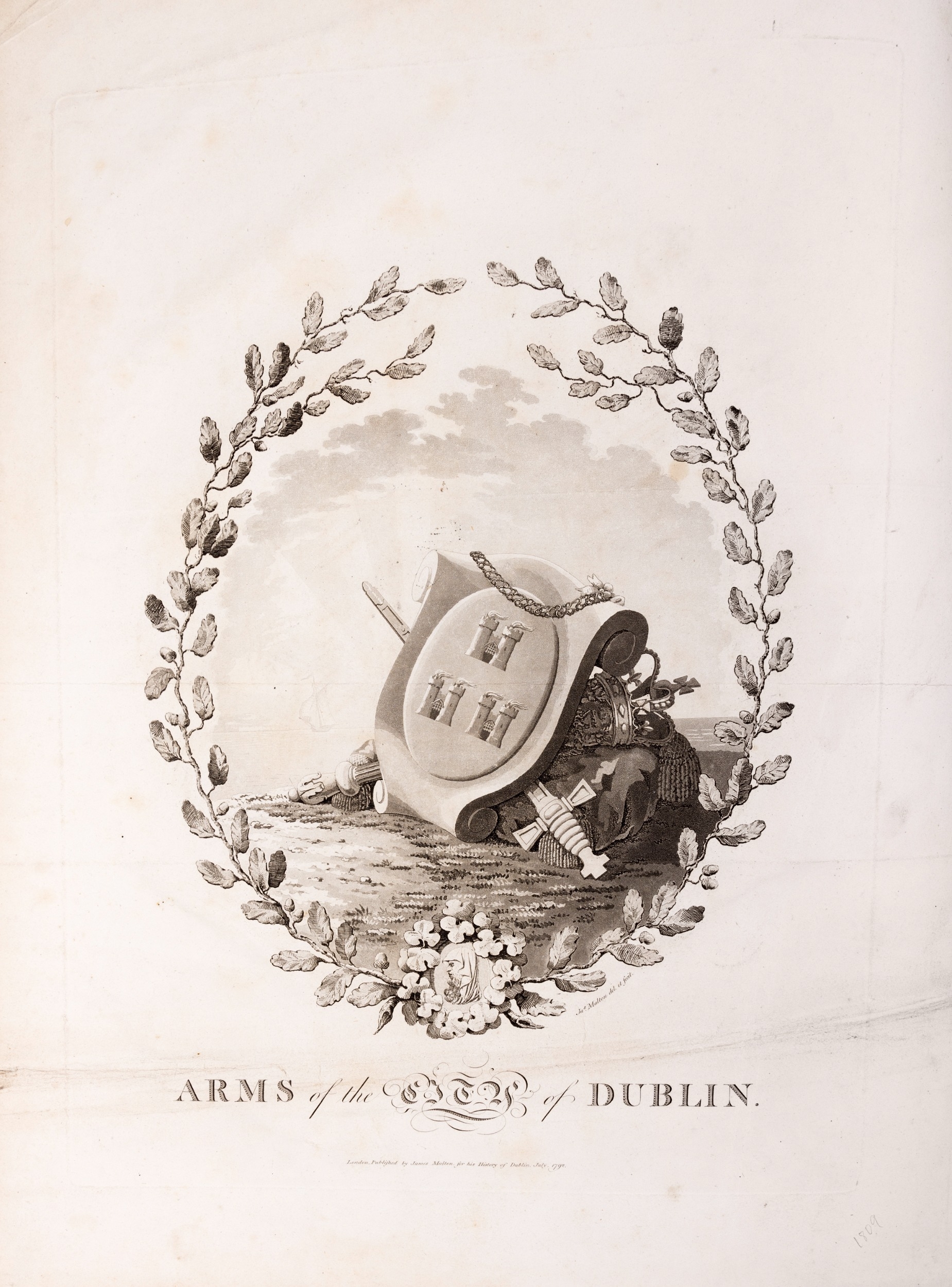
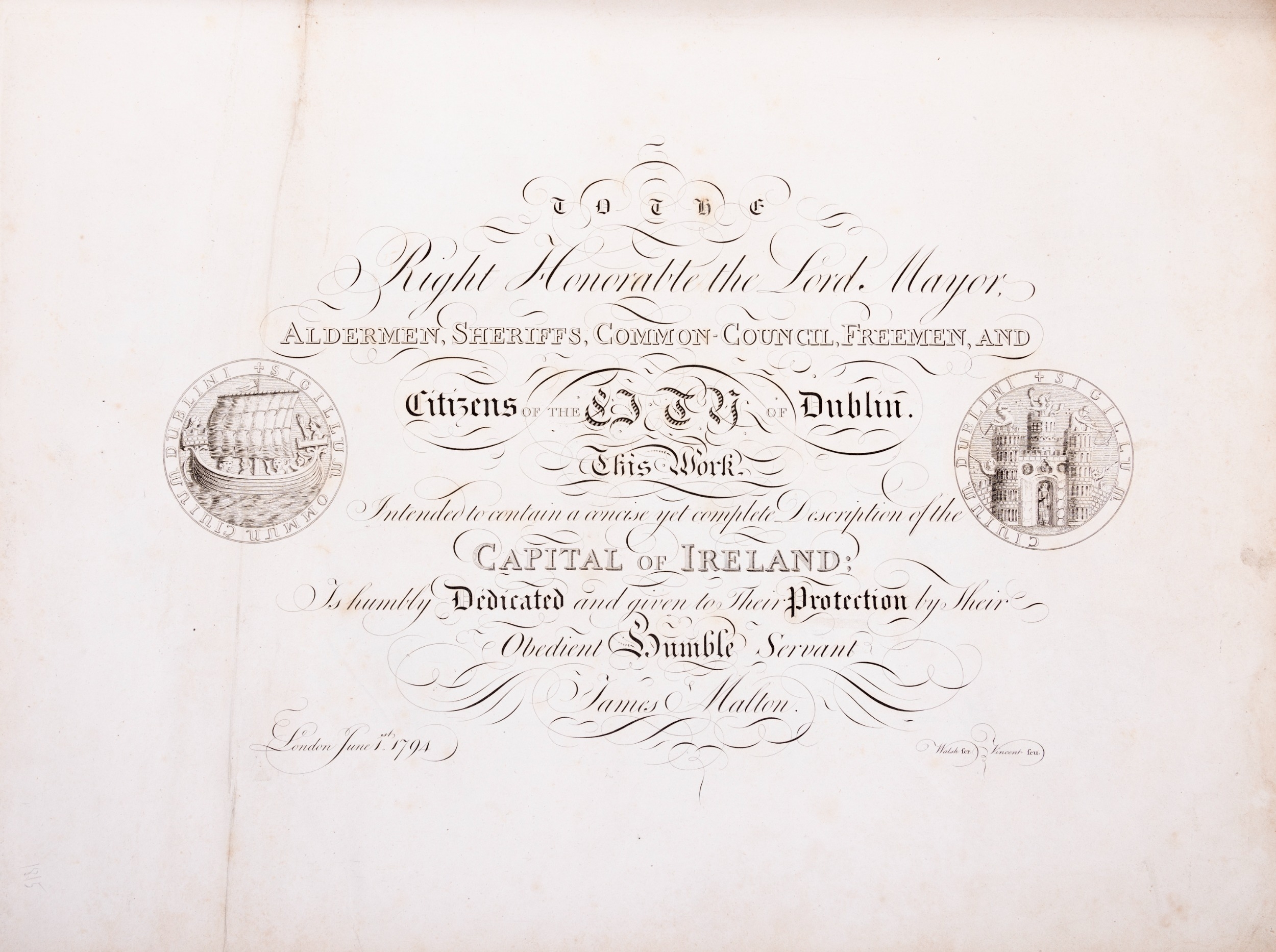
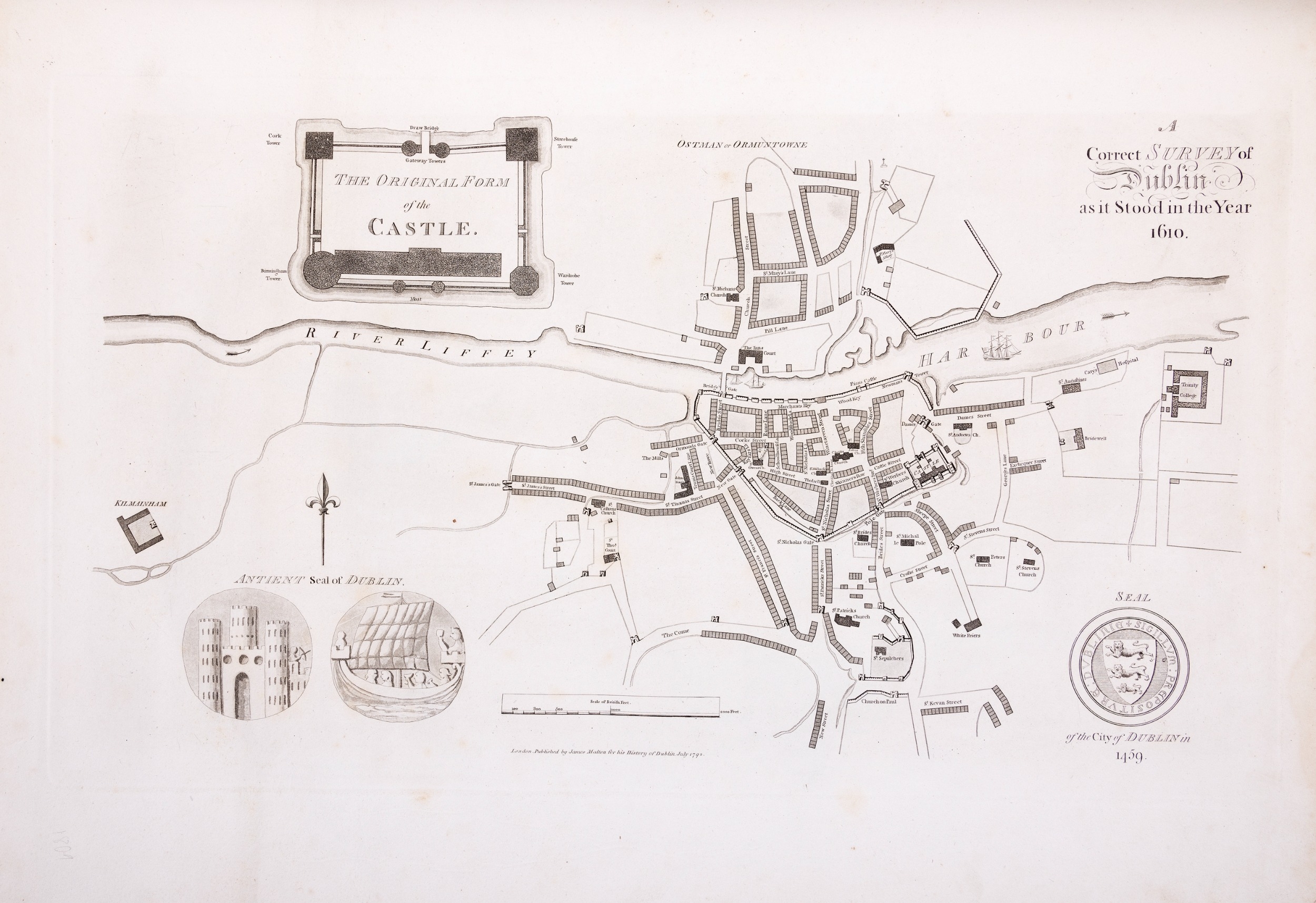
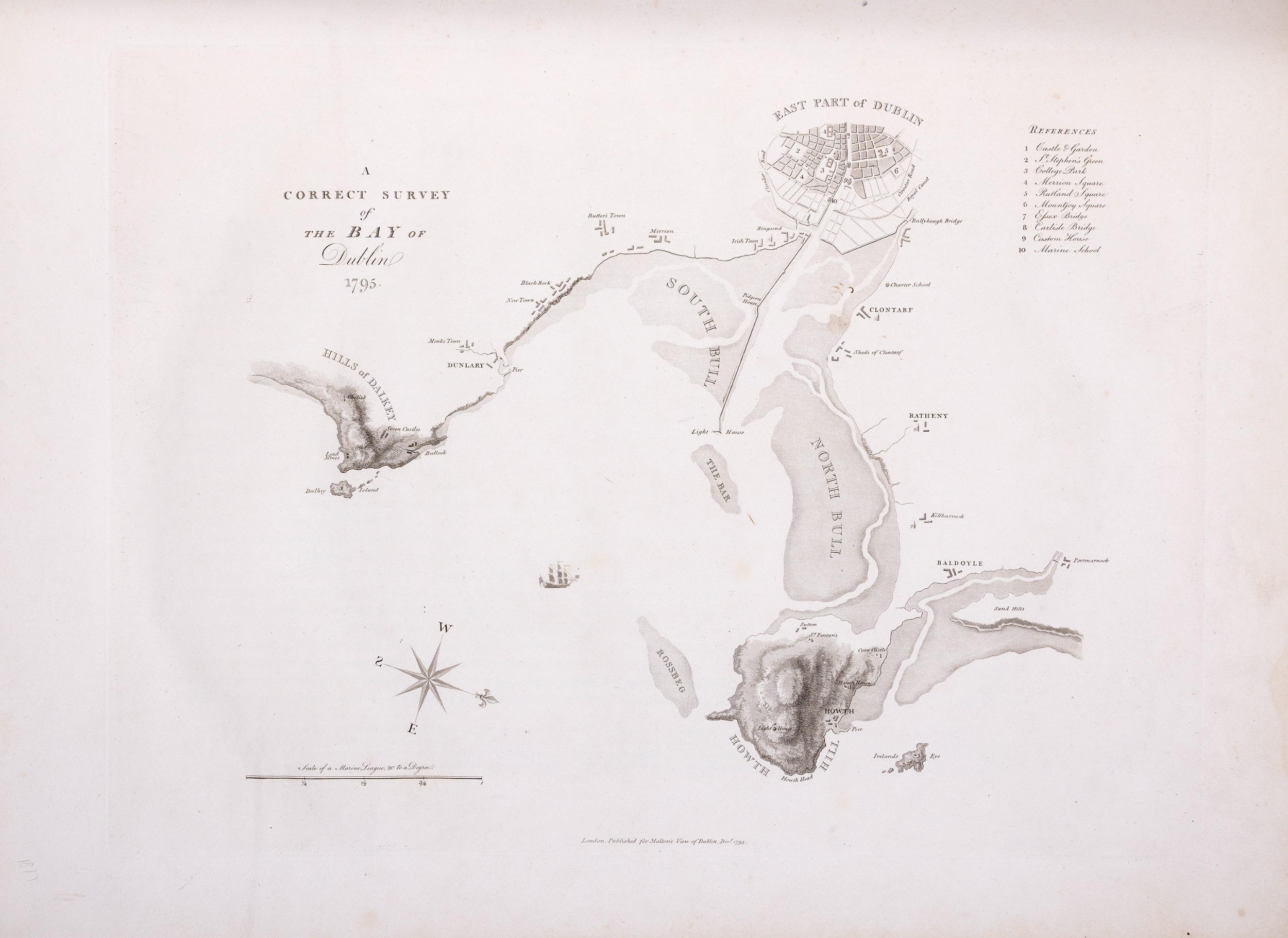
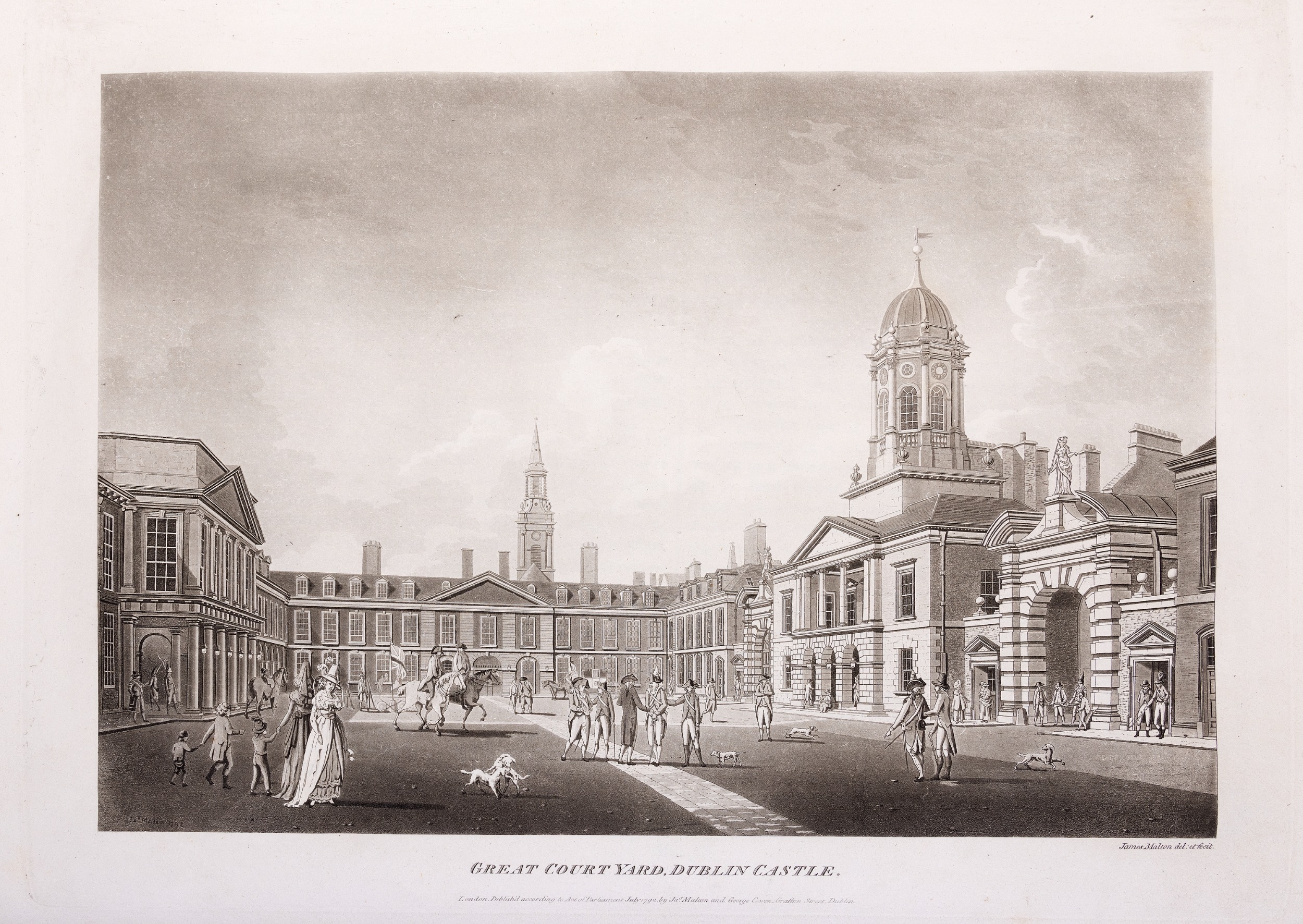
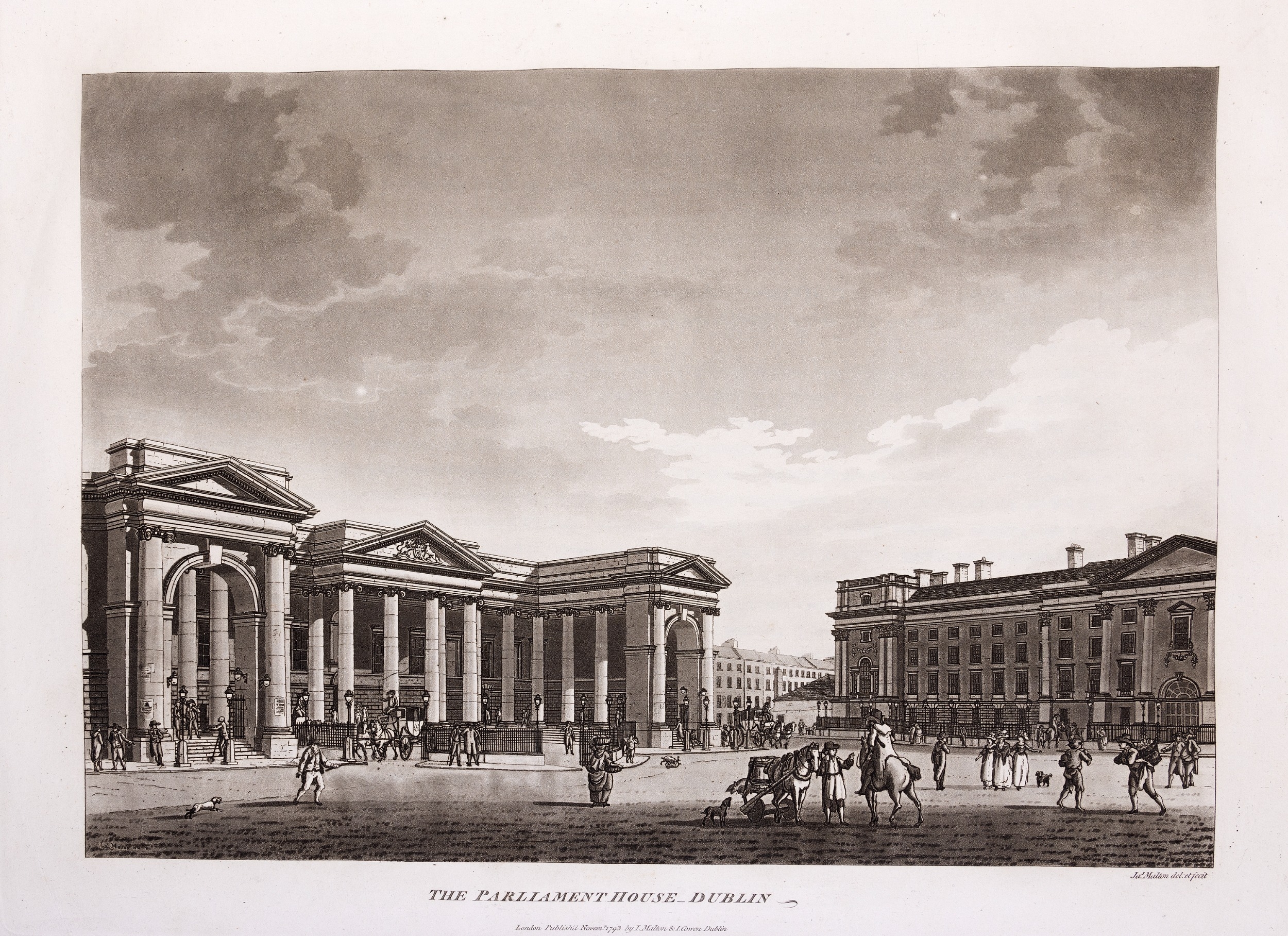
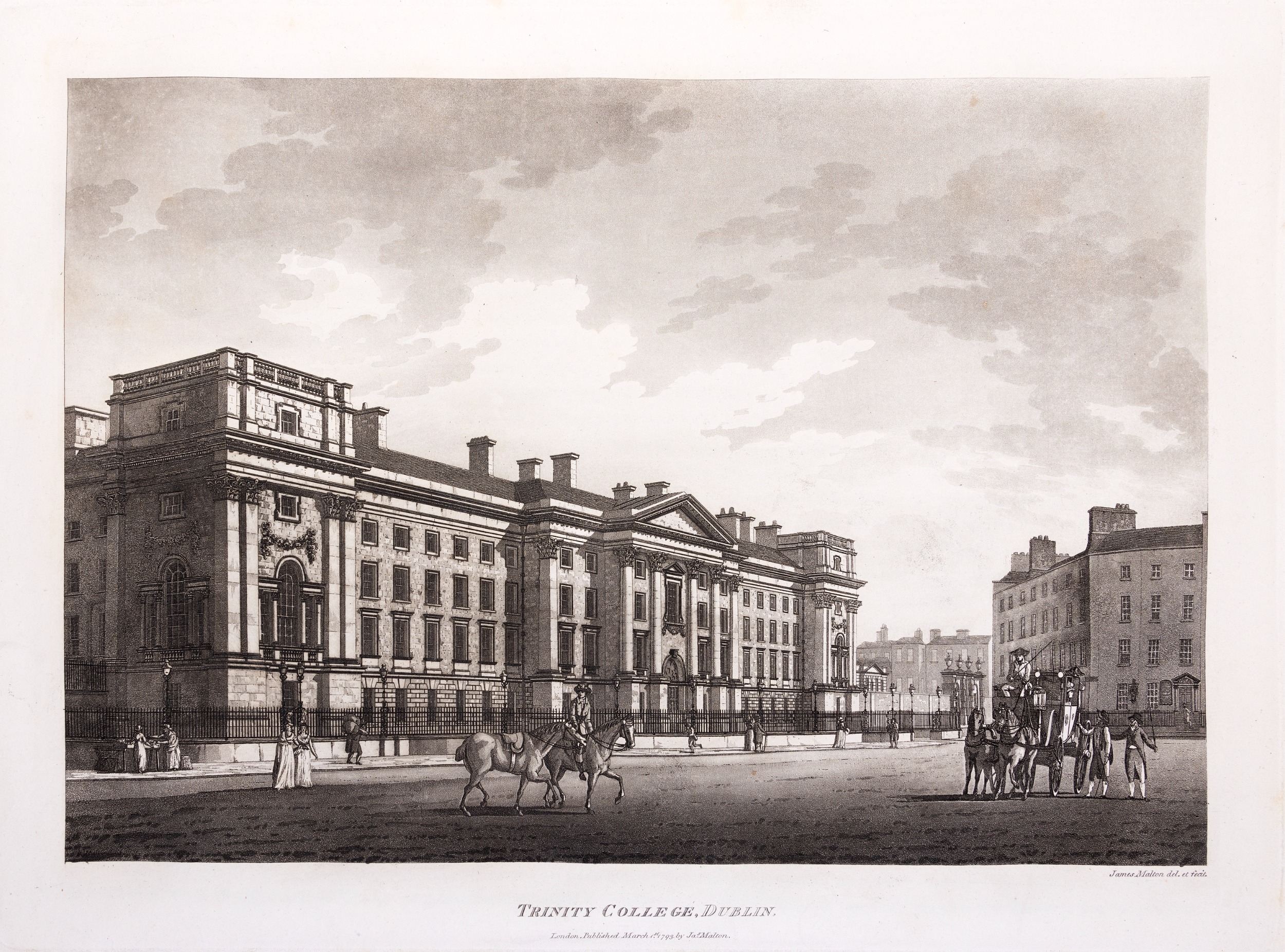
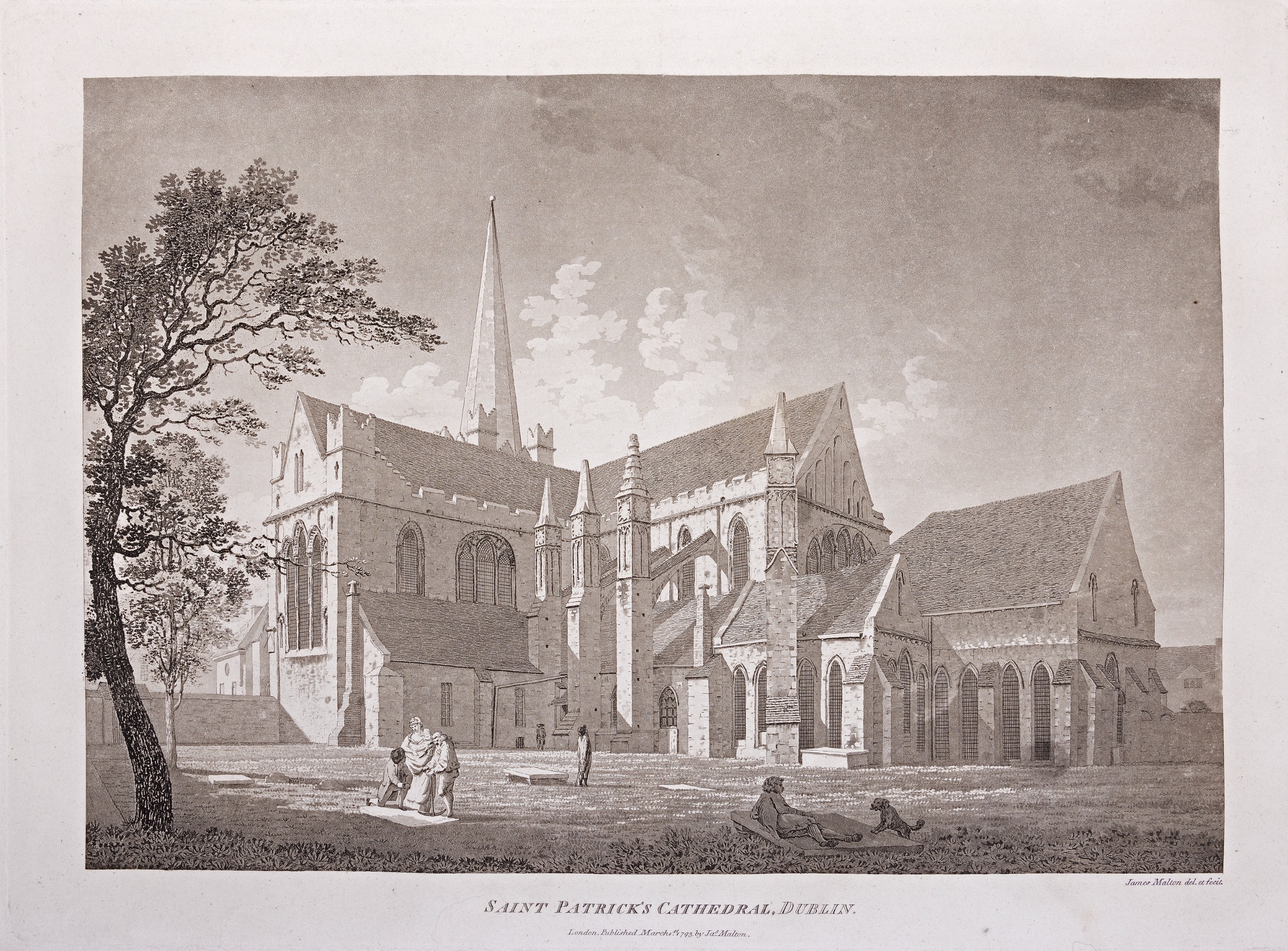
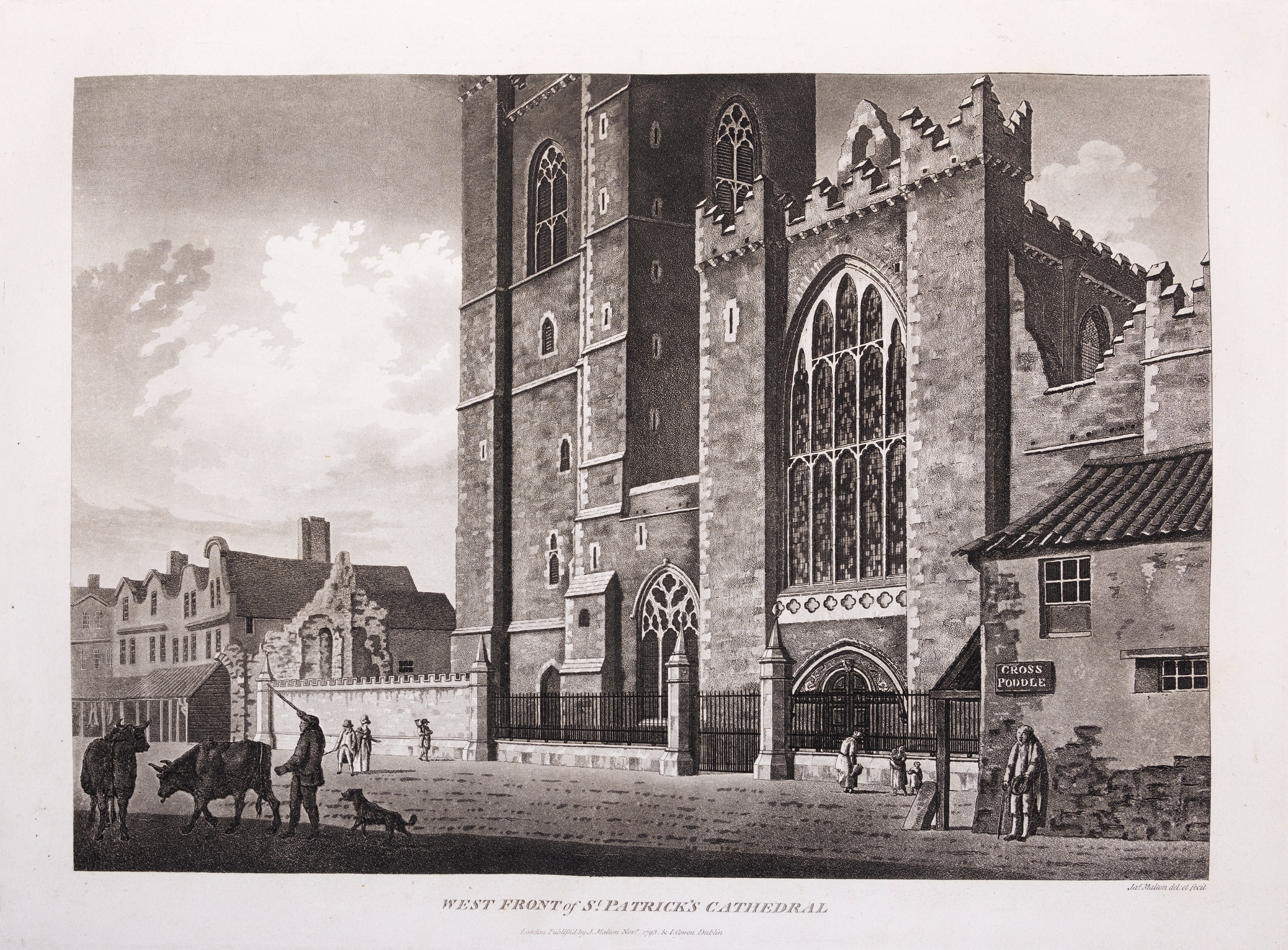
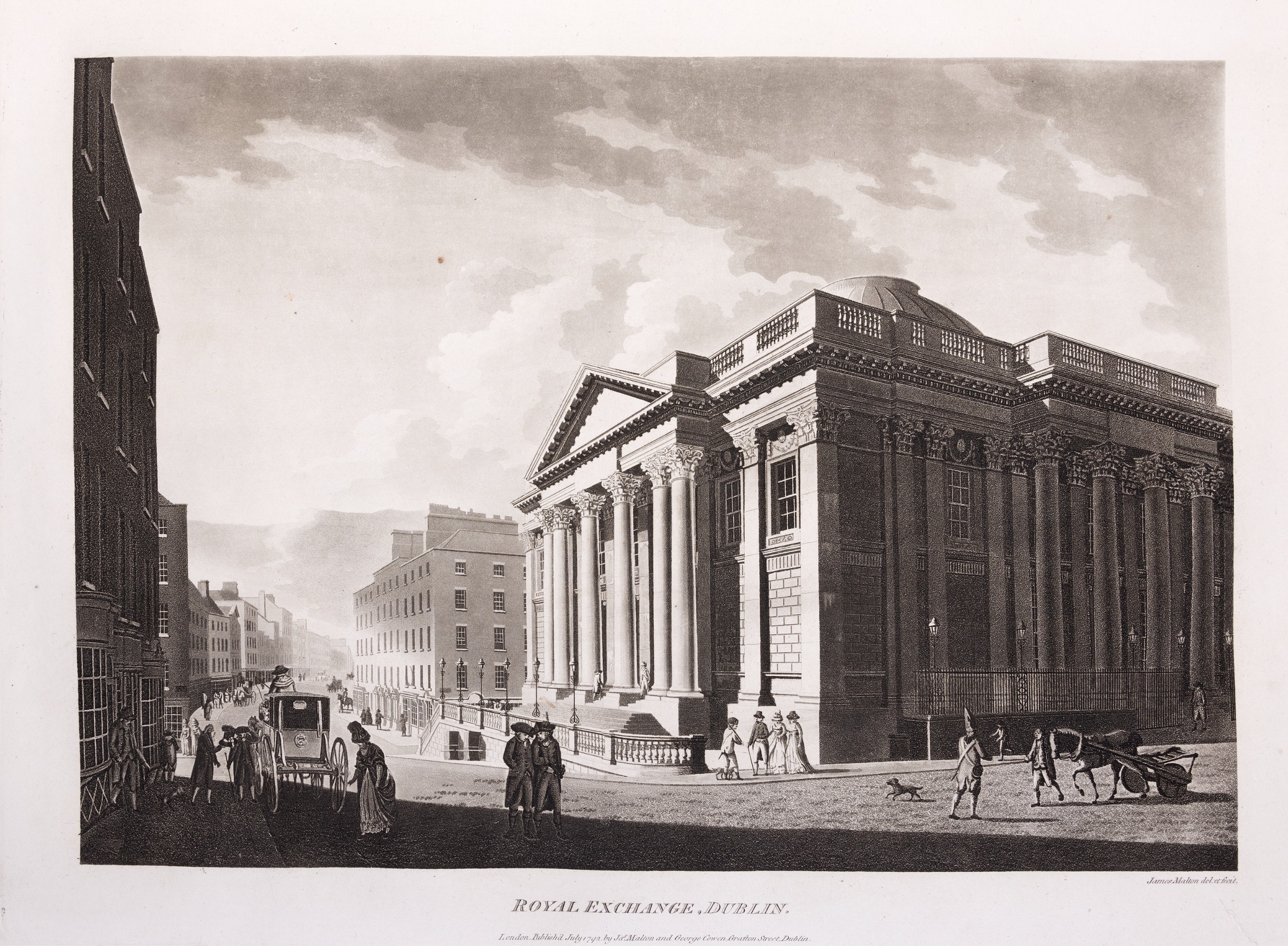
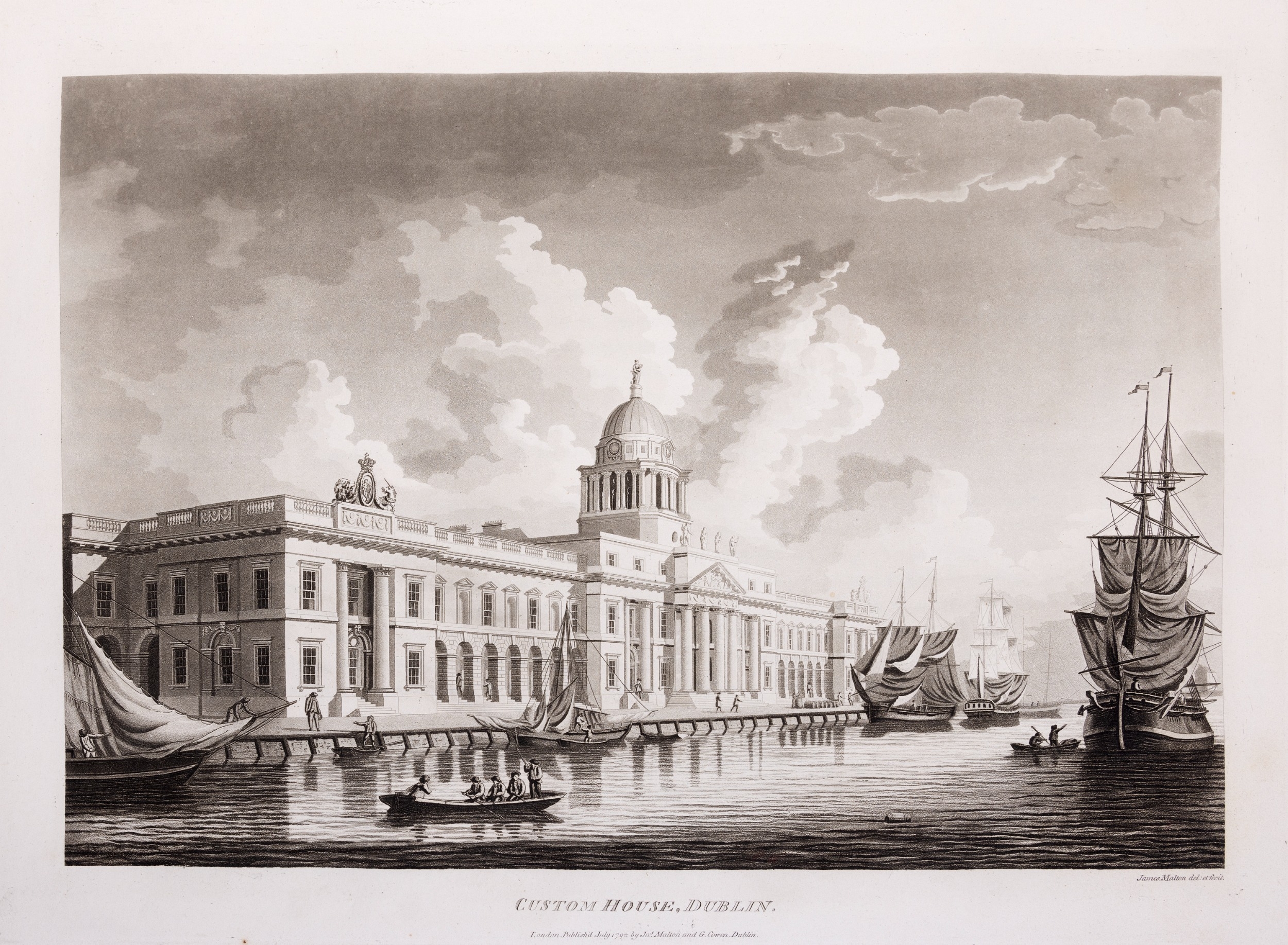
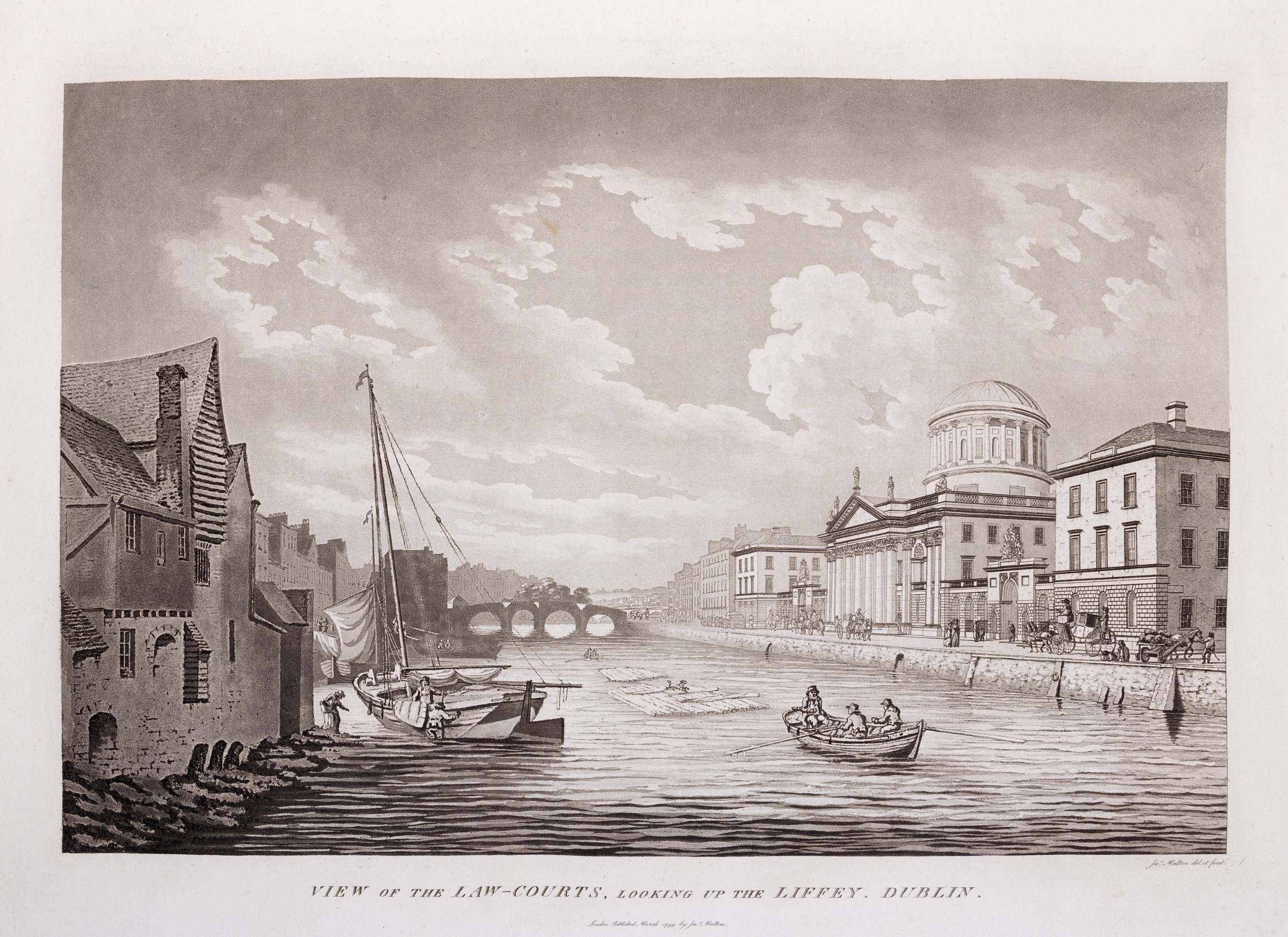
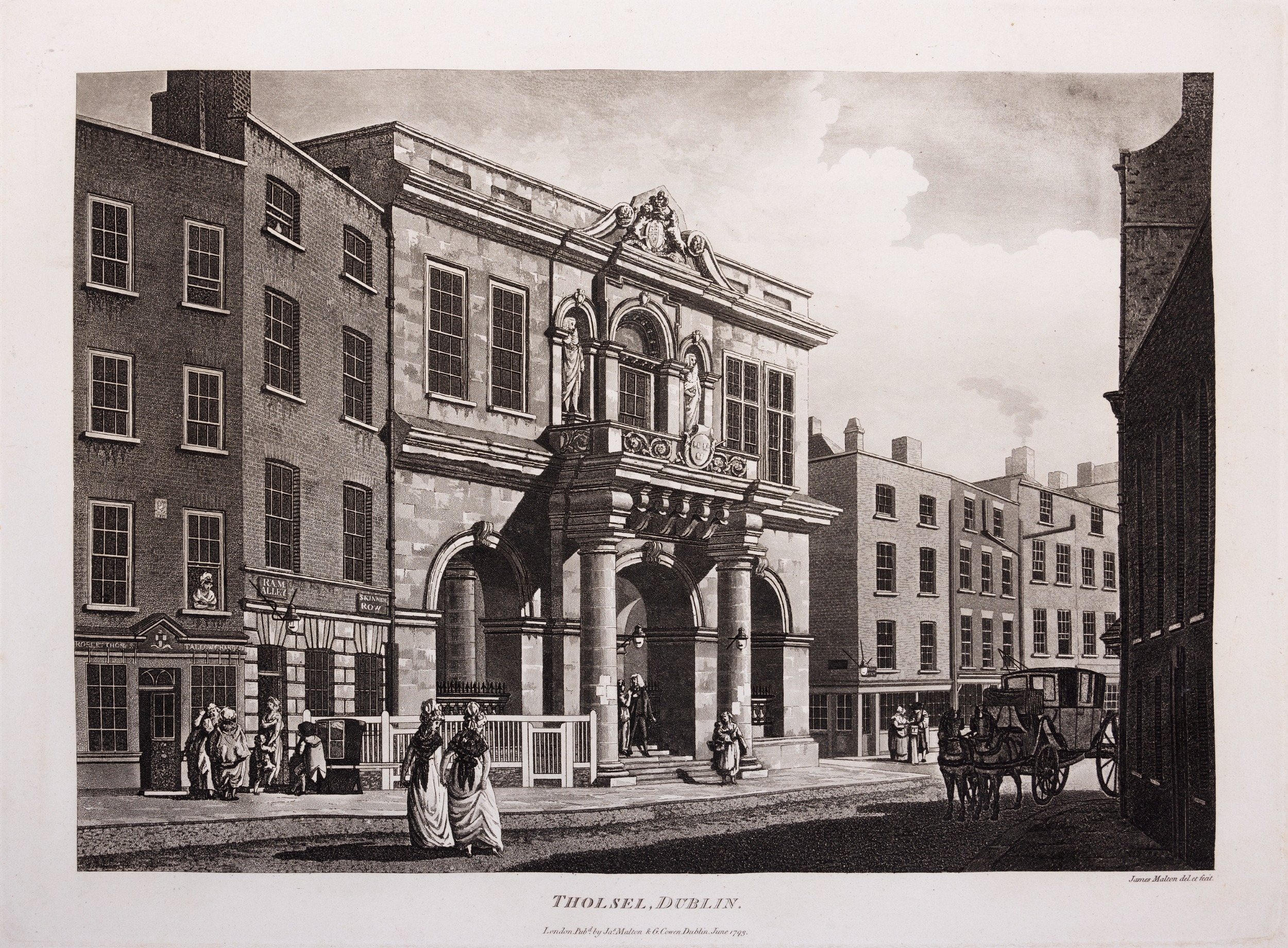
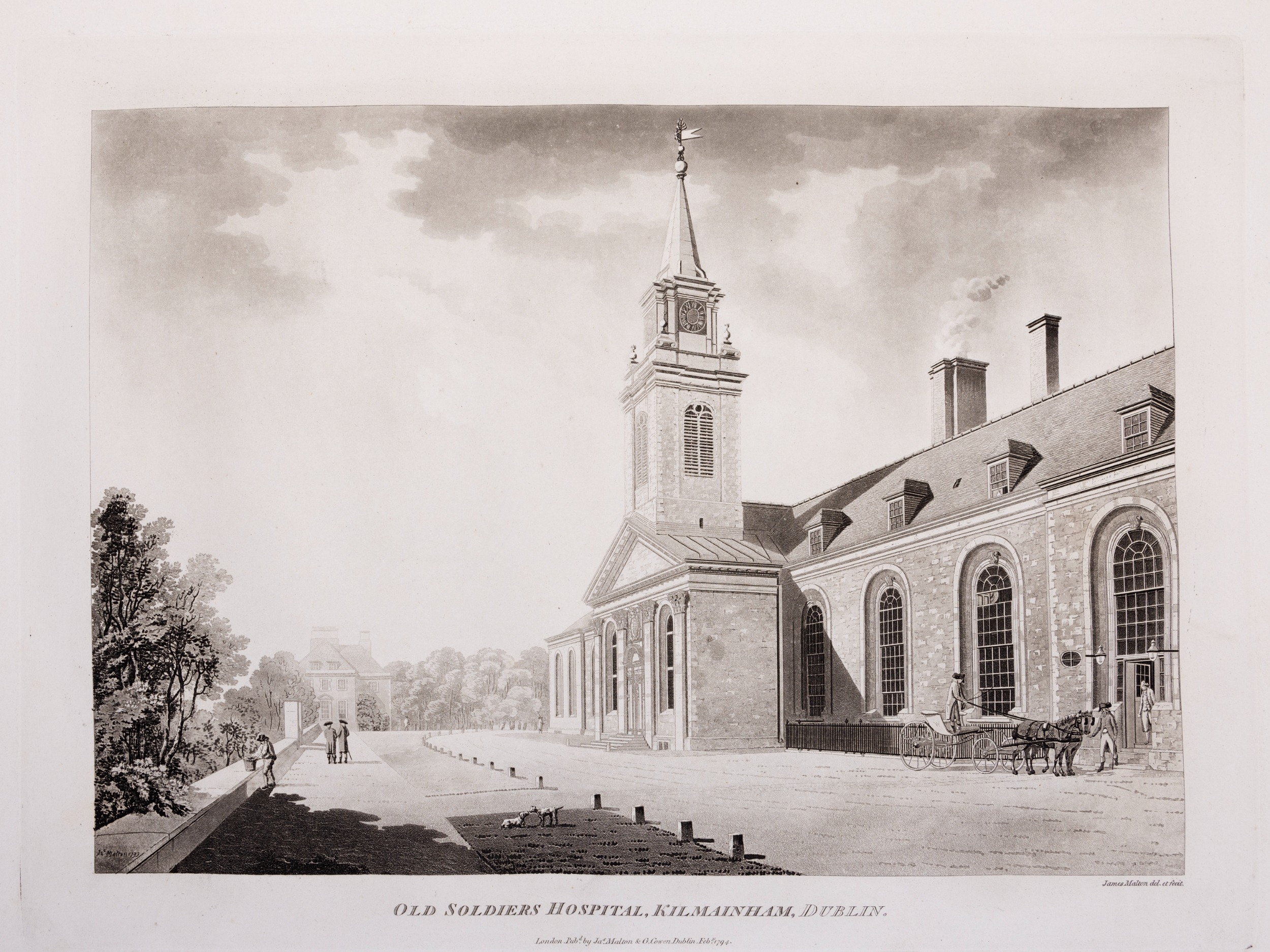
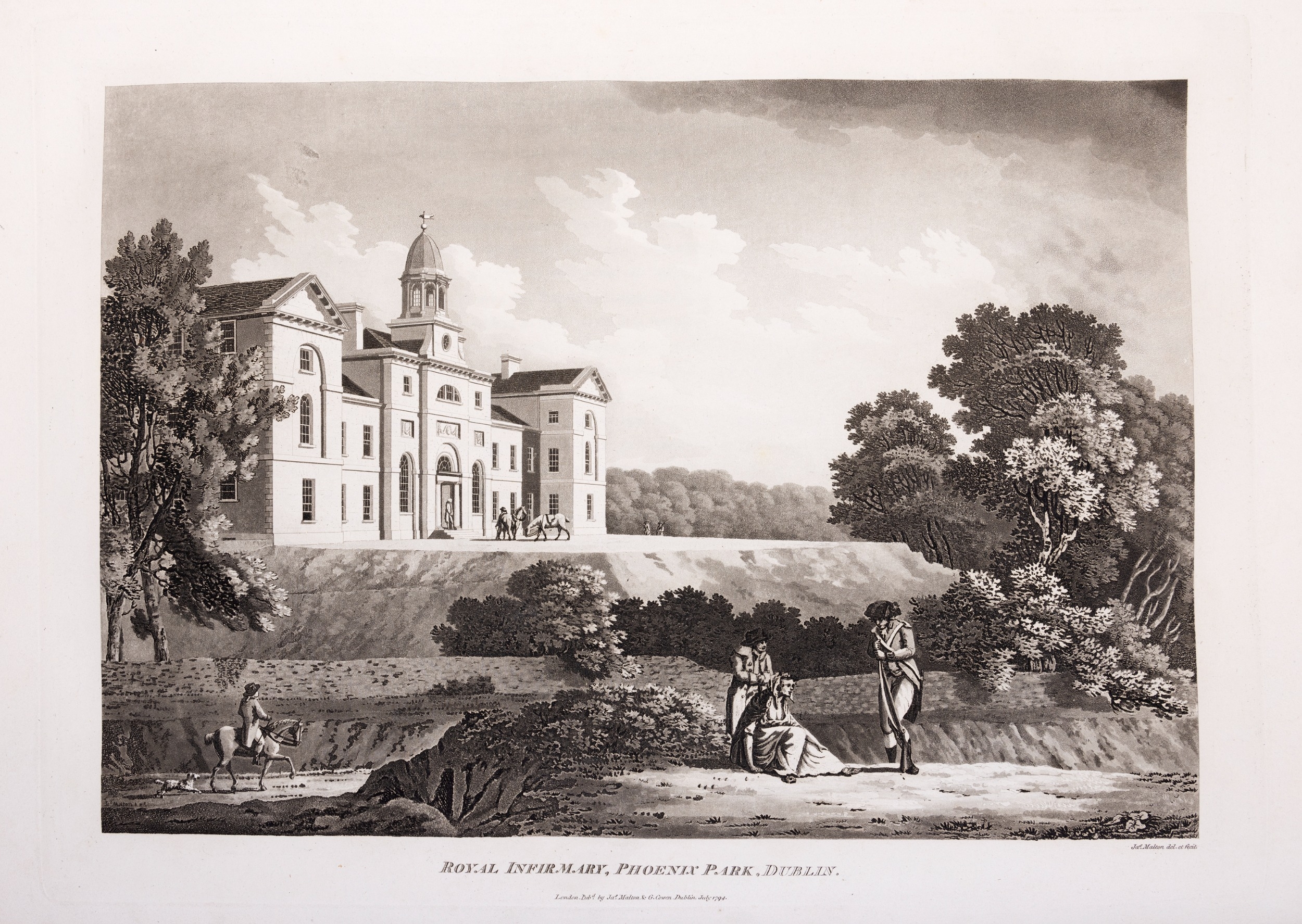
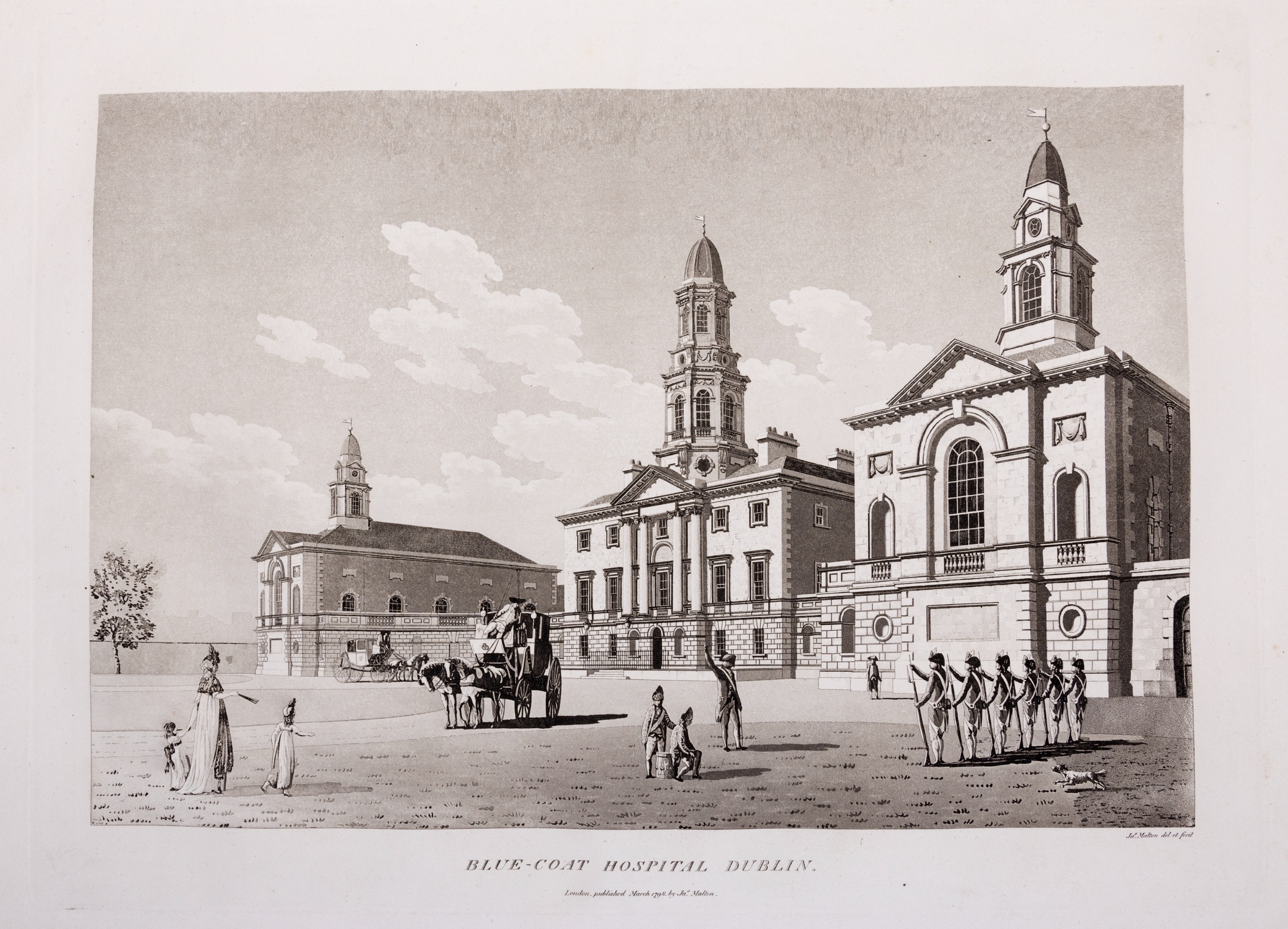
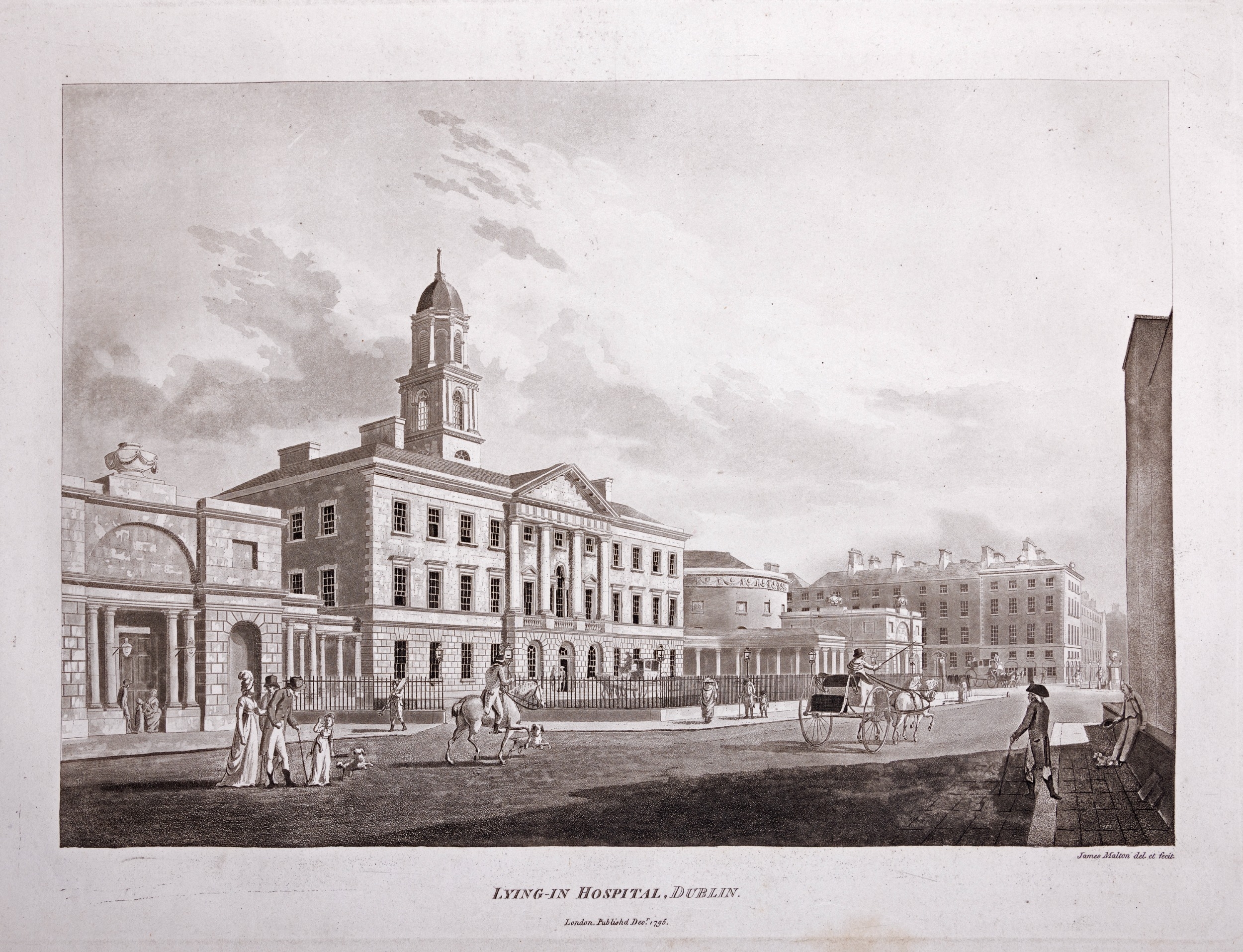
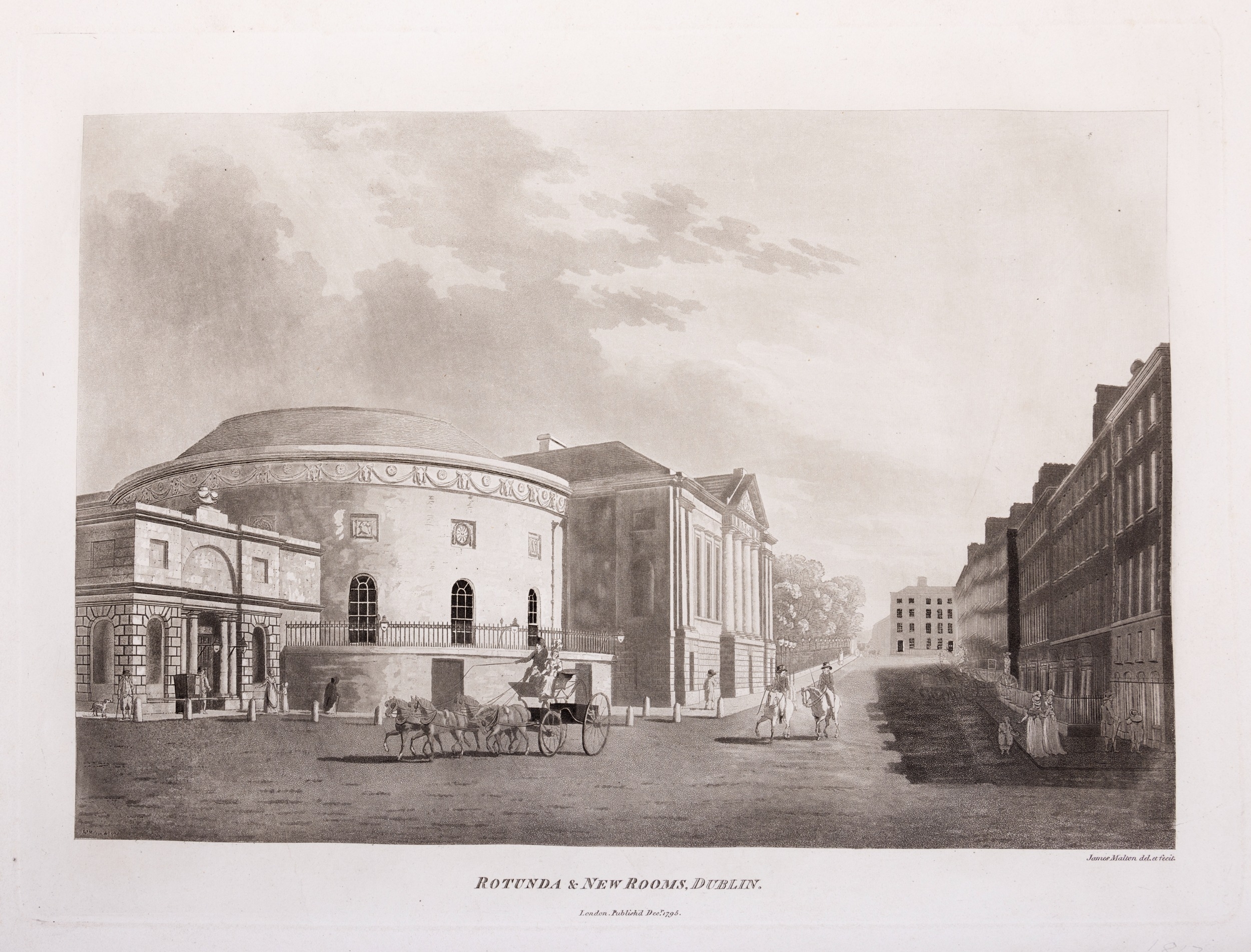
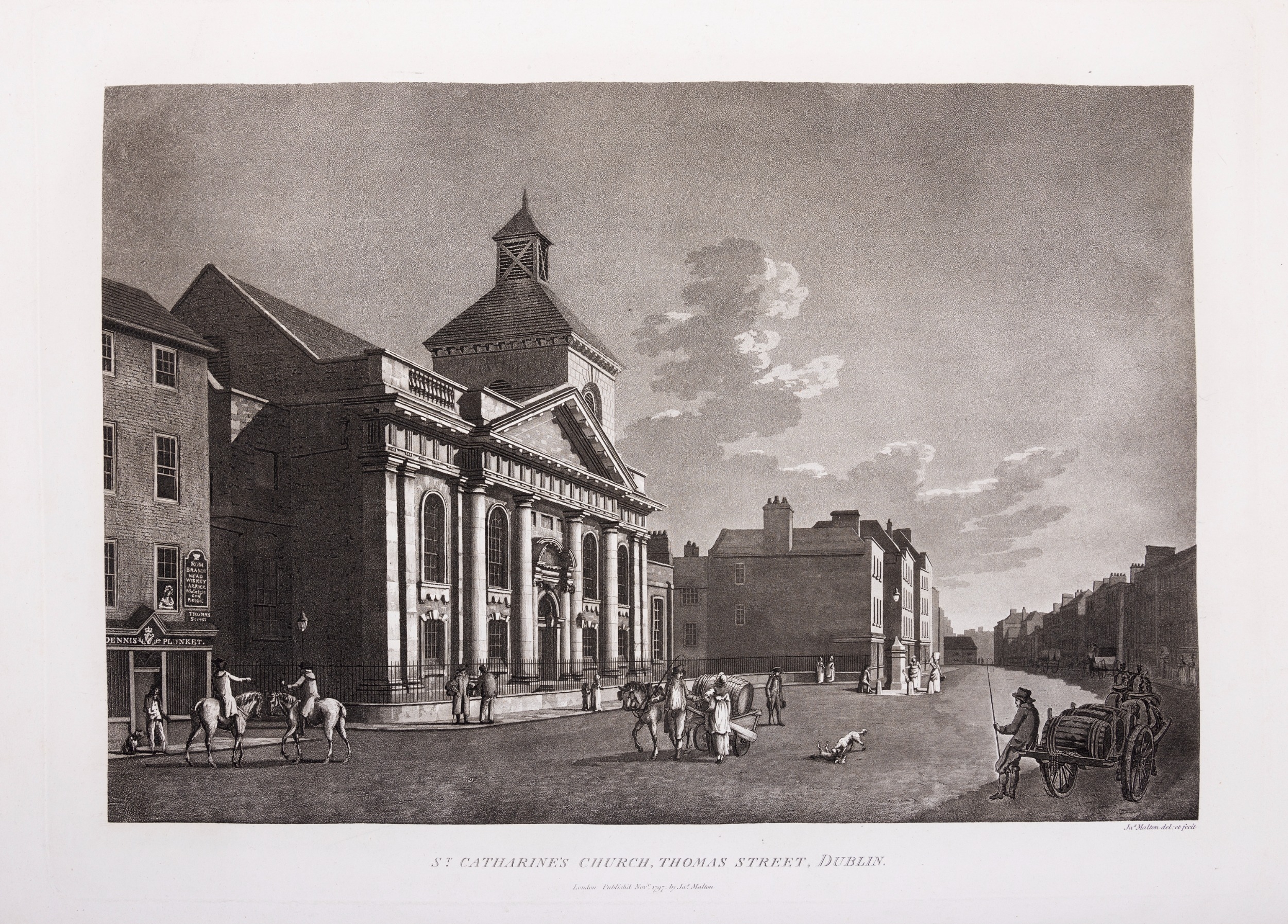
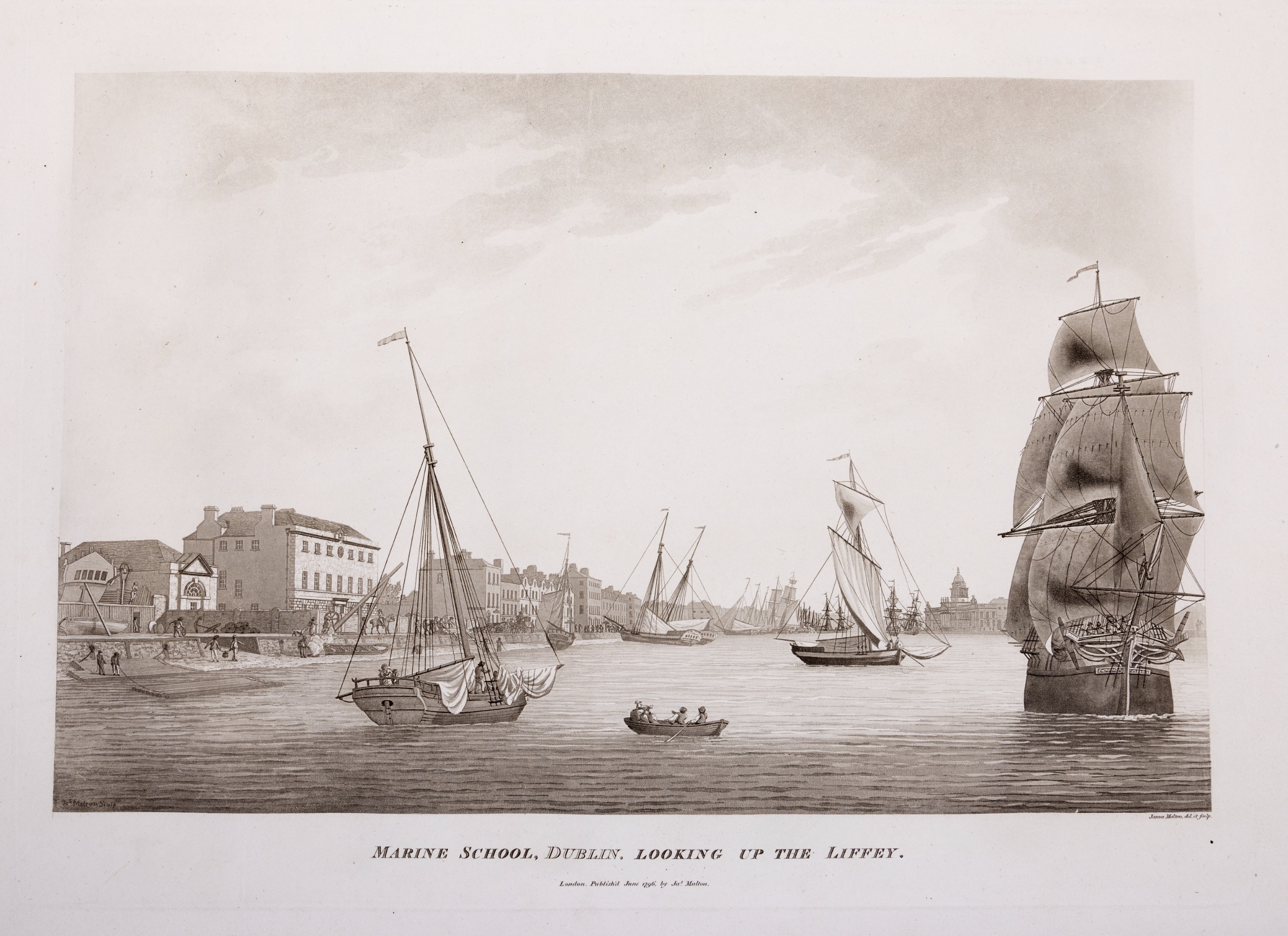
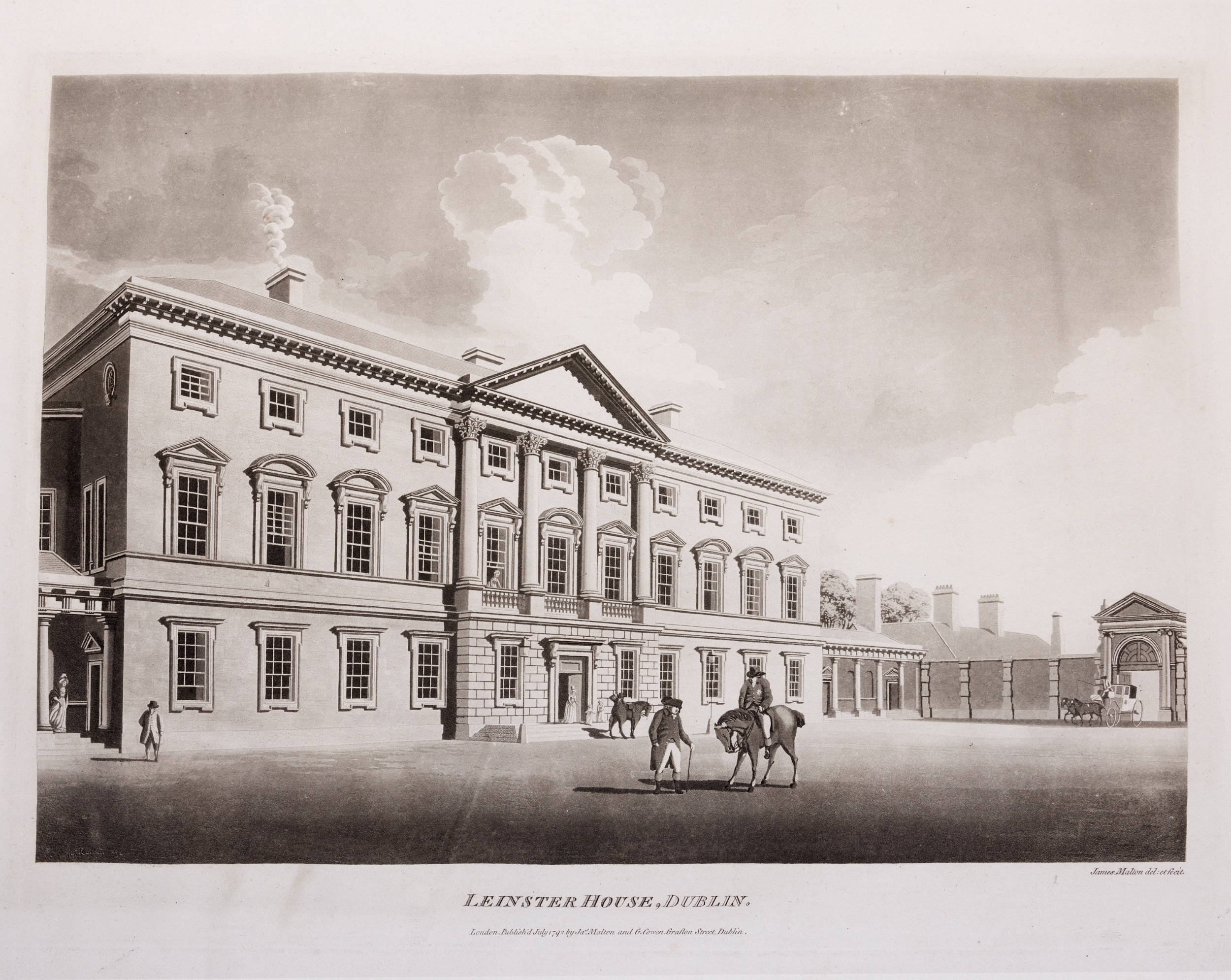
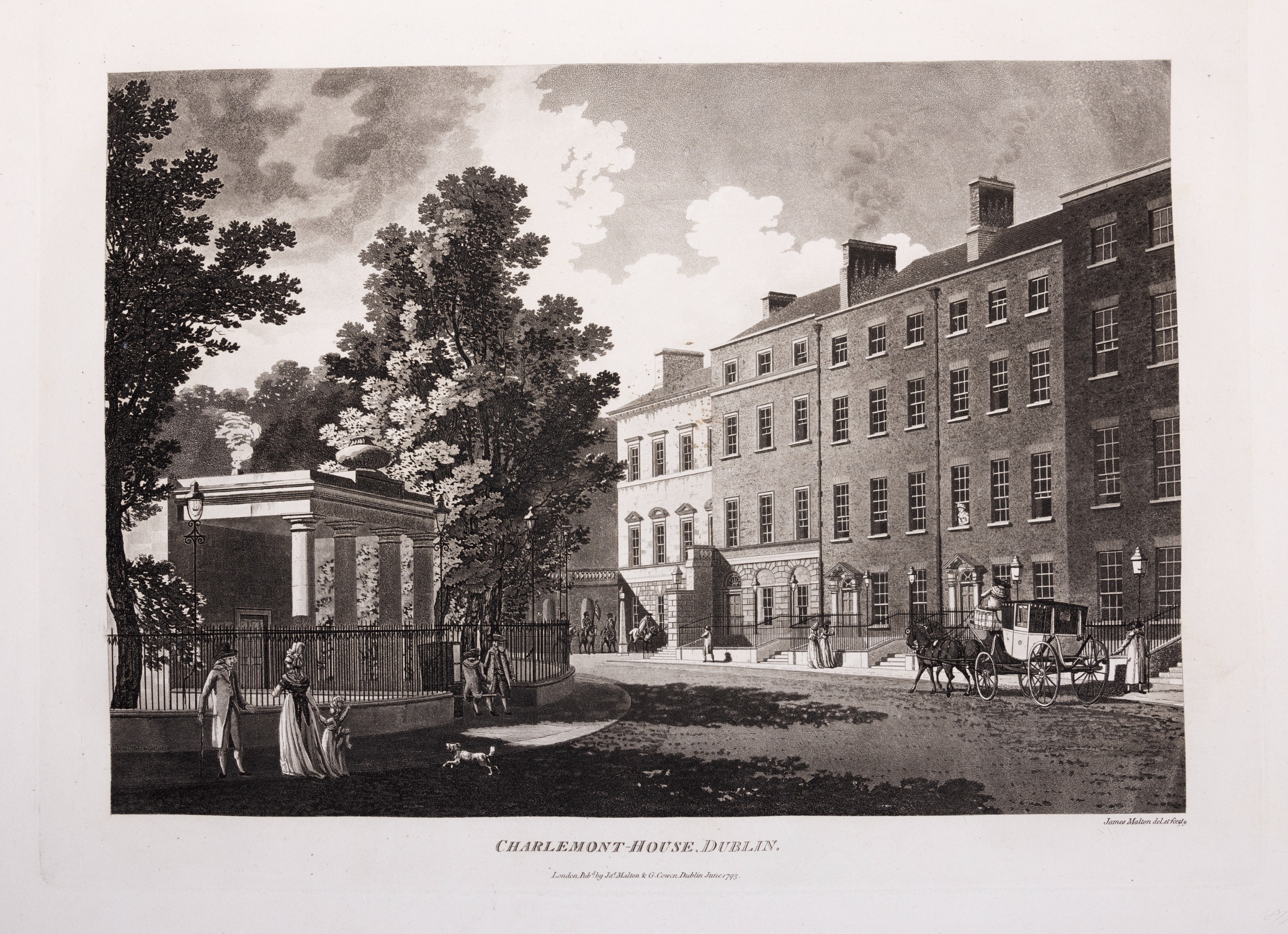
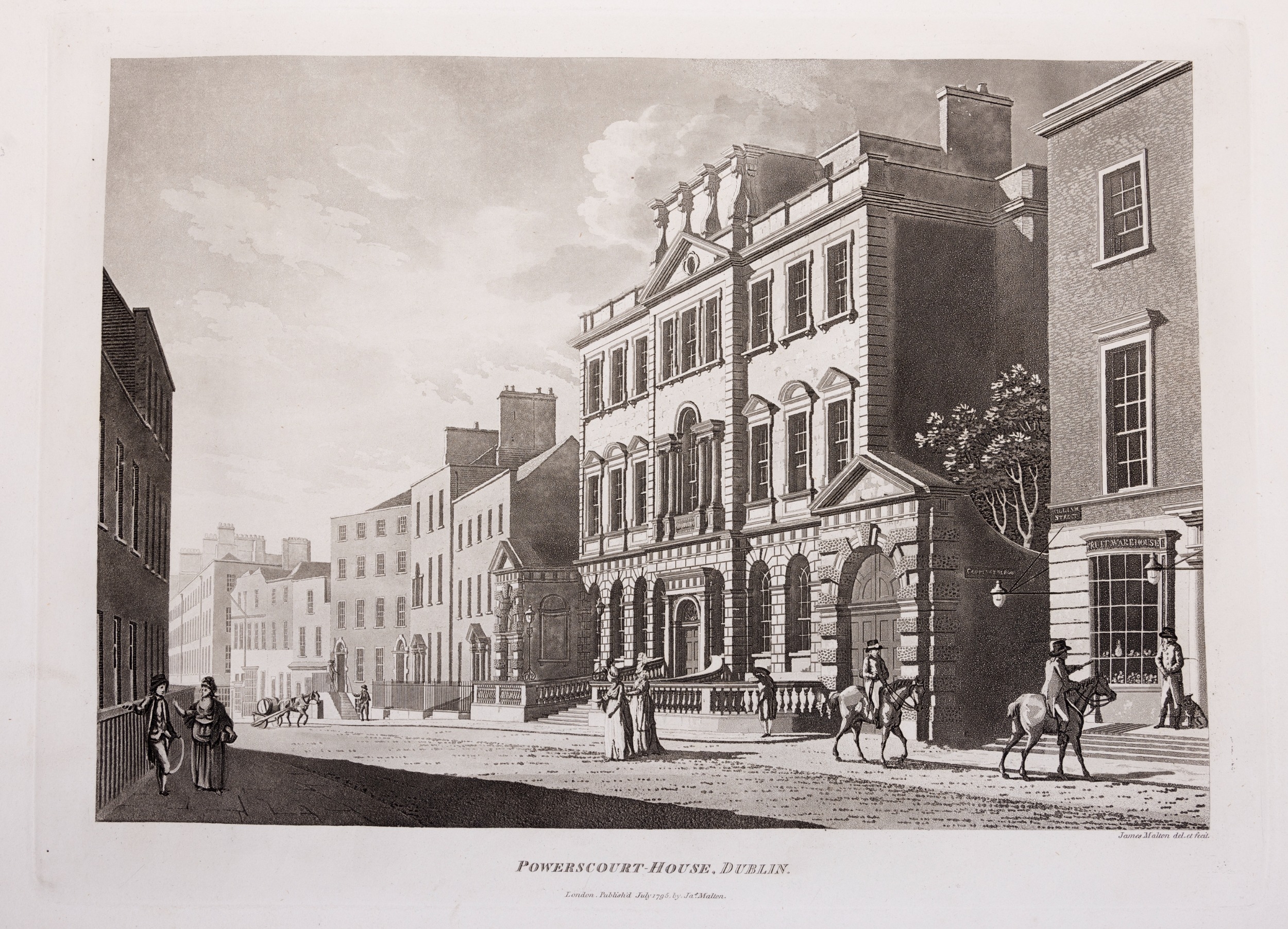
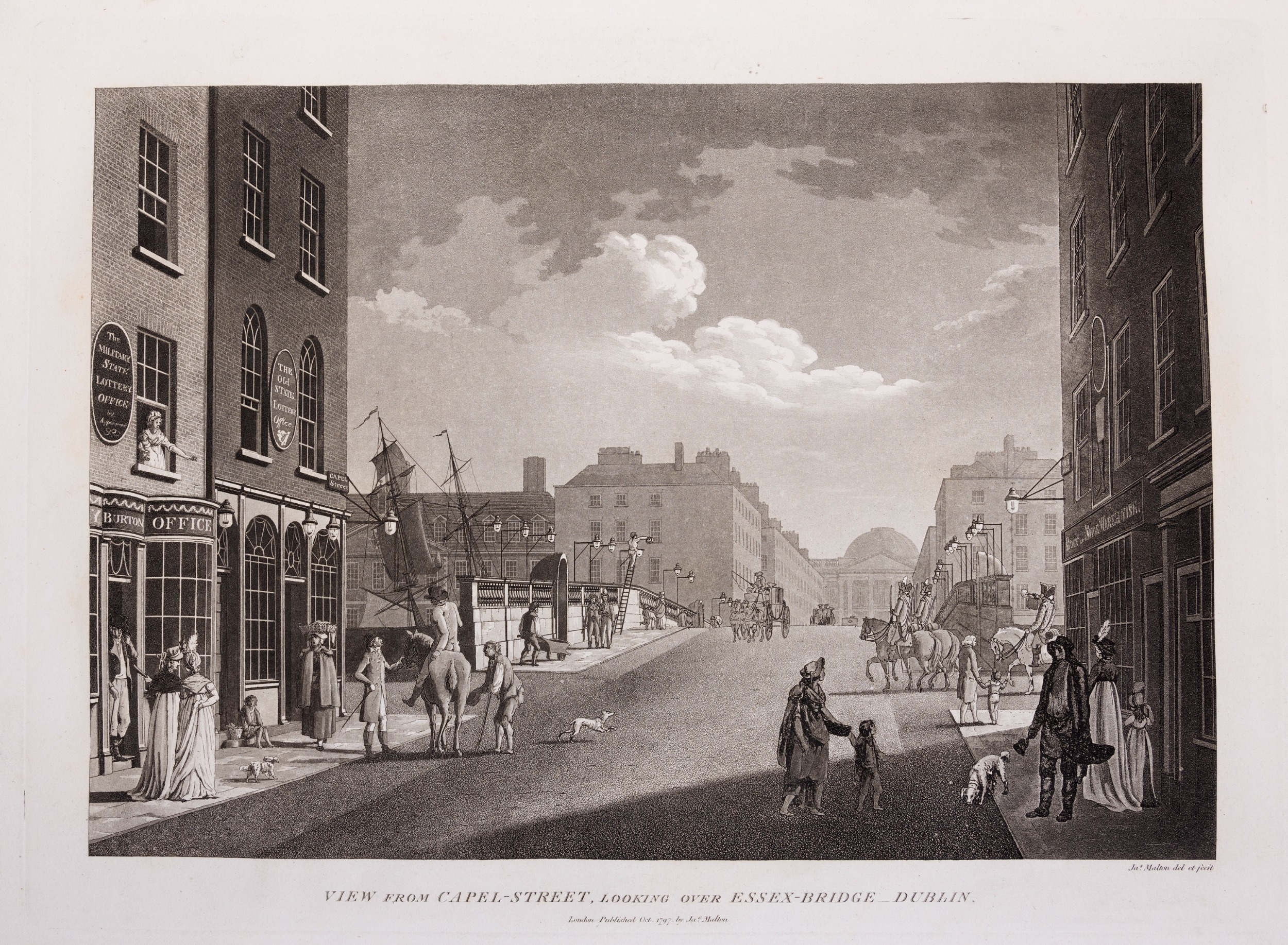
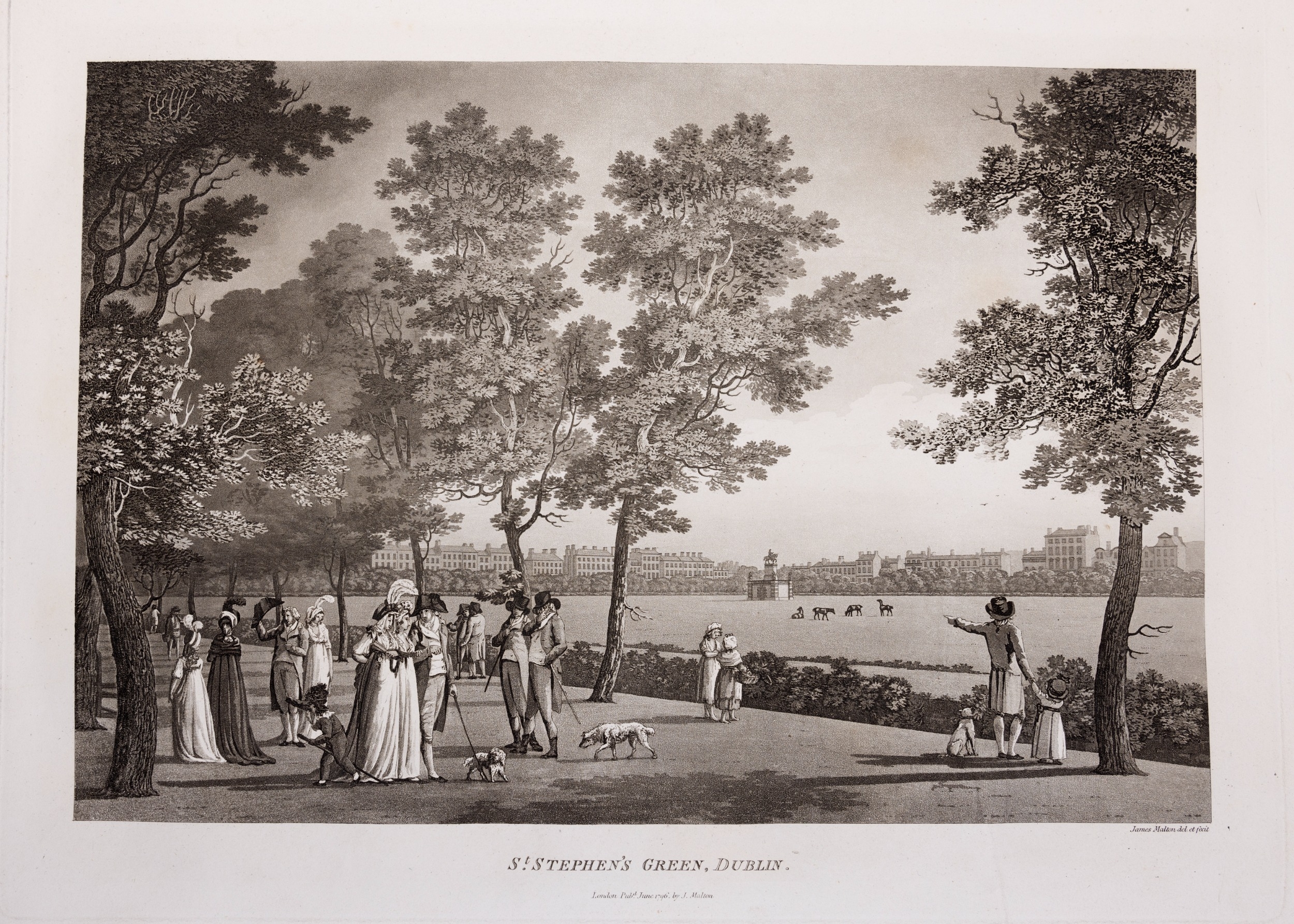
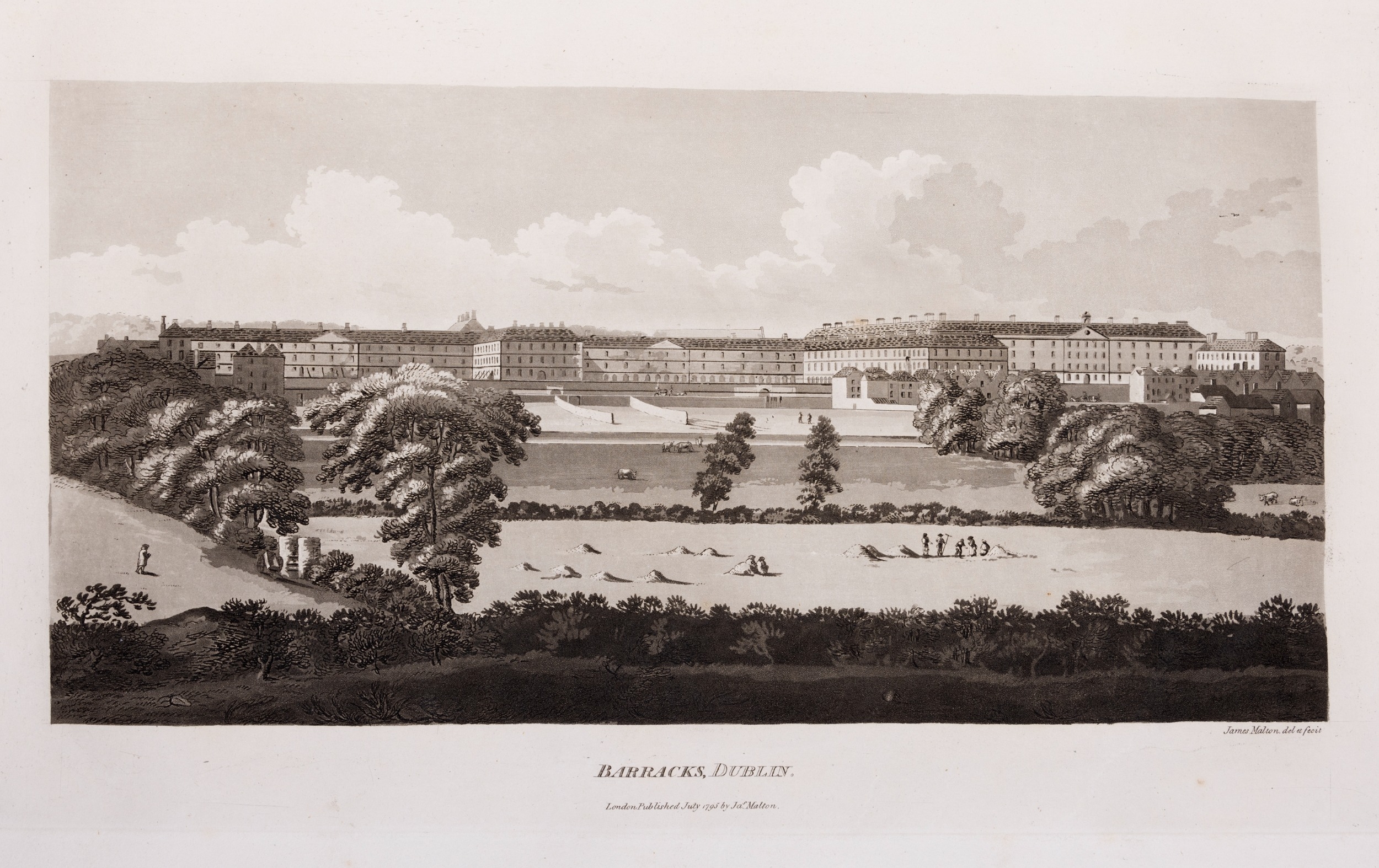
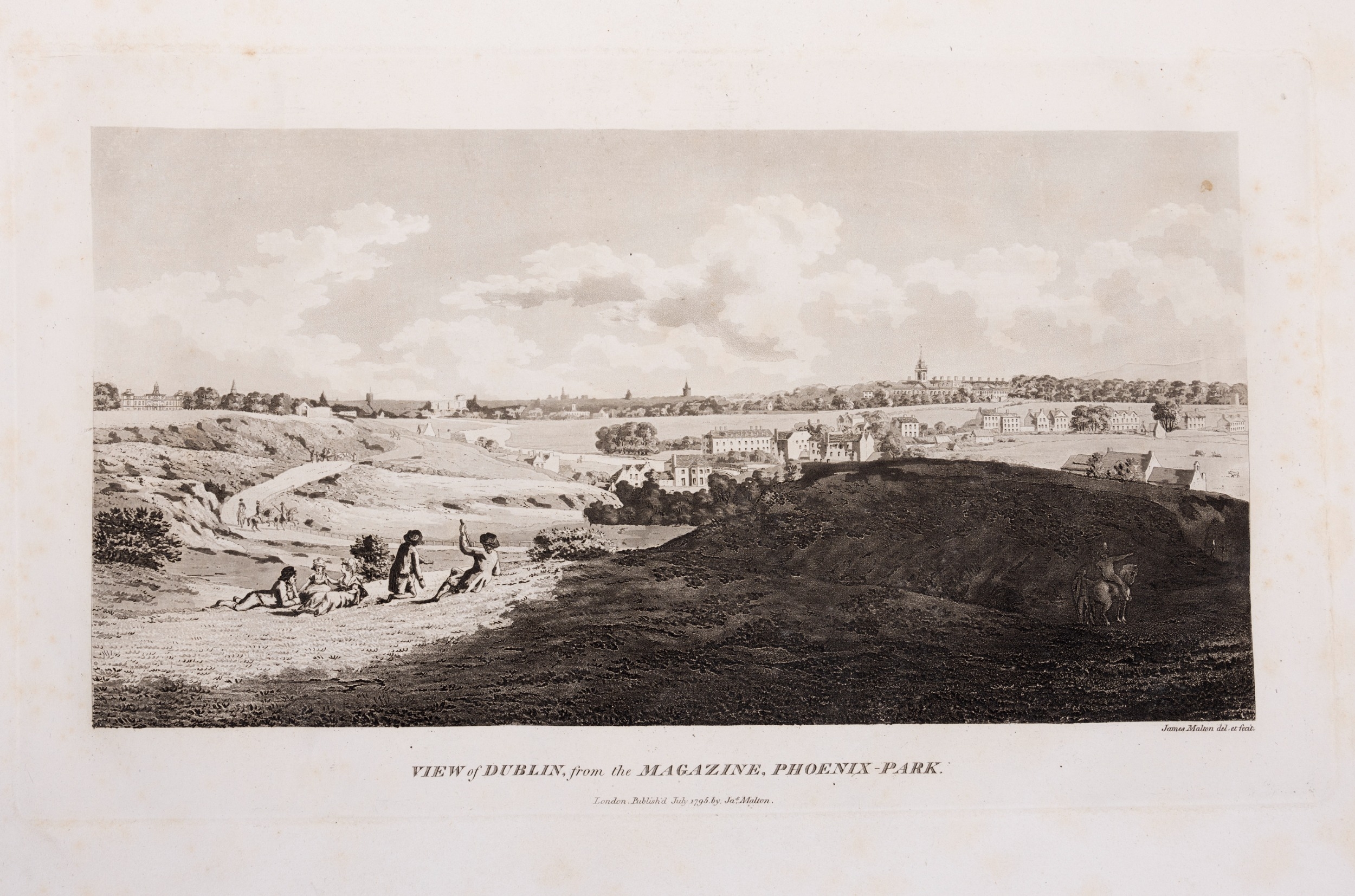
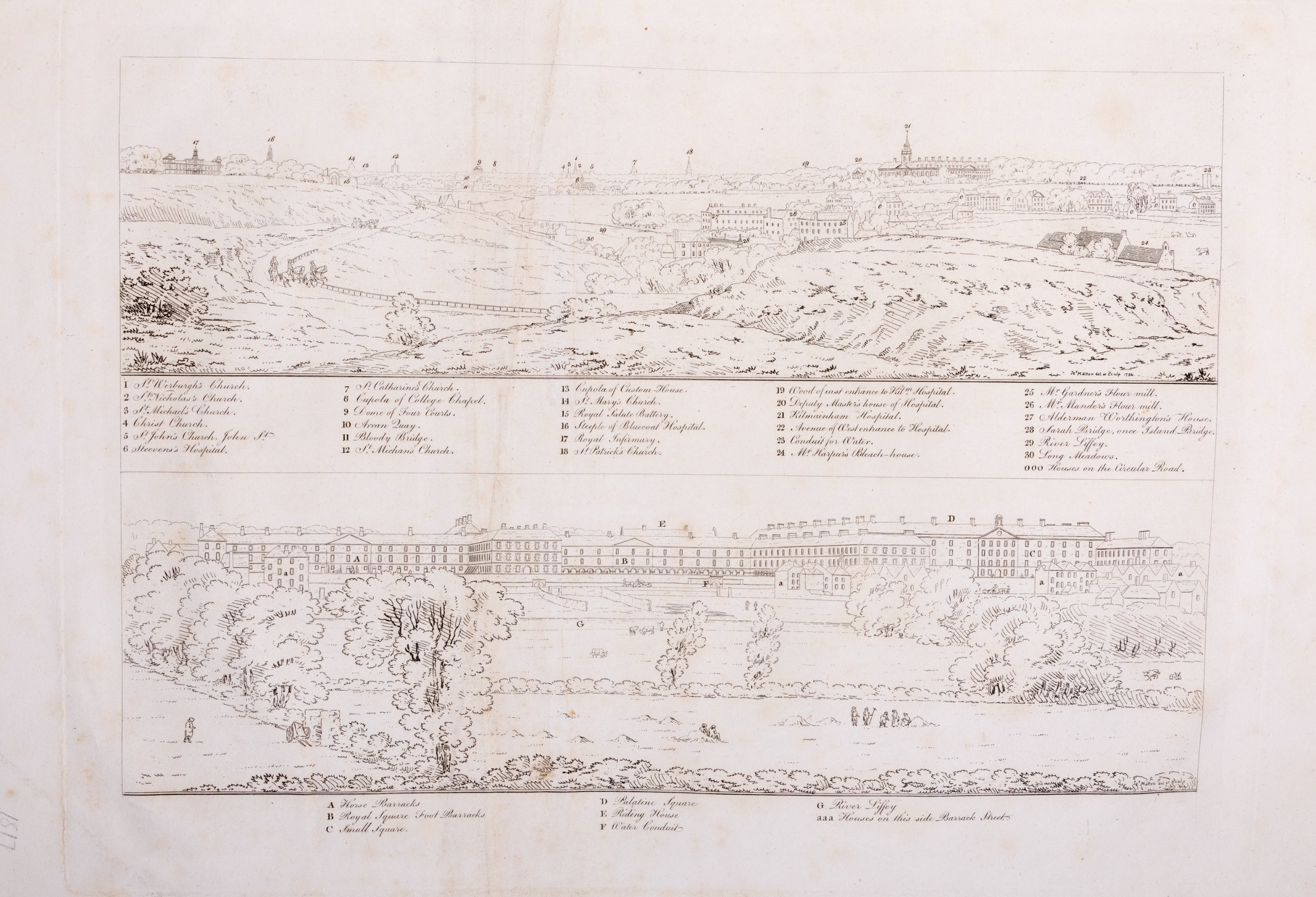
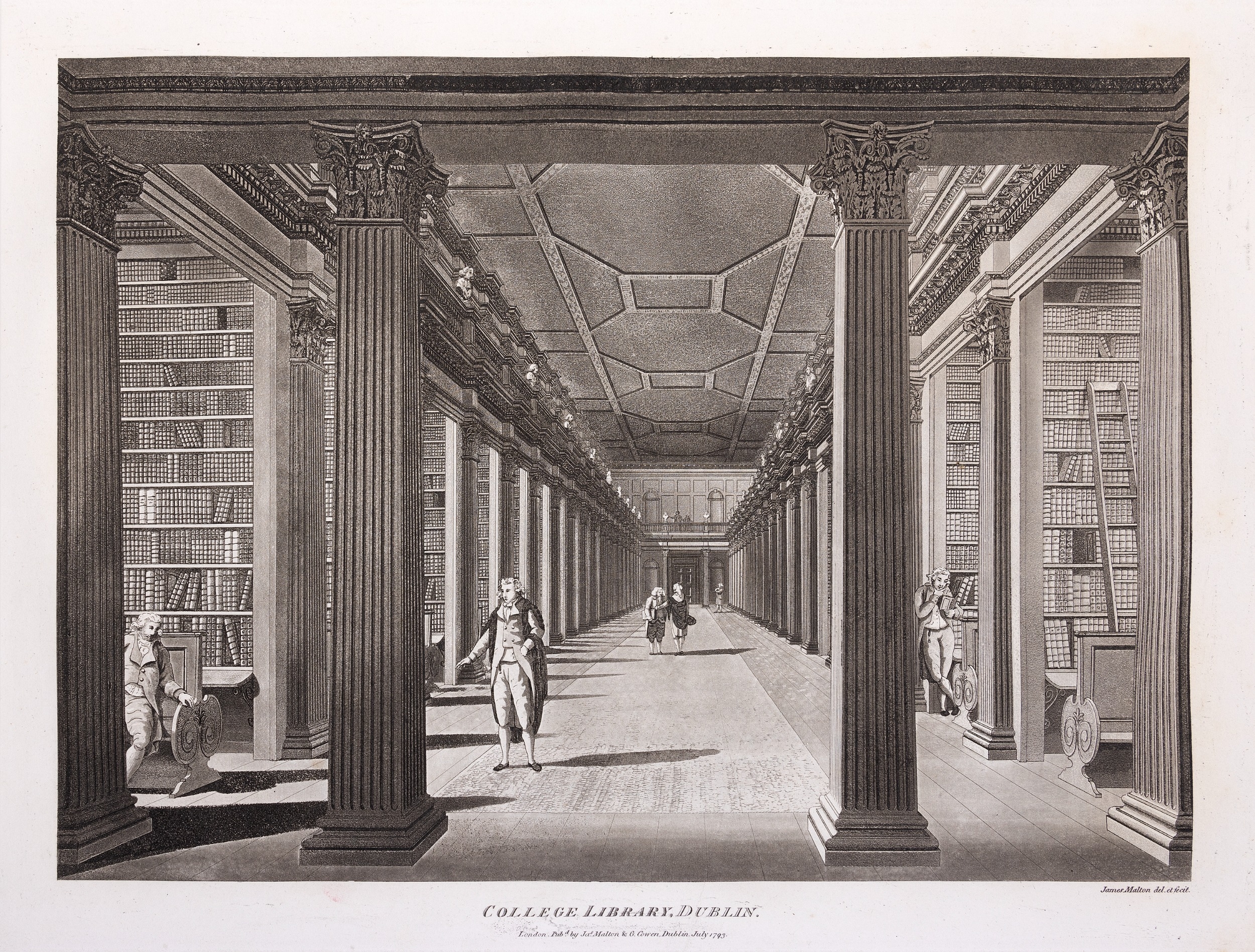
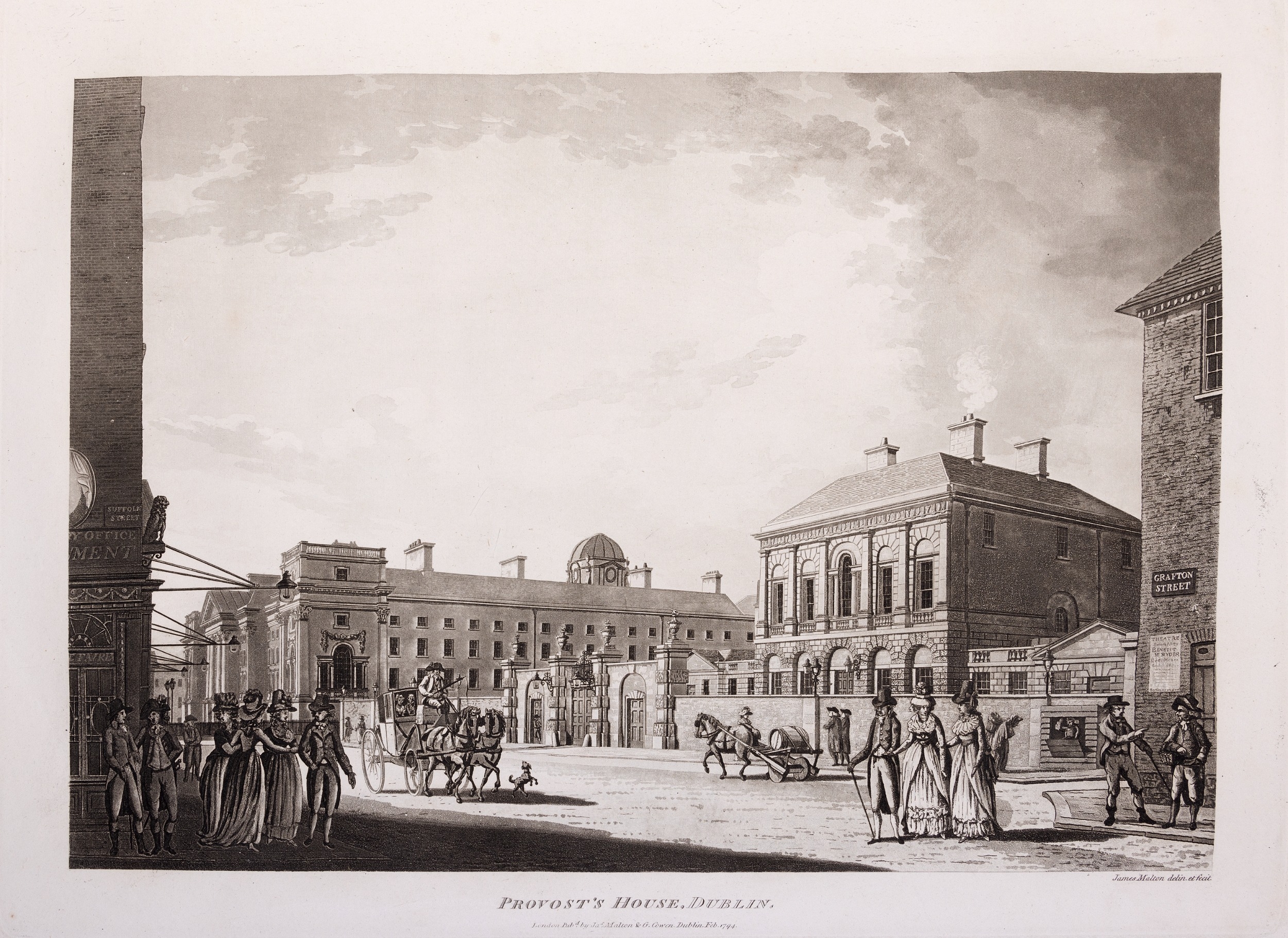
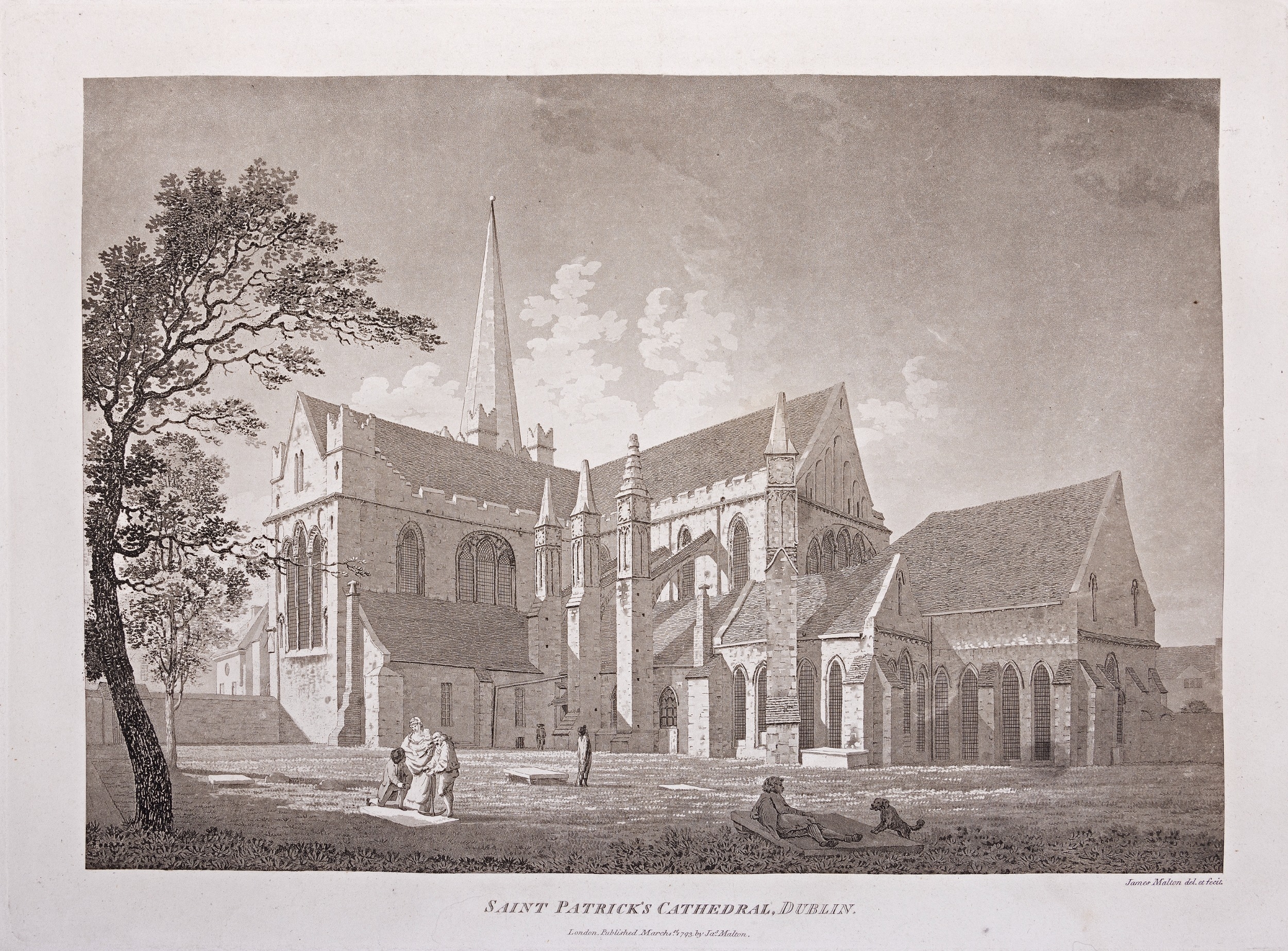
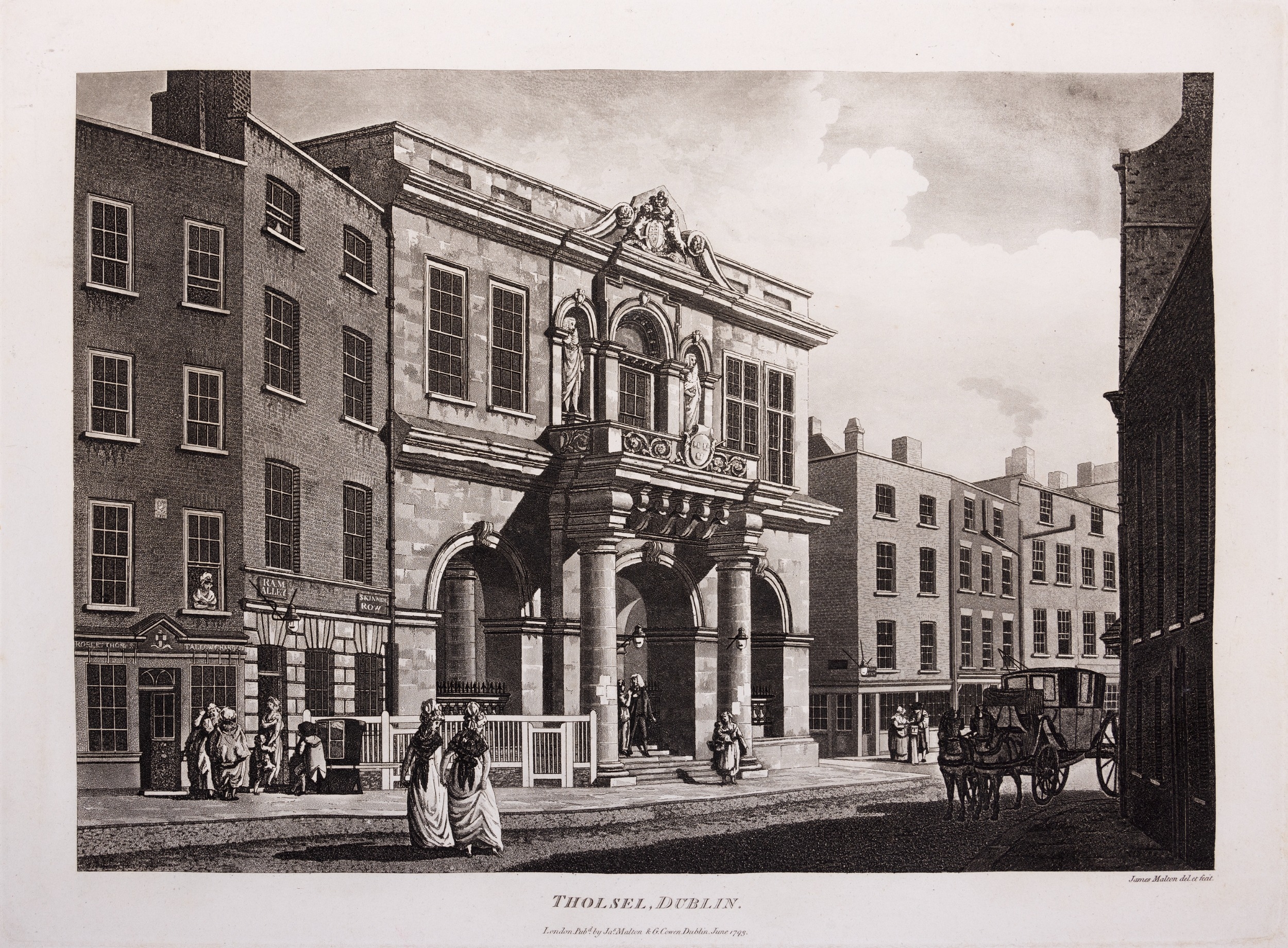
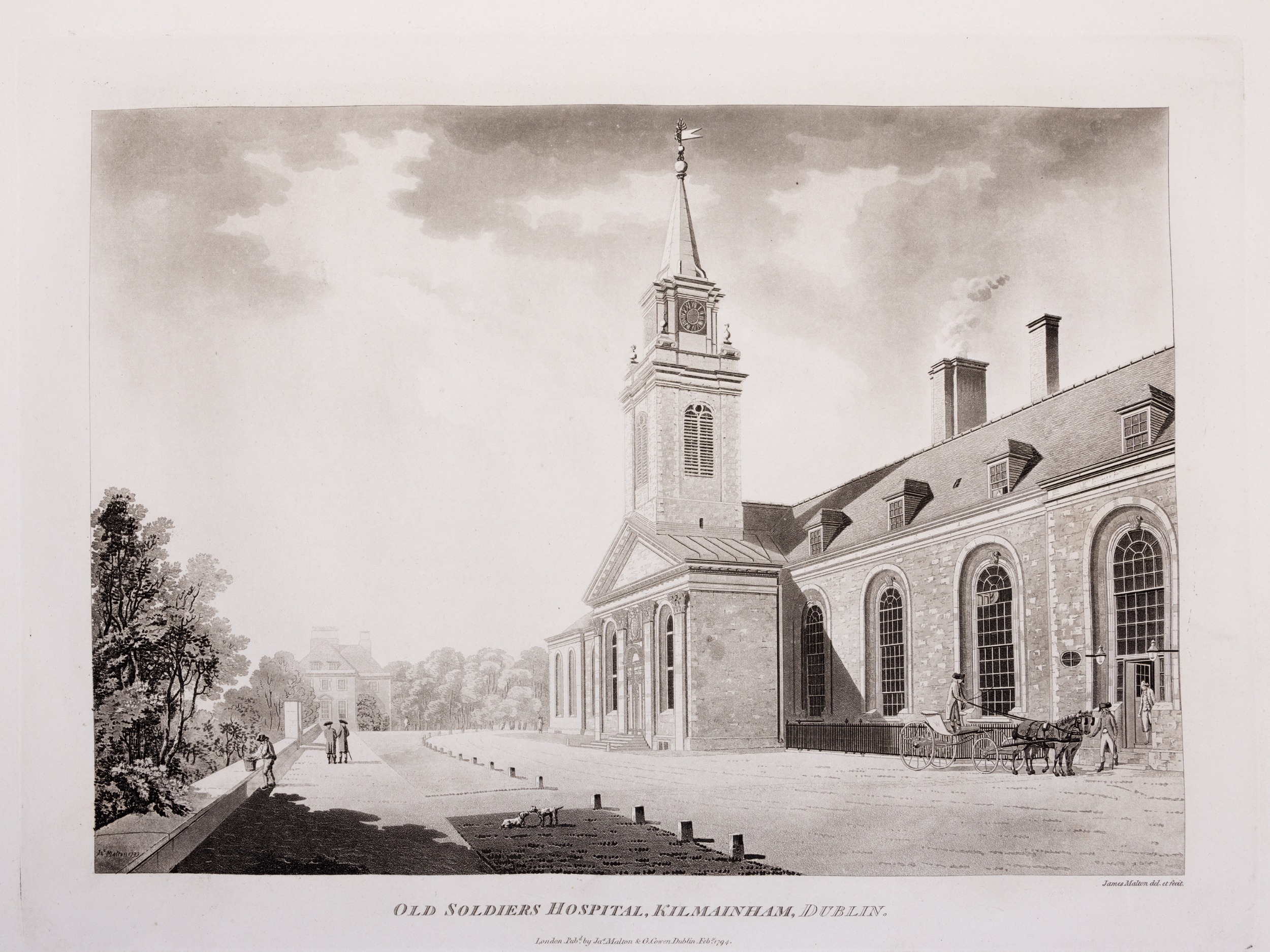
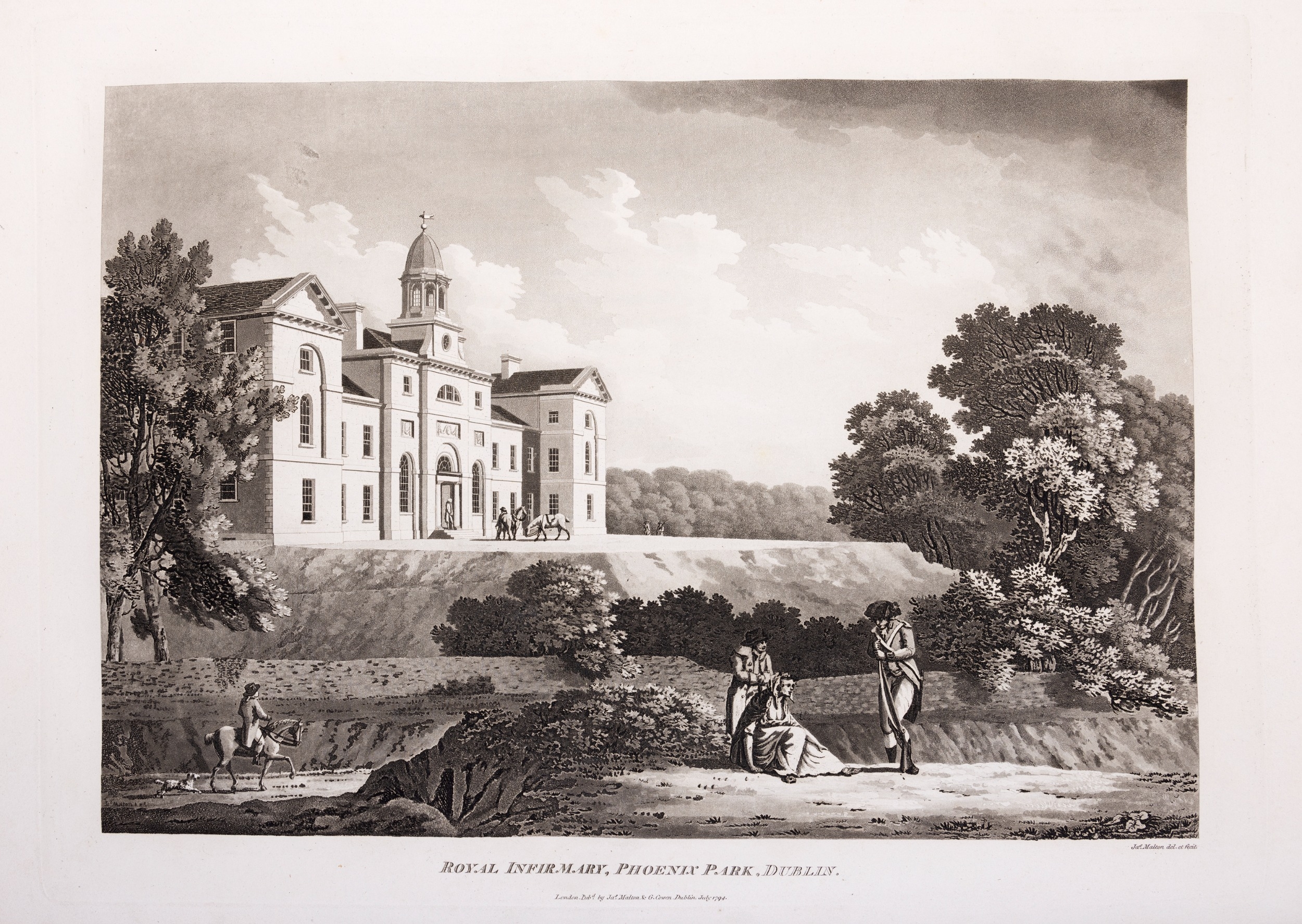
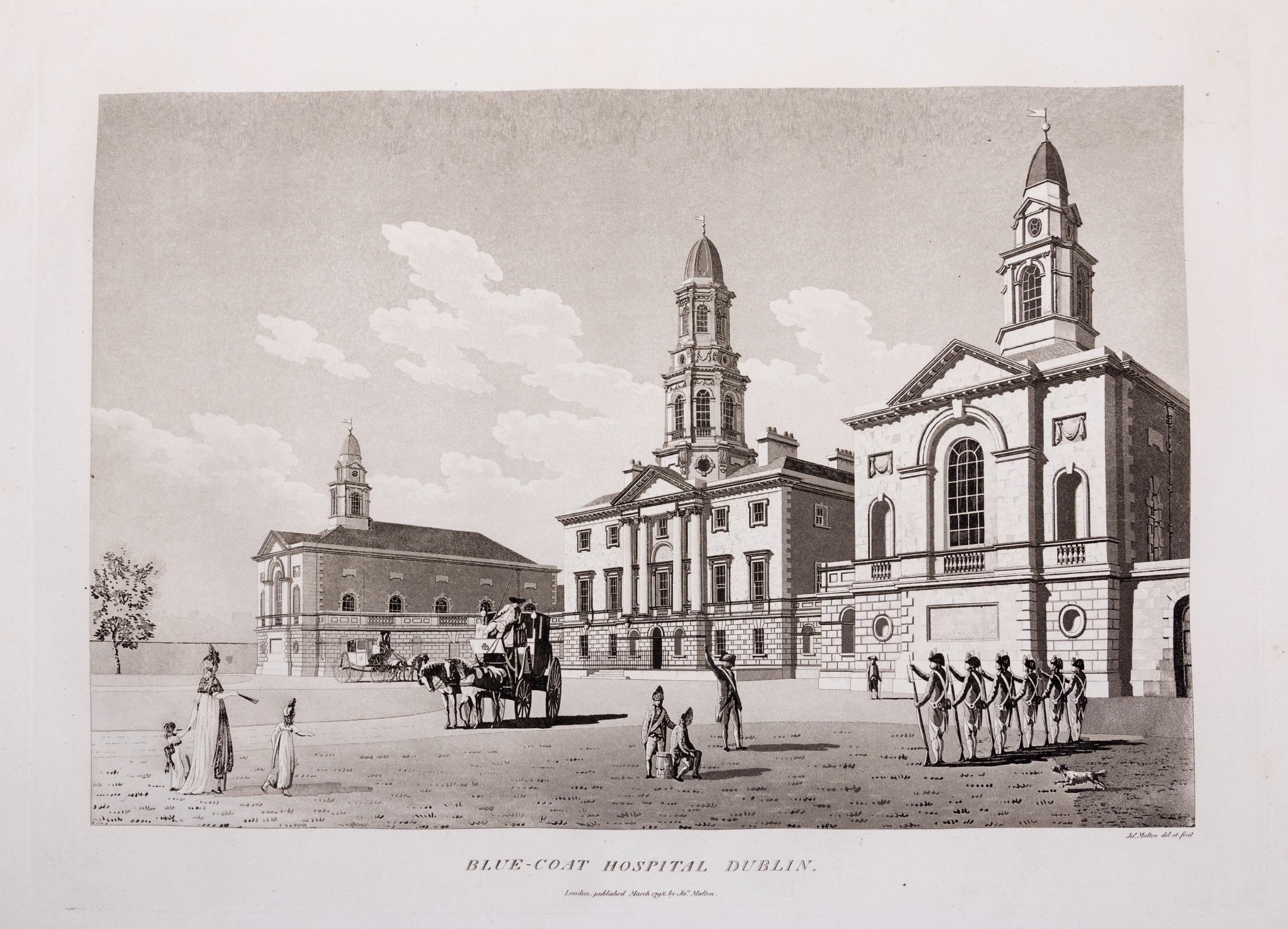
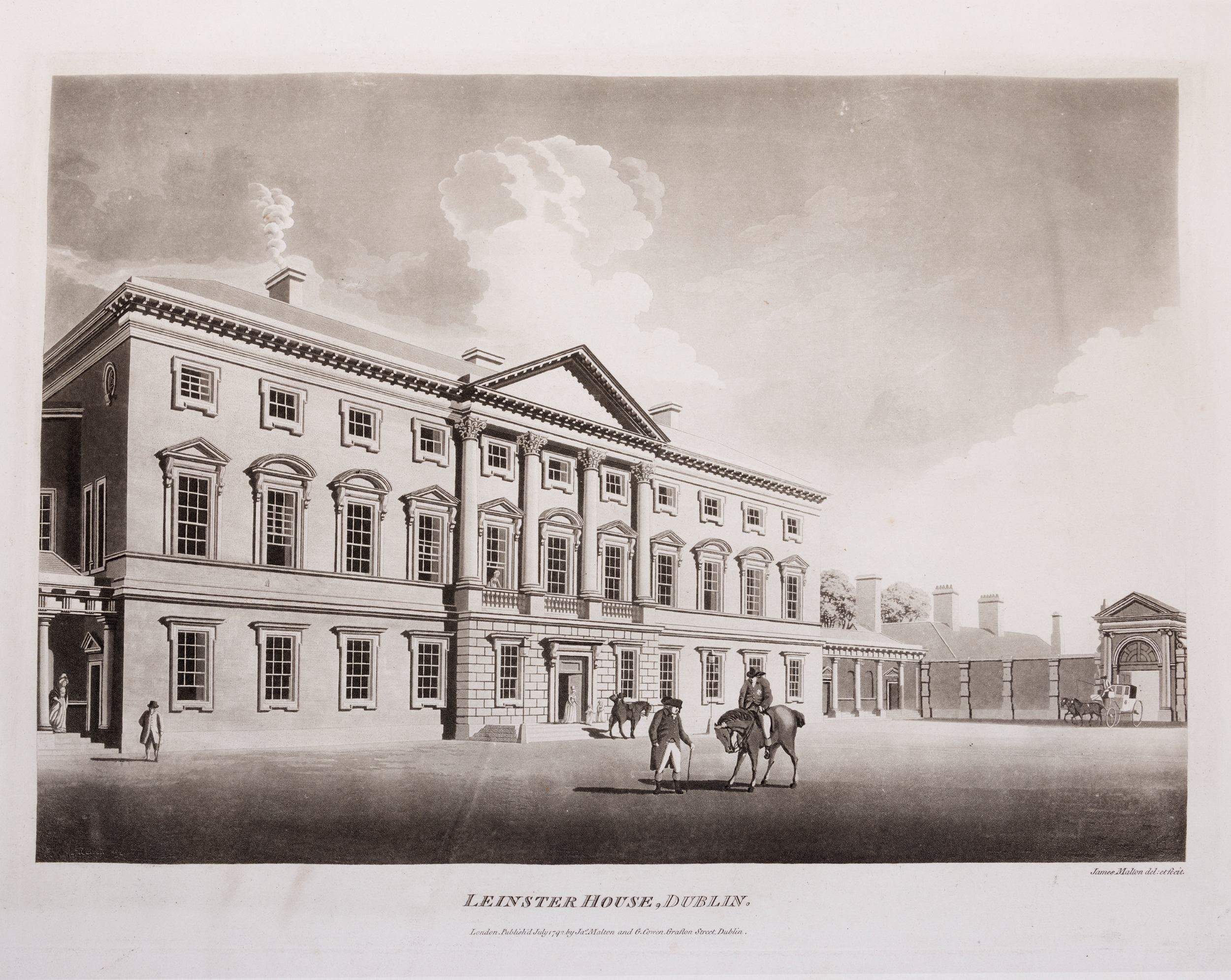
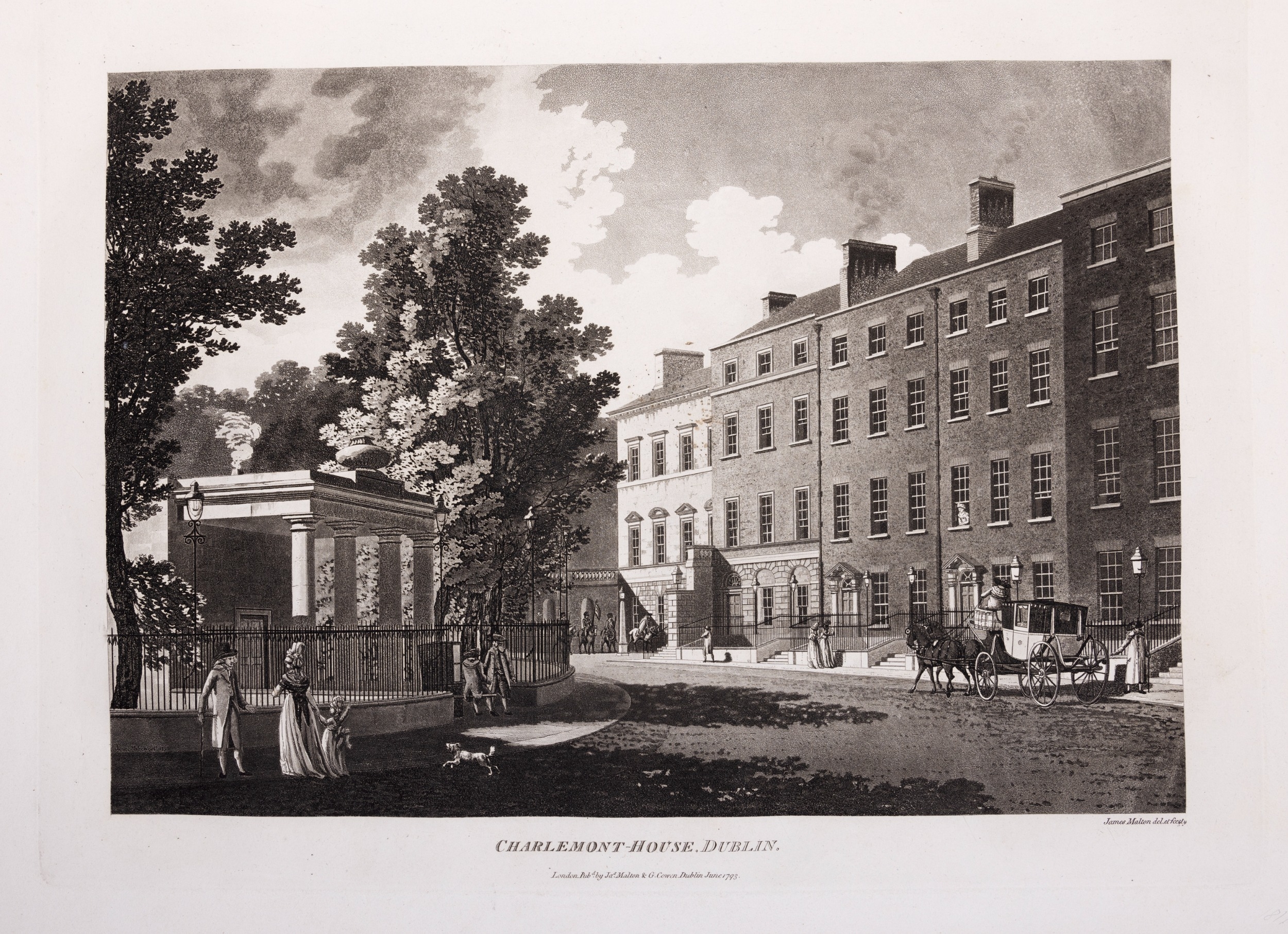
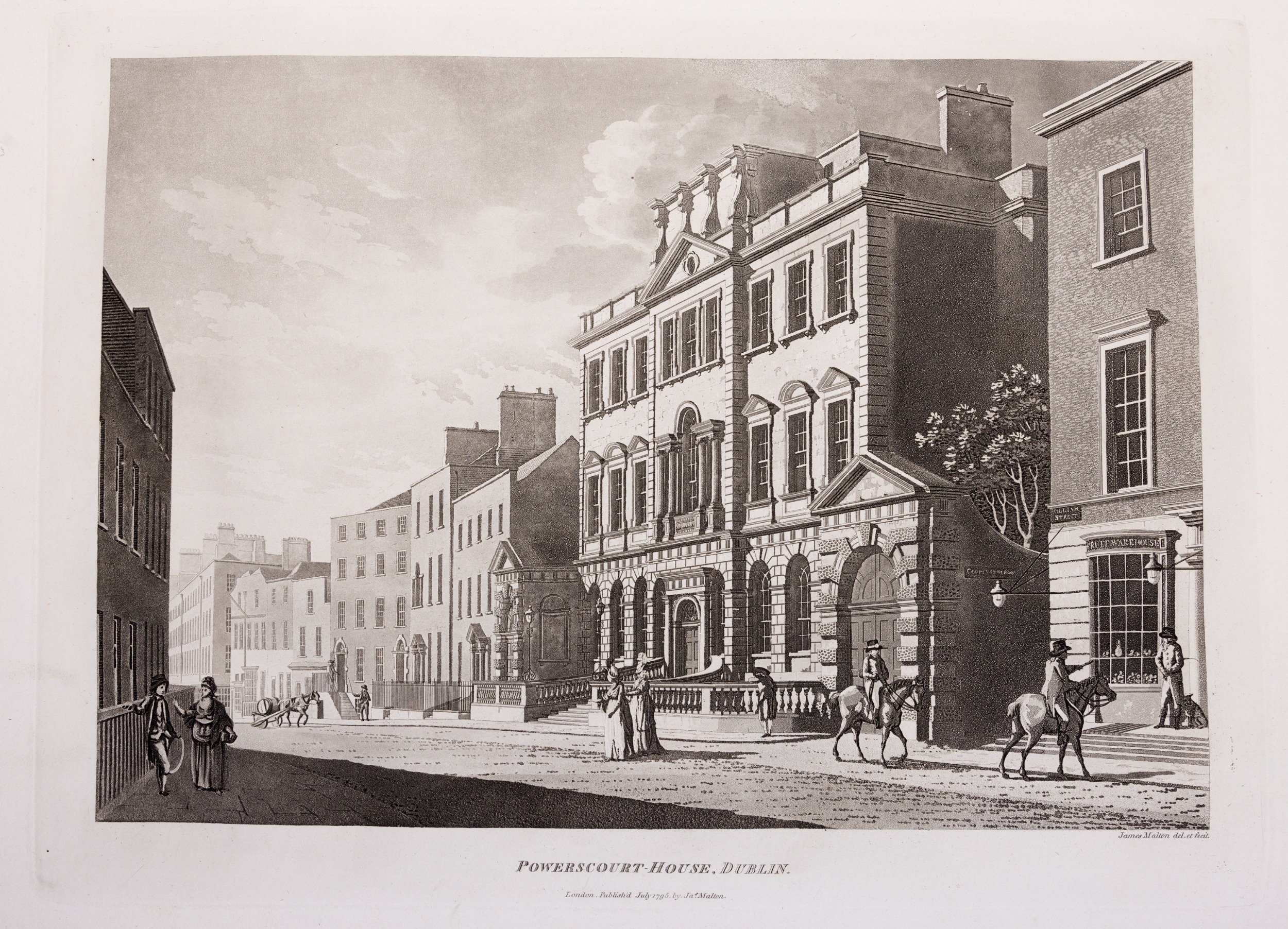
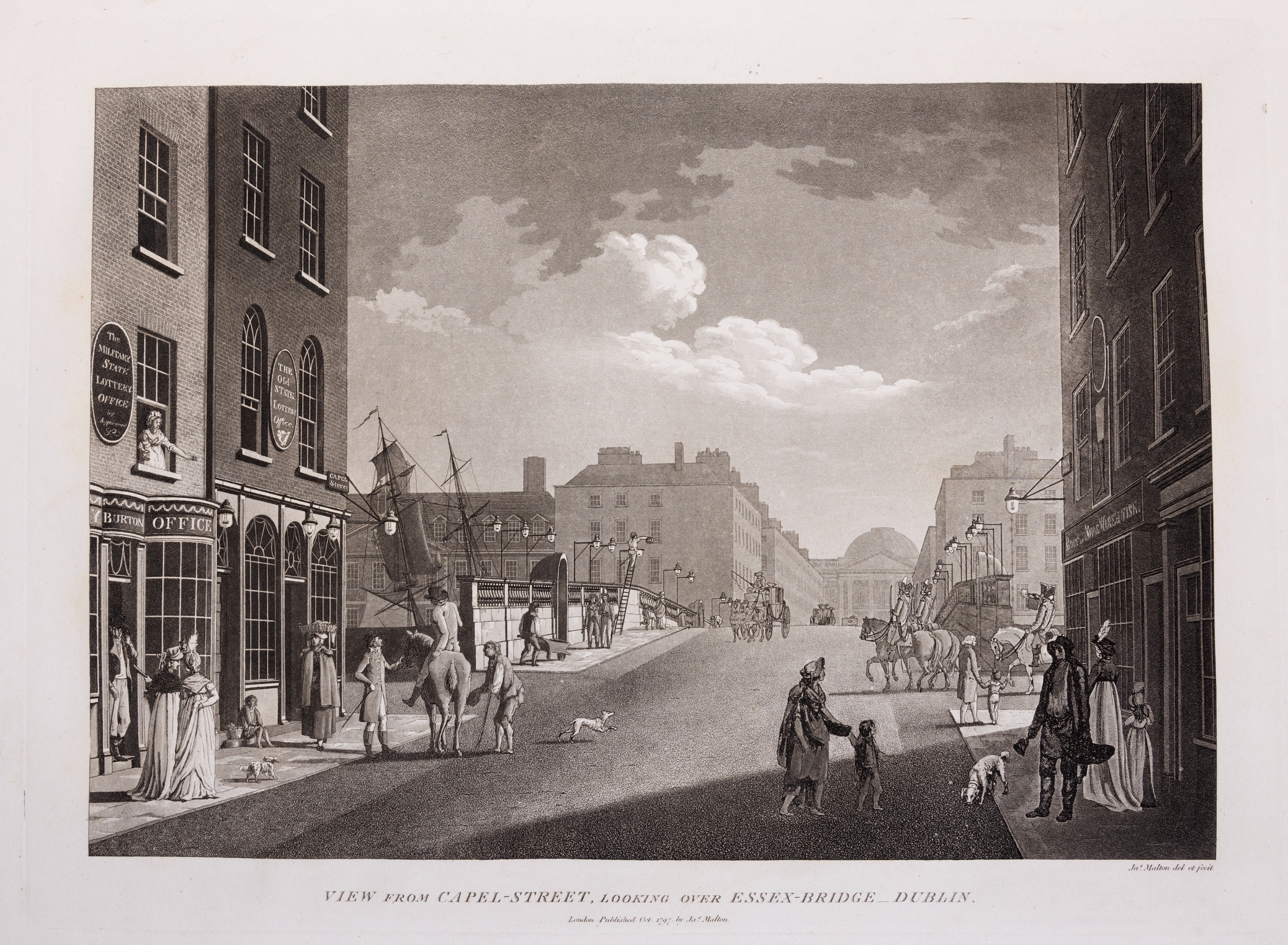
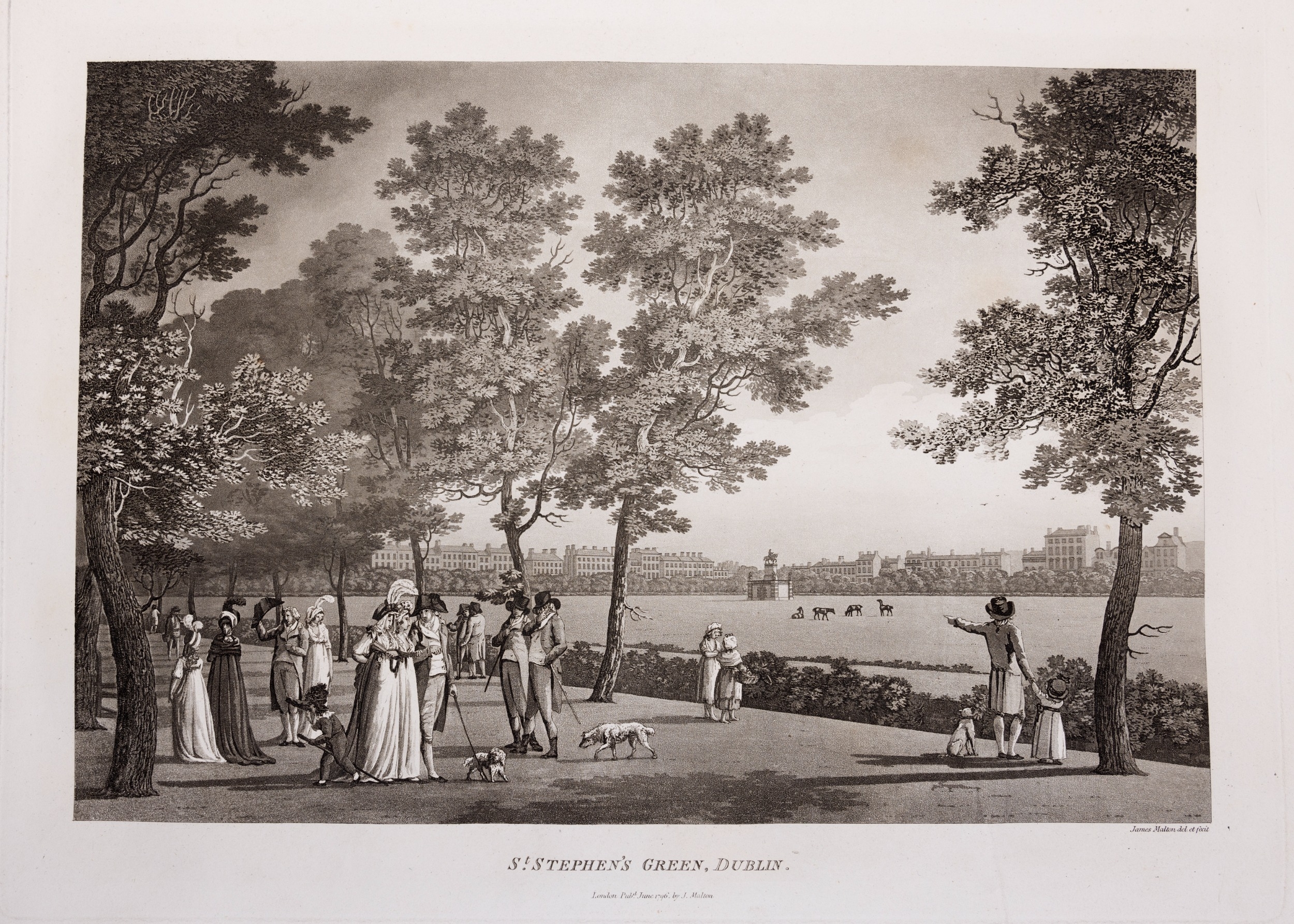
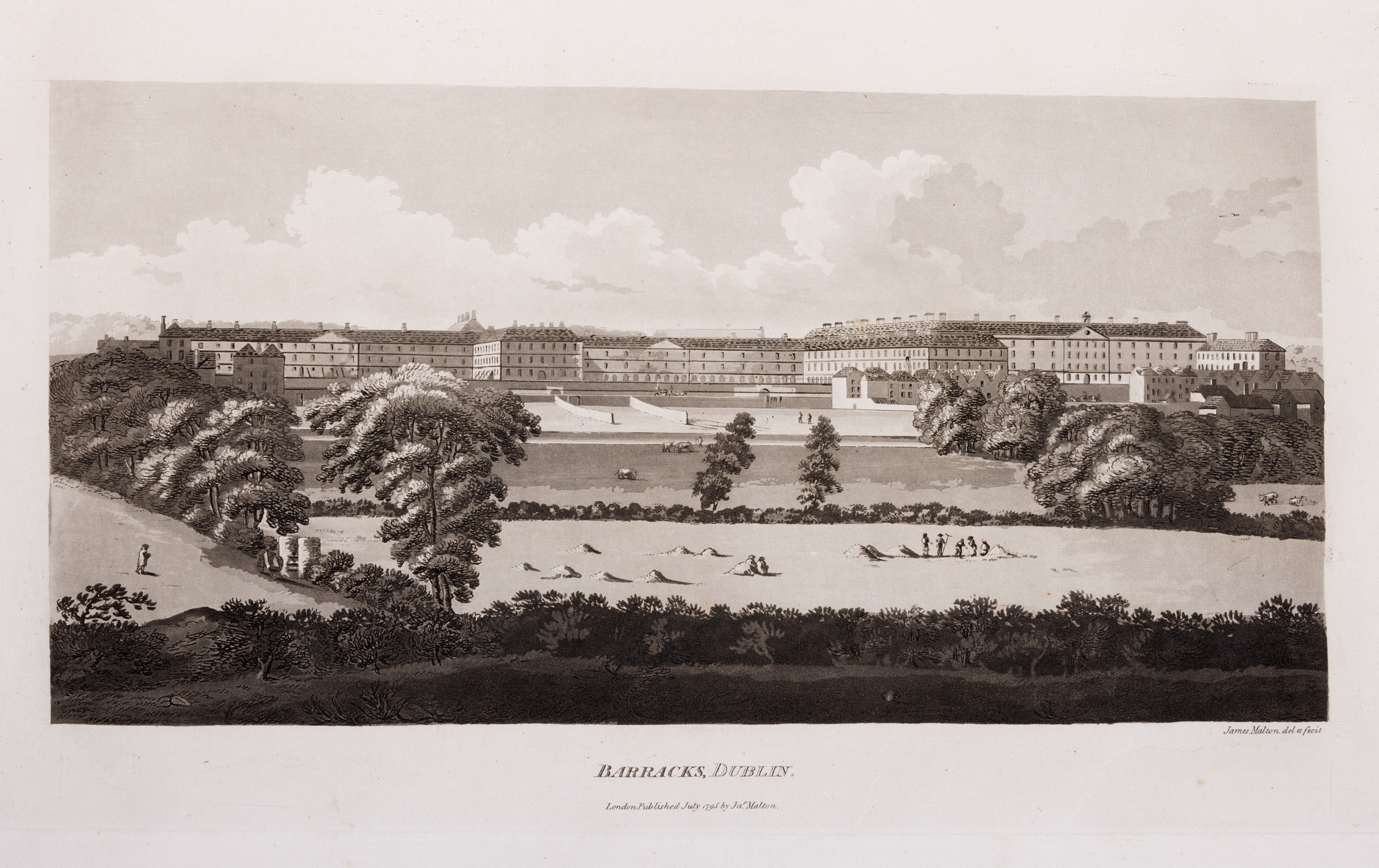
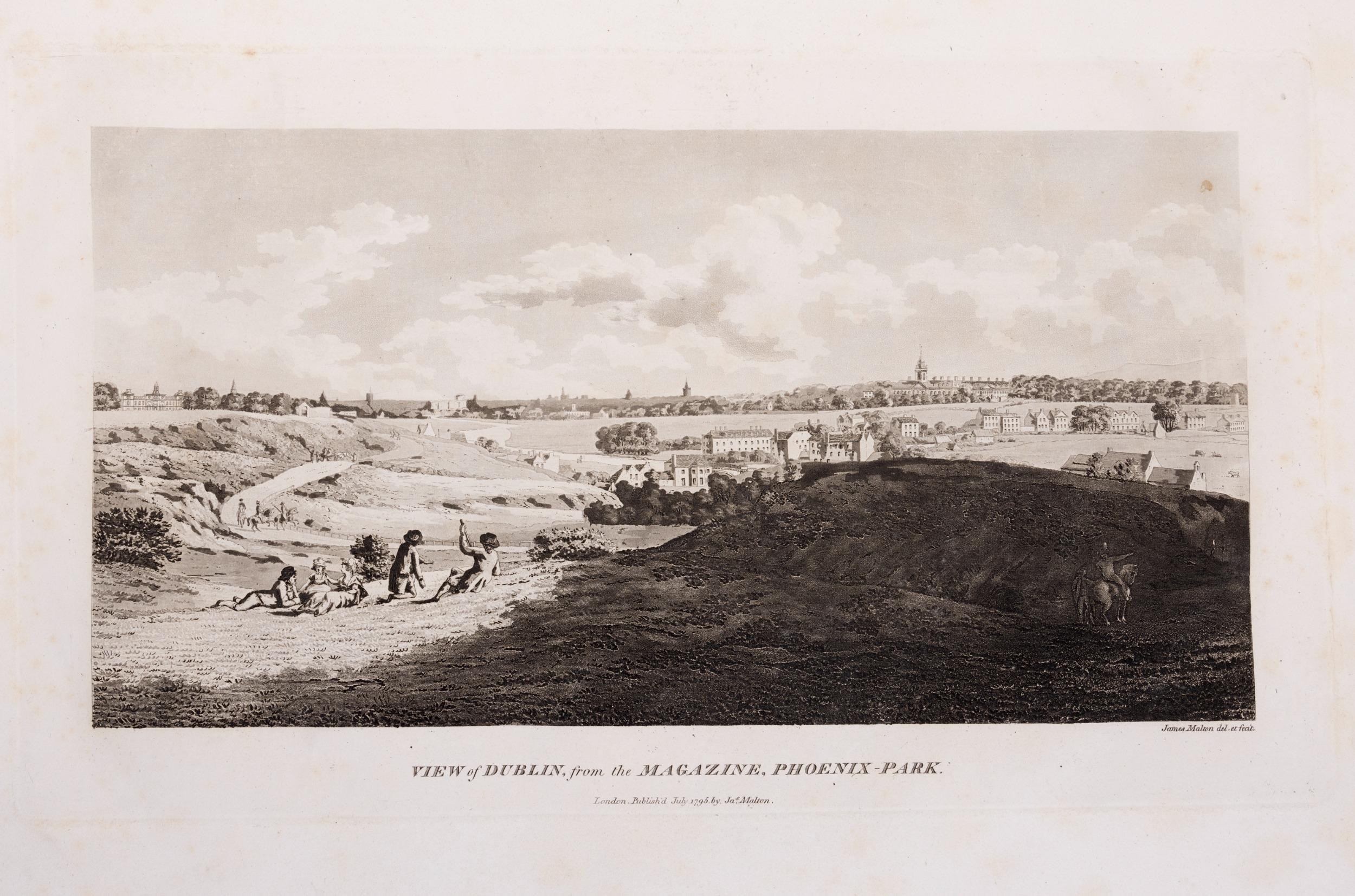
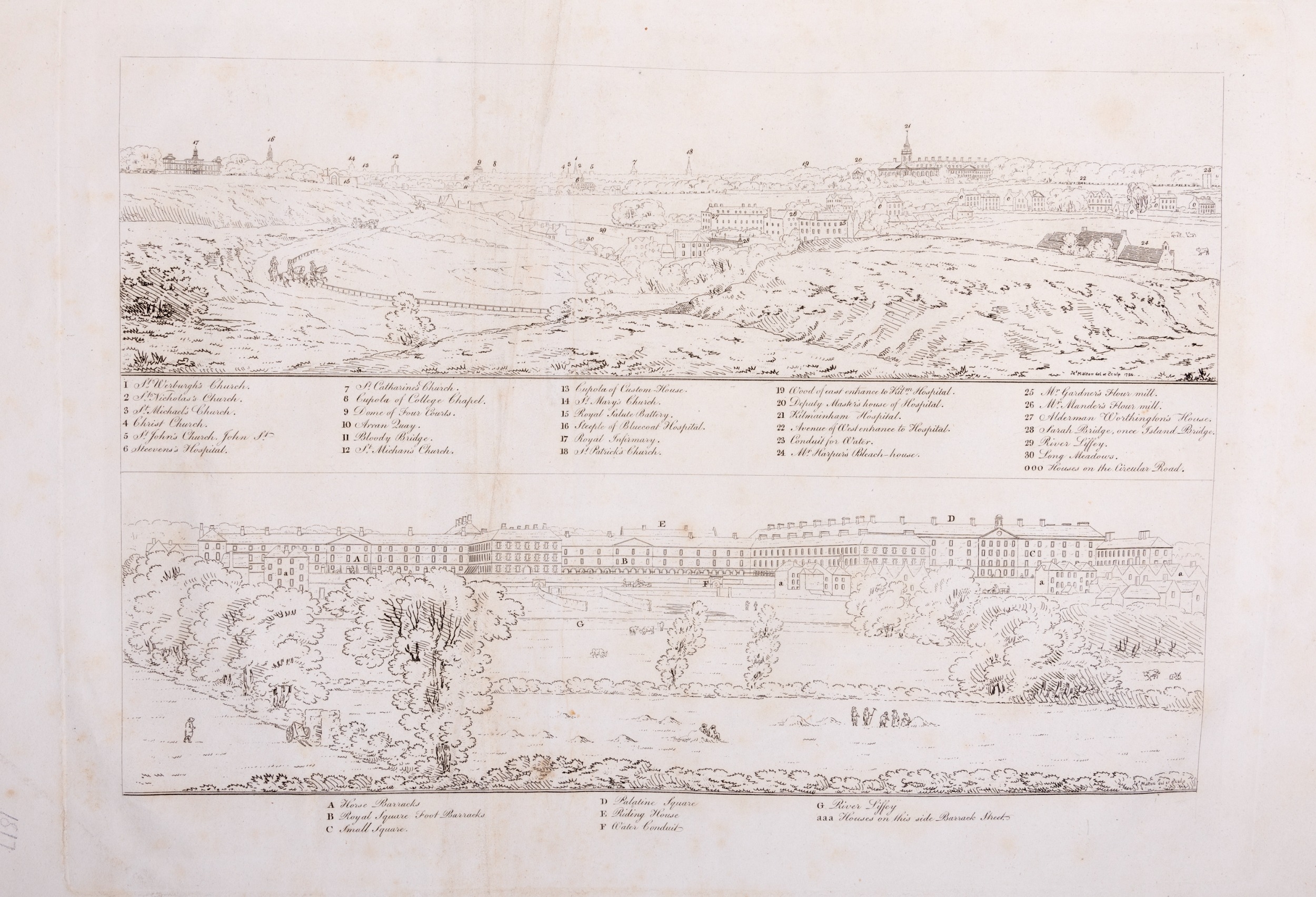
JAMES MALTON (1761-1803) A PICTURESQUE AND DESCRIPTIVE VIEW OF THE CITY OF DUBLIN In a series of the most Interesting Scenes taken in the year 1791. By James Malton. With a brief authentic history from the earliest accounts to the present time. Oblong folio, 1809 edition, engraved titlepage and dedication, Arms of Dublin, A Correct Survey of Dublin as it stood in the year 1610, A Correct Survey of the Bay of Dublin 1795, and twenty-five plates of views. London: 1803. The plates are as follows: Great Courtyard, Dublin Castle; The Parliament House; Trinity College; College Library; Provost's House; St. Patrick's Cathedral; West Front of St. Patrick's Cathedral; Royal Exchange; Custom House; View of the Law Courts, looking up the Liffey; Tholsel; Old Soldiers Hospital, Kilmainham; Royal Infirmary, Phoenix Park; Blue Coat Hospital; Lying-in Hospital; Rotunda New Rooms; St. Catharine's Church; Marine School; Leinster House; Charlemont House; Powerscourt House; View of Capel Street, looking over Essex Bridge; St. Stephen's Green; Barracks; View of Dublin from the Magazine, Phoenix Park. Dedicated to the Governors and Directors of the Hospital, including the College Library, dedicated to Edmund Burke. Besides the above twenty-five views the bound volume contains the Arms of Dublin, as frontispiece; Survey of the City of Dublin as it stood in 1610, taken from Speed's Map; Survey of the Bay of Dublin, 1795, and a folding map of Dublin by Faden . At the end of the volume is a plate with two outline Keys - one of the smaller View of Dublin from the Park, the other of the smaller view of the Barracks. All the plates are inscribed James Malton del. et fecit James Malton’s A Picturesque and Descriptive View of the City of Dublin (1799) constitutes a significant artistic and historical document, reflecting the author’s profound admiration for the city’s architectural grandeur. In the preface, Malton expresses his desire to bring Dublin into the cultural spotlight, believing it to be a capital that had been unjustly neglected. His work, however, emerges from a context marked by both professional turmoil and personal ambition. “Few cities can boast more extensive conveniences, more eminent beauties, than Dublin… To convey to the curious inquirer adequate ideas of those objects; to diffuse information of a Capital so long undesertly unnoticed, and to give it that place in estimation with regard to others it merits, this work was undertaken.” Preface, A Picturesque and Descriptive view of the City of Dublin, James Malton, 1799 Born in England in 1765, Malton was the son of Thomas Malton, a noted architectural draughtsman and instructor in geometry and perspective. The Malton family relocated to Dublin in 1769, where the elder Malton sought to establish himself within the city’s vibrant architectural scene. In 1781, through his father’s connections, James Malton secured a position as a drawing clerk under the esteemed architect James Gandon, who was then overseeing the construction of the Custom House, one of the city’s most important public buildings. Despite initial praise from Gandon, Malton’s tenure was short-lived; he was dismissed due to what Gandon described as breaches of professional trust and misconduct. This dismissal later culminated in an anonymous and caustic critique of Gandon’s architectural designs, published in 1787—a possible act of retaliation by Malton or his father. That same year, Malton failed in his candidacy for the position of Master of the Dublin Society’s School of Architectural Drawing. Undeterred by these setbacks, Malton devoted himself to documenting the architecture of Dublin. By 1791, he had completed a comprehensive series of architectural drawings capturing the city’s most prominent buildings. These drawings vividly depicted Dublin’s Georgian streetscapes with great detail and accuracy. The engravings were issued in six instalments between 1792 and 1799, with the final bound volume published that same year, complete with descriptive text. Malton’s engravings are not merely technical records but are imbued with an artistic vision that animates the architecture of late eighteenth-century Dublin. His Picturesque and Descriptive View situates Dublin within the aesthetic discourses of the time, contributing to the visual and cultural representation of the city.
Fees apply to the hammer price:
Free Registration
28.6% inc VAT*
Flat Fee Registration
25.00% inc VAT*