€20,000 - €30,000
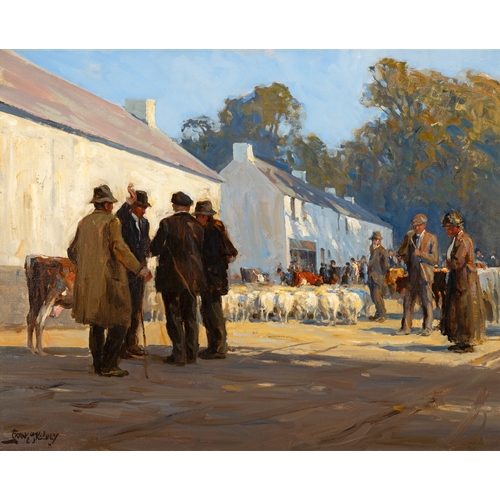
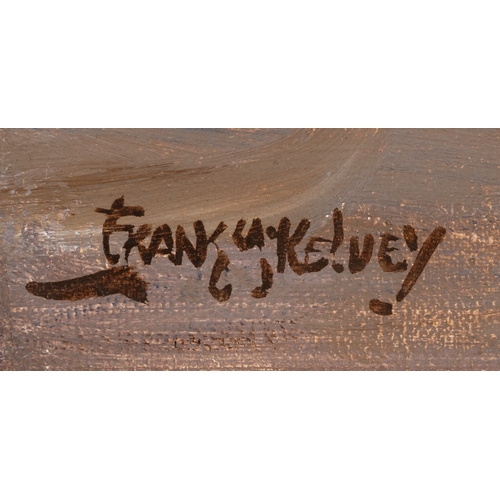
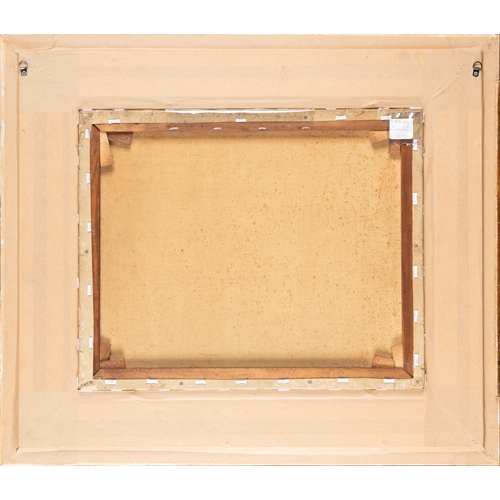
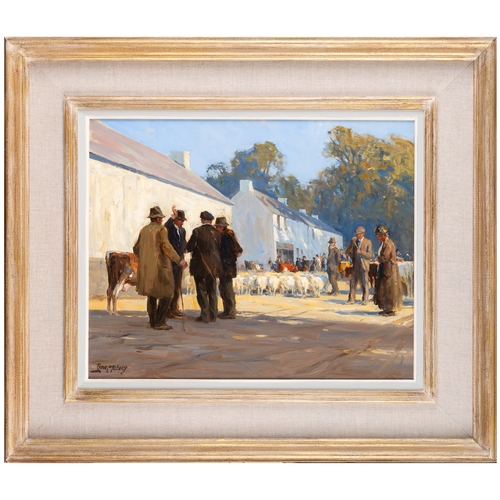
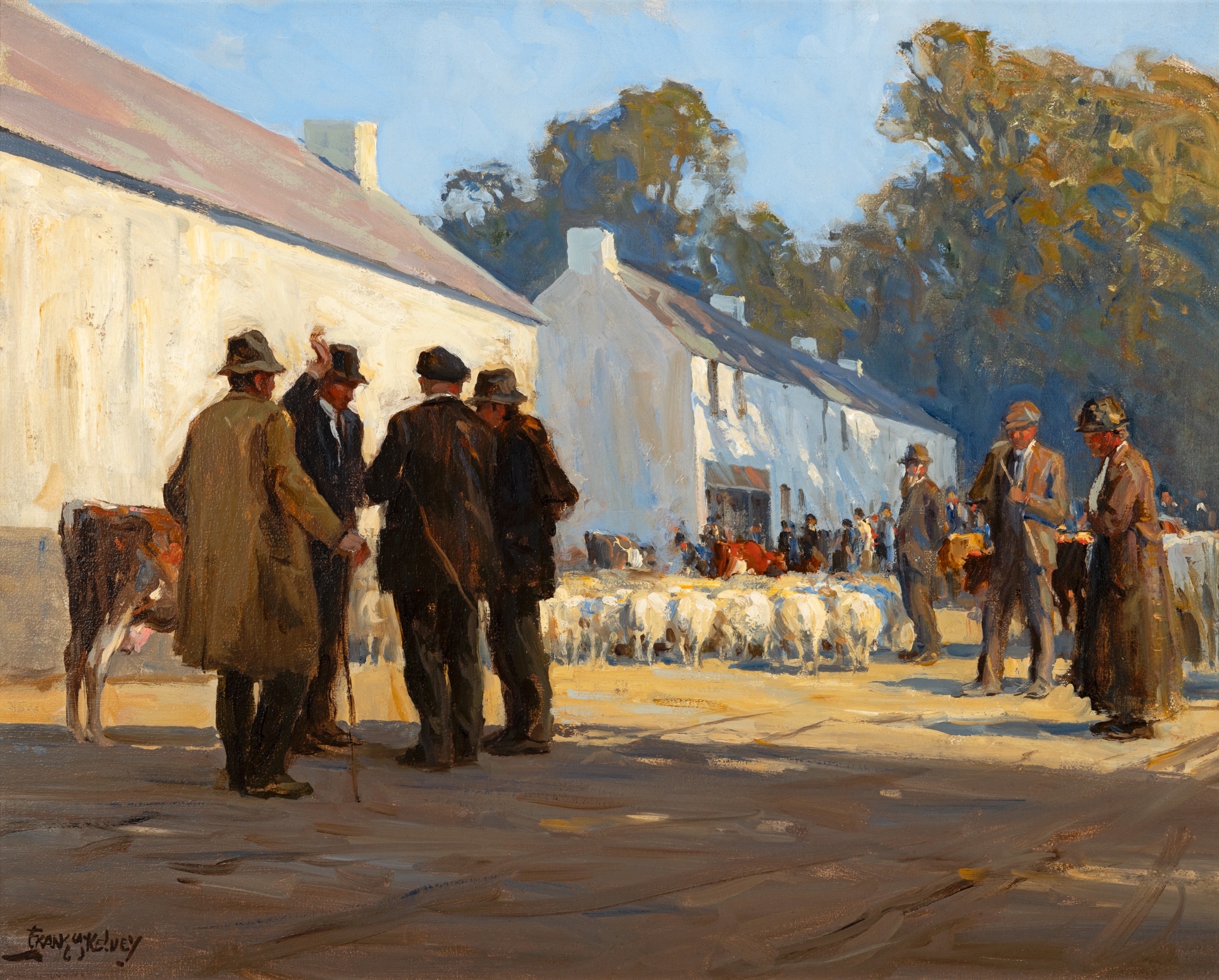
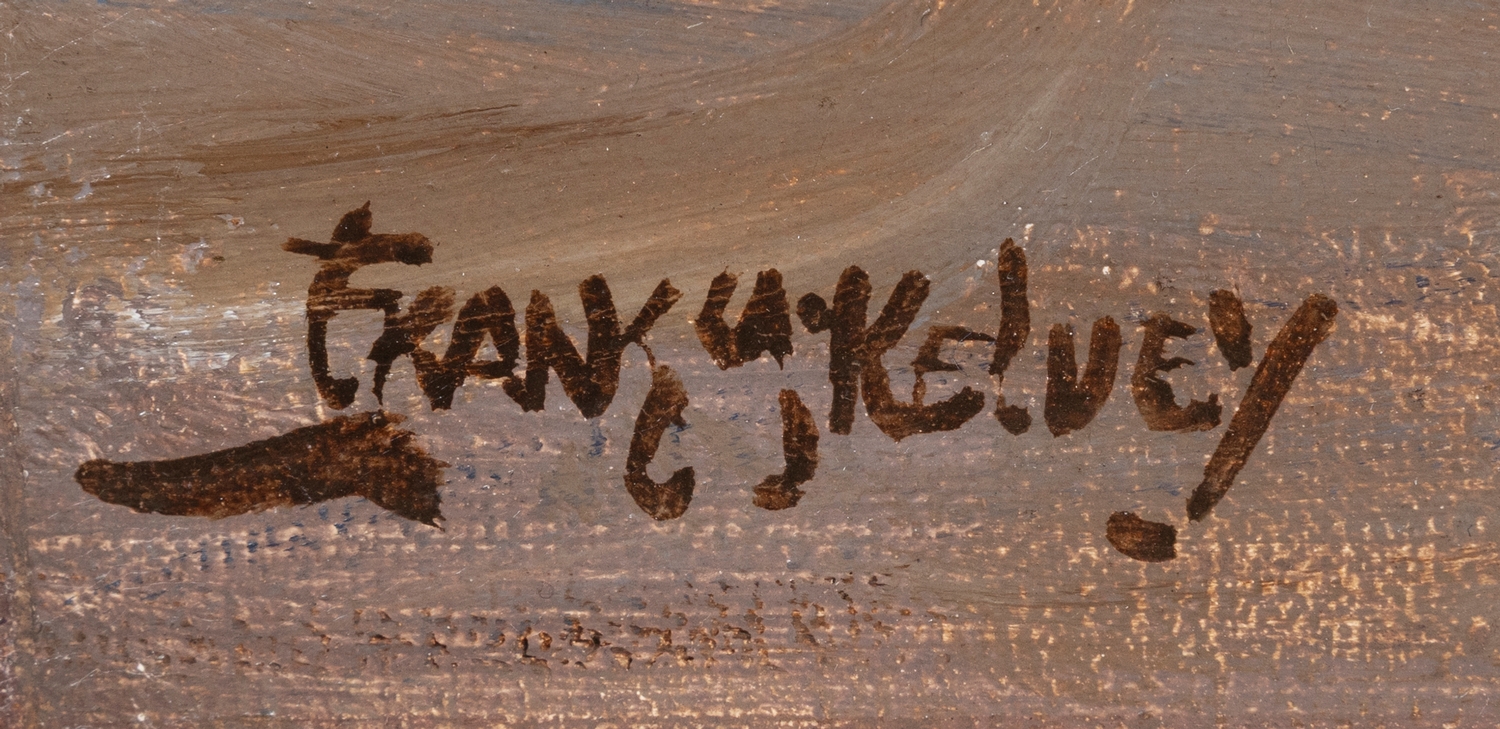
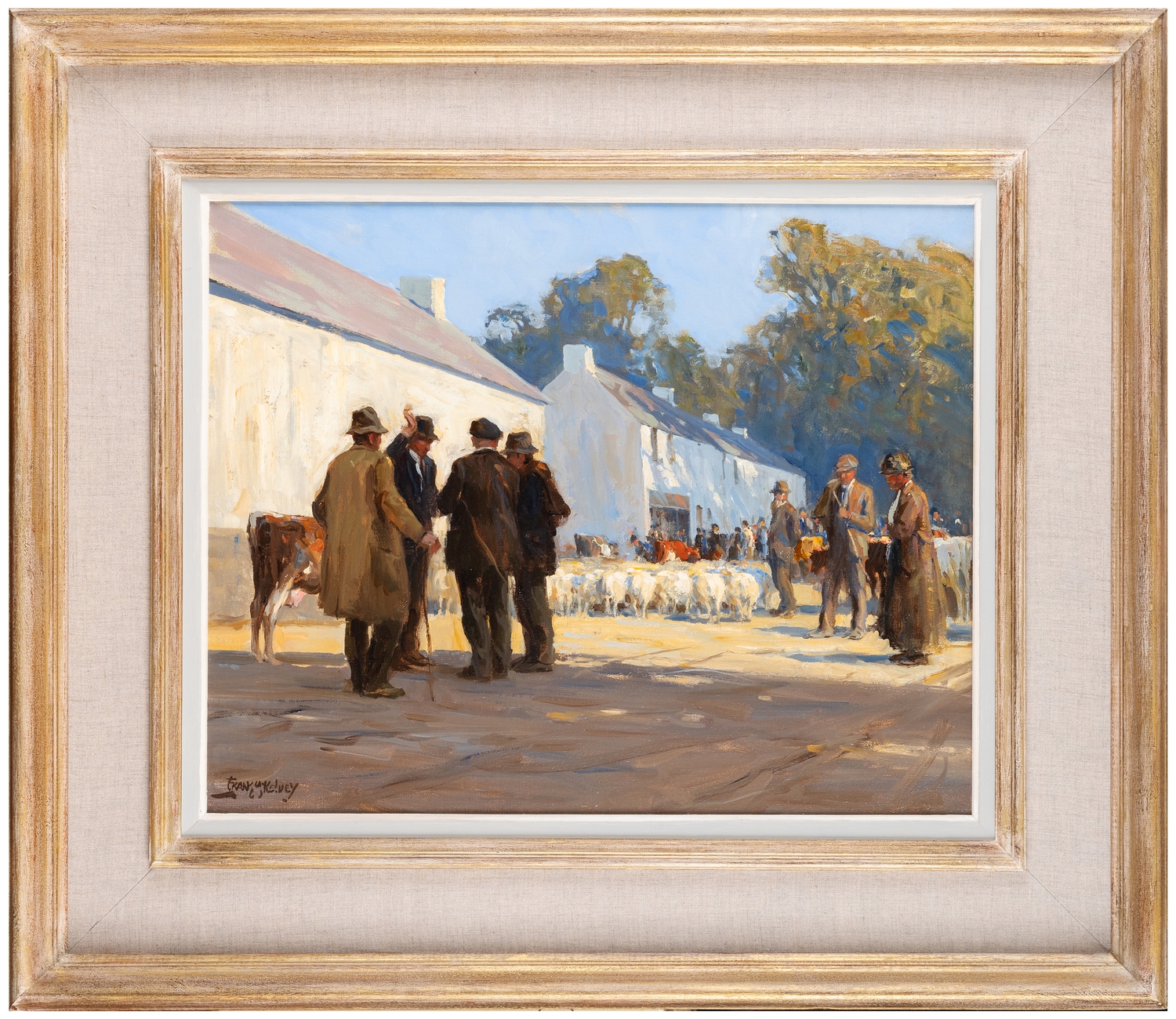
Frank McKelvey RHA RUA (1895-1974) The Fair Day, Camlough, Co. Armagh Oil on canvas, 42 x 52.5cm (16½ x 20½) Signed Provenance: Collection of Reeta and Frank Hughes, Warrenpoint, thence by descent. Literature: Eamonn Mallie (Ed), 'One Hundred Years of Irish Art', 2000, illustrations p.301 Francis 'Frank' McKelvey was born on 3rd of June 1895 to a working class Belfast family. As the eldest son of six, McKelvey's first foray into art world was purely practical as the son of painter decorator William McKelvey. The young Frank showed promise and on his father's advice became an apprentice lithographer and poster designer with the firm of David Allen & Sons - a firm particularly noted for their designs for theatre, opera, postage stamp and general advertisement across Belfast and later across Great Britain with studios in Dublin, Liverpool, Glasgow, Harrow, London and Brentford. McKelvey's artistic spark was further fanned when he entered the Belfast College of Art in 1911 as a full time student having attended evening classes for a period of time prior. It was here that McKelvey would meet the artist Alfred Rawlings Baker (1864-1939) who no doubt contributed a great deal to McKelvey's partiality towards rural and rustic scenes. Camlough Fair, here beautifully depicted was a repeat subject in McKelvey's early work, likely introduced to the artist via his marriage to a local farmer's daughter, Elizabeth Caldwell Murphy of Bessbrook, Co. Armagh in 1924. Bessbrook is located less than two miles from the aforementioned Camlough, and featured often in McKelvey's work reflecting the nearby majesty of the Ring of Gullion. It should be noted that a very similar work by the artist titled Camlough Fair, The Clinching Bid was sold in these rooms on the 29th of May 2013 with the added date of 1924, indicating that this work was likely completed on this same year as the artist's marriage. A subsequent work of a similar subject and varying composition titled Fair Day at Camlough was sold in Christie's in May 2004, both with notable interest at sale. 1924 was indeed a fruitful year for McKelvey personally and professionally. His picture On the River Bann was purchased under the terms of the Gibson request for the Crawford School of Art, Cork. The Belfast Museum purchased Evening, Ballycastle for their collection. A glowing review of McKelvey's exhibited works at the RHA that same year stated 'Mr Frank McKelvey stands in the forefront of our interpreters of natural beauty…painting with him is an accomplishment and his pictures declare it. One feels the sunlight in every one of them'. McKelvey is widely acknowledged as a leading landscapist and a luminary of the emerging Northern School of painters, later referred to as The Belfast School. The most revered of his works are those where his compositional instinct intersects with his genius for light play. In particular, those scenes where dappled sunlight falls across a scattering of hens in a traditional farmstead environment have captured the imagination of the wider public for their tranquillity and homely nature, as well technical ability. Similarly, the scene at Camlough here presented is a perfect intersection of the aforementioned conditions of composition and light which so define McKelvey's greatest works. Later in his career his linework became looser and notably more romantic, however these earlier works evince a strong and structured approach. Structurally, the framing of this piece is robust and striking, no doubt influenced by McKelvey's experience in the lithography studios of Belfast. An oblique view of a limewashed 19th century streetscape pulls the viewer's eye from the left of the composition towards the centre where we see the livestock gathered and similarly small droves of tweed-clad locals vie for the best view of the sale. The low lying morning sun casts mauve shadows along the street and a hot blue sky indicates a fine day ahead. A small group of men are huddled on the left engaged in animated conversation. This is observed by three solitary figures on the right, each figure in their own rumination of the scene. McKelvey's composition encourages the viewer to examine each in detail and in doing so actually includes the critical viewer as a bystander of this fine morning in Camlough. Later in his career McKelvey would continue to produce these vibrant market scenes such as Market Scene painted in 1945/36 (illus. pl. 19, Frank McKelvey, S.B. Kennedy). The scene at Camlough in its bold use of colour, strong contrast and definitive compositional choices is truly representative of McKelvey's early defining work of the 1920s and an excellent example of the artist's finest work. Stephanie Brennan, April 2026
Fees apply to the hammer price:
Free Registration
28.6% inc VAT*
Flat Fee Registration
25.00% inc VAT*