£200,000 - £300,000
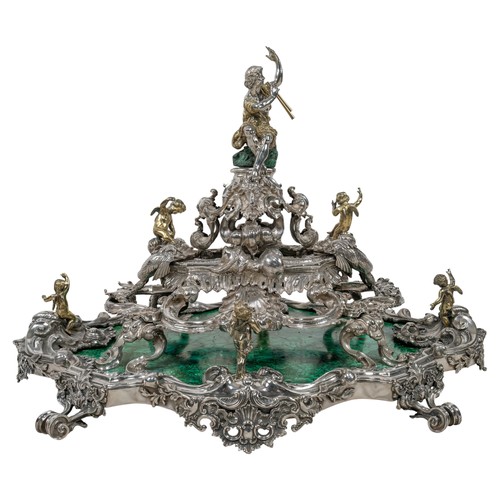
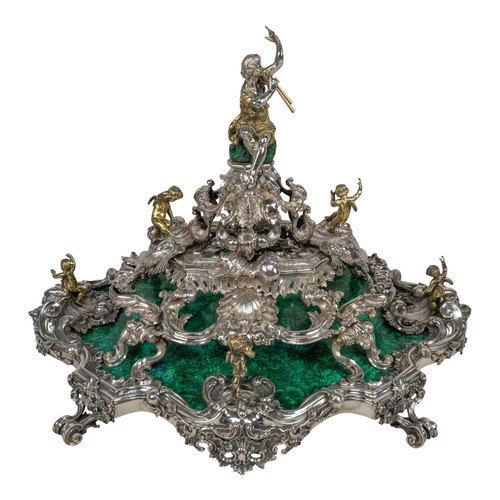
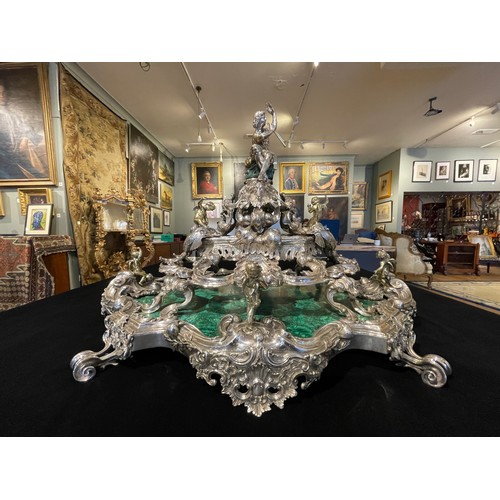
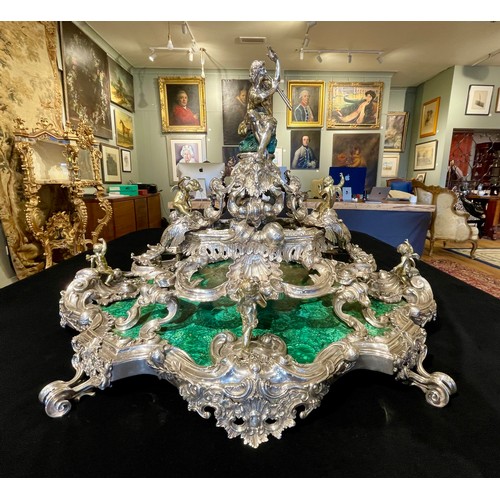
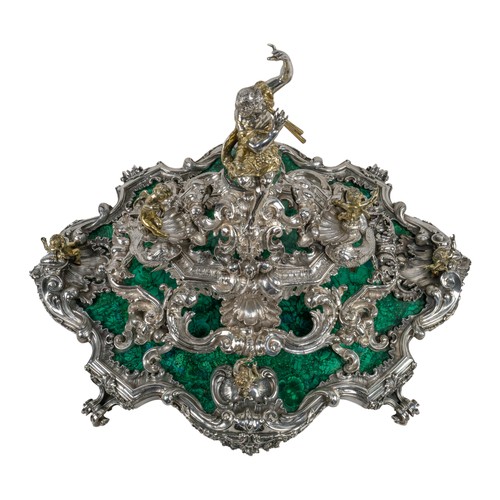
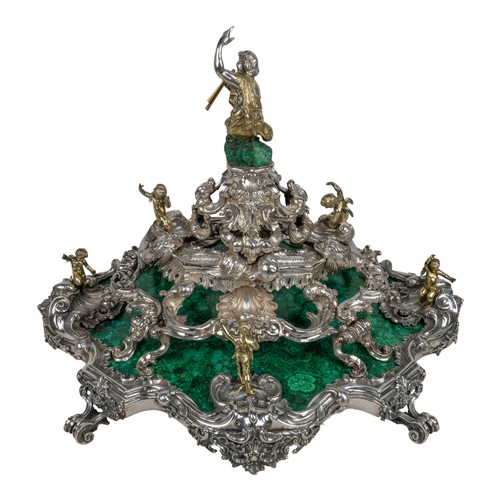
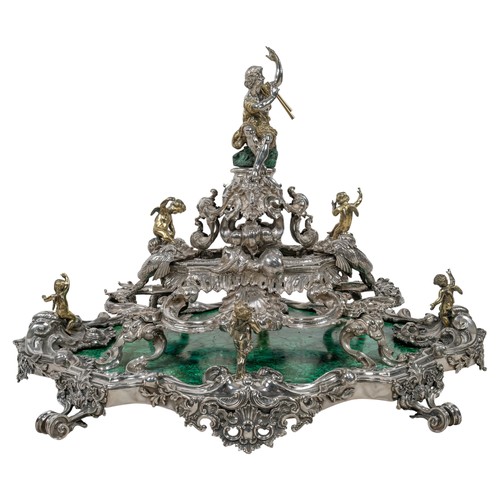
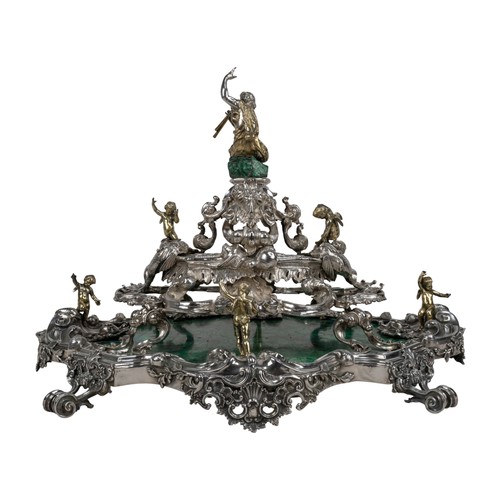
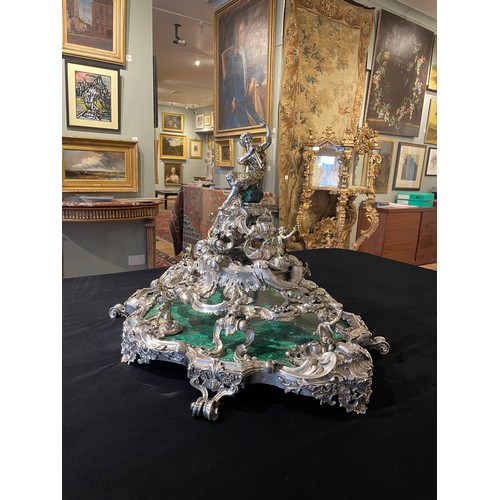
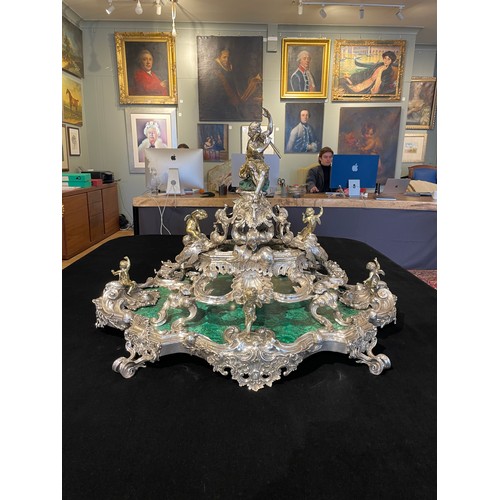
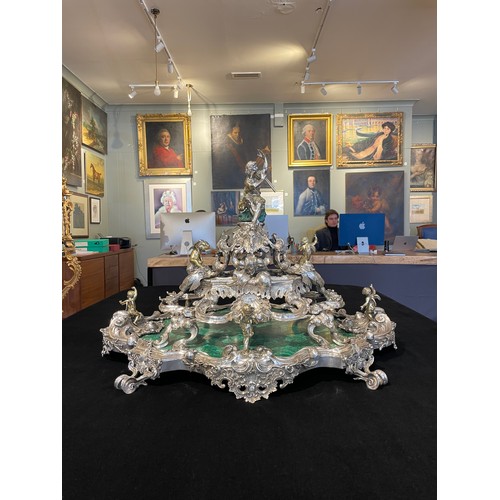
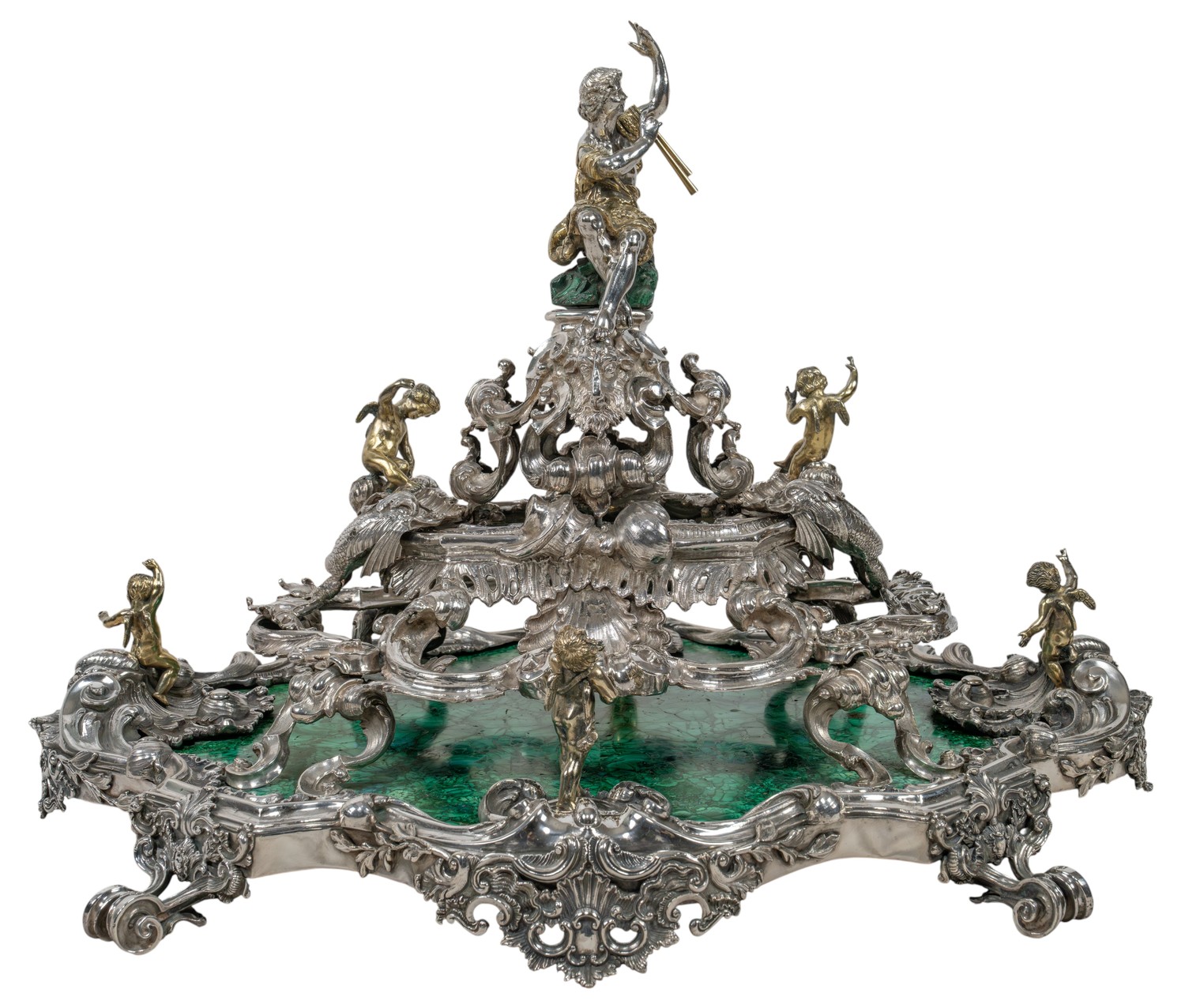
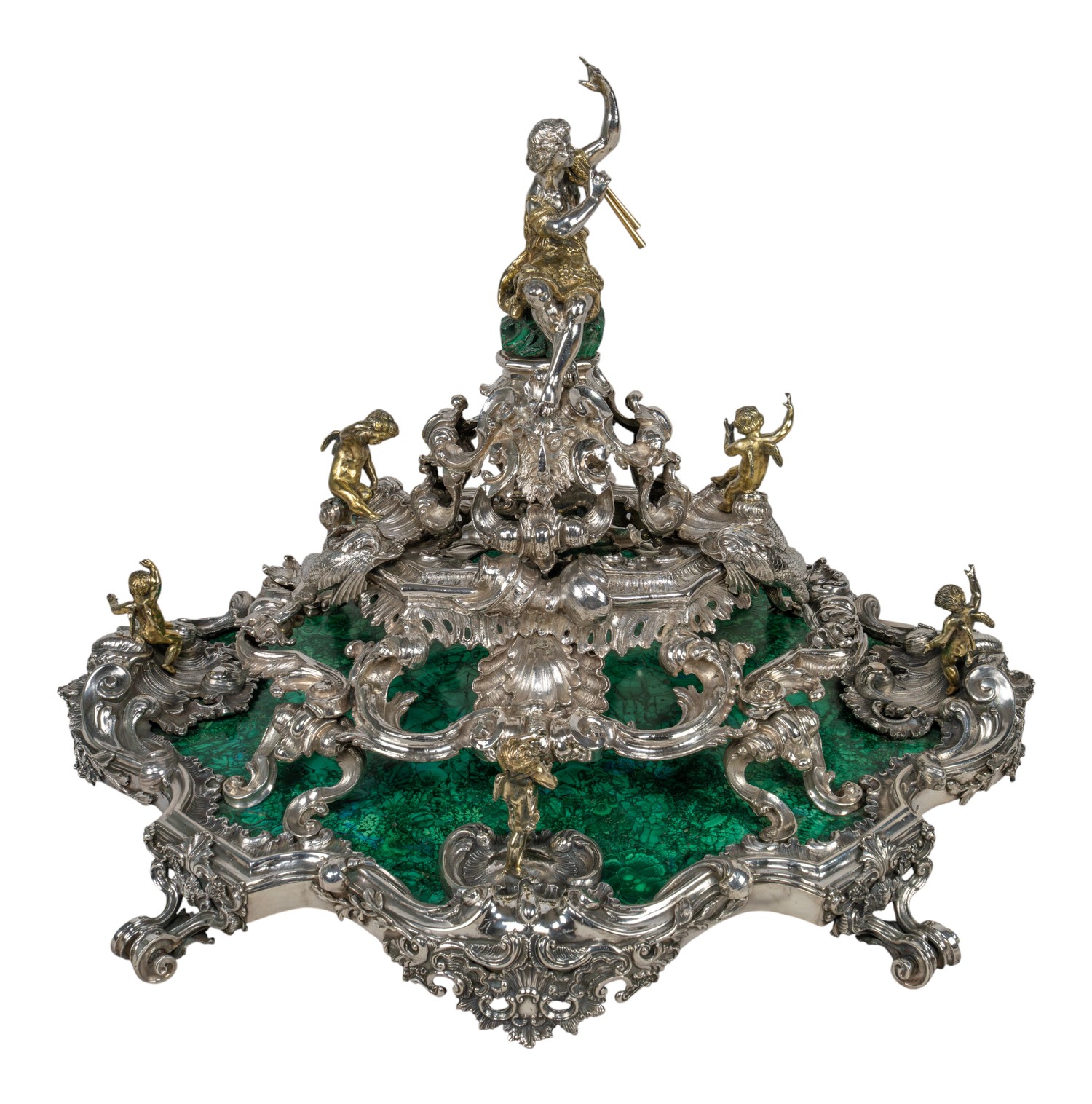
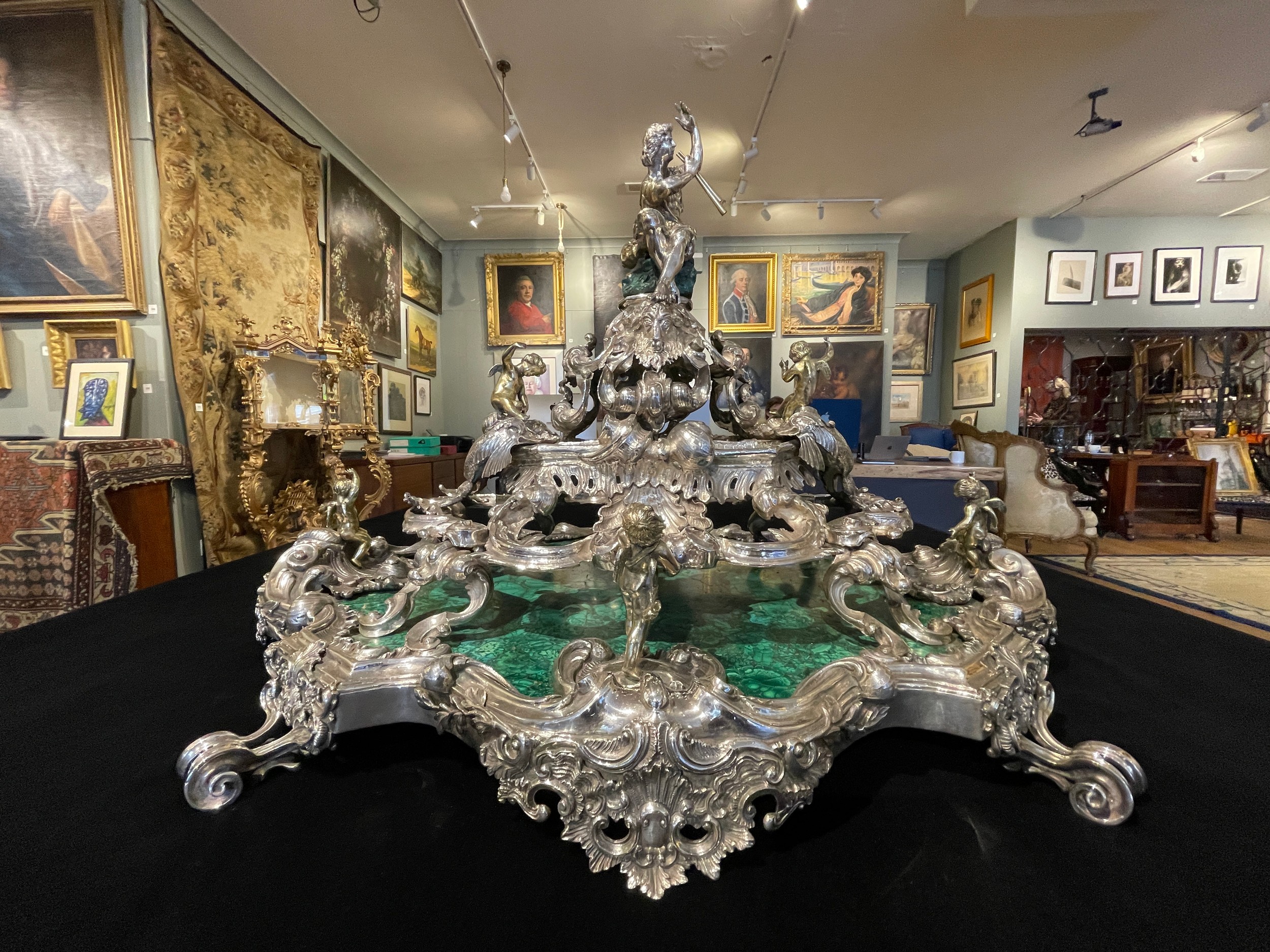
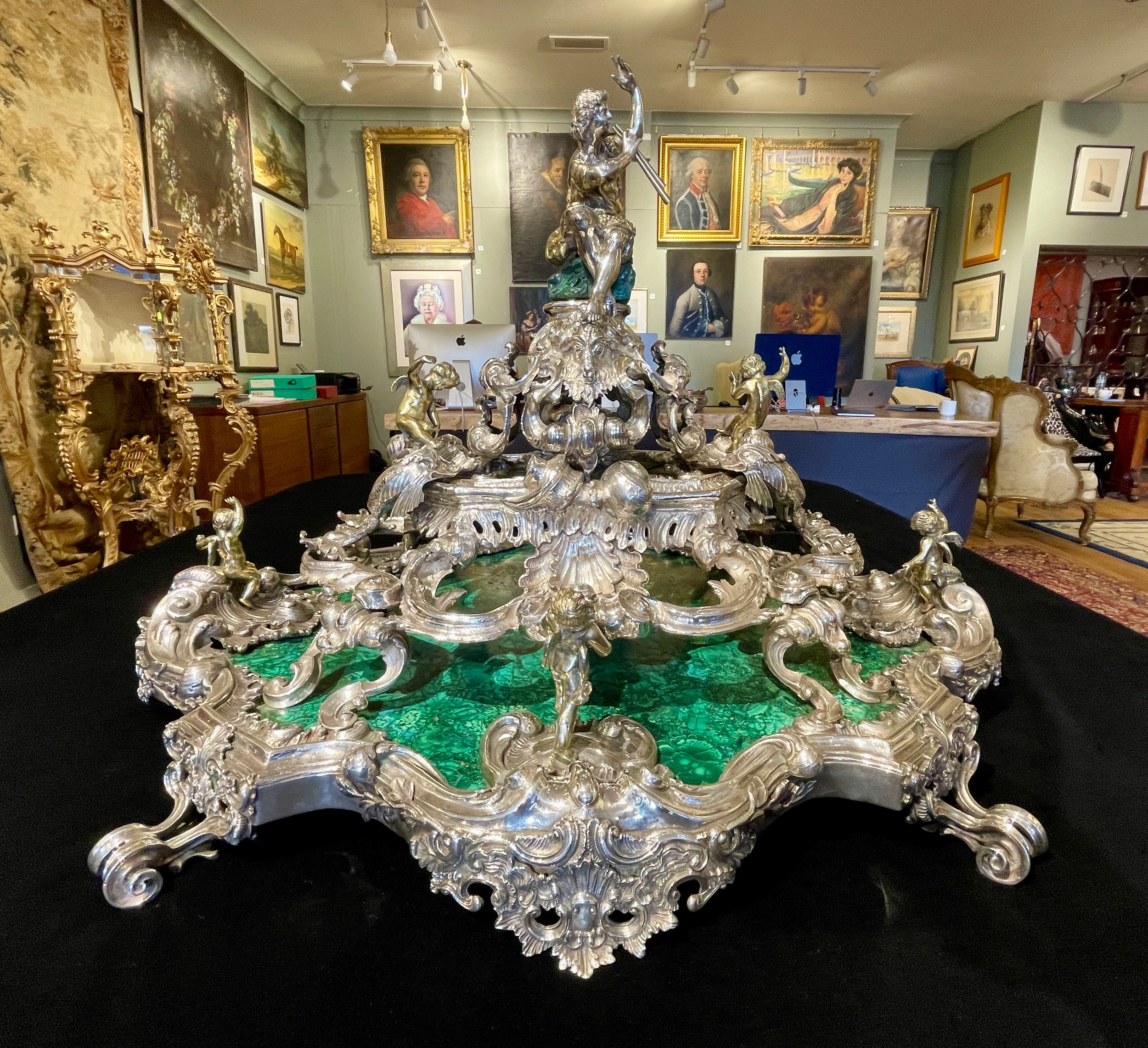
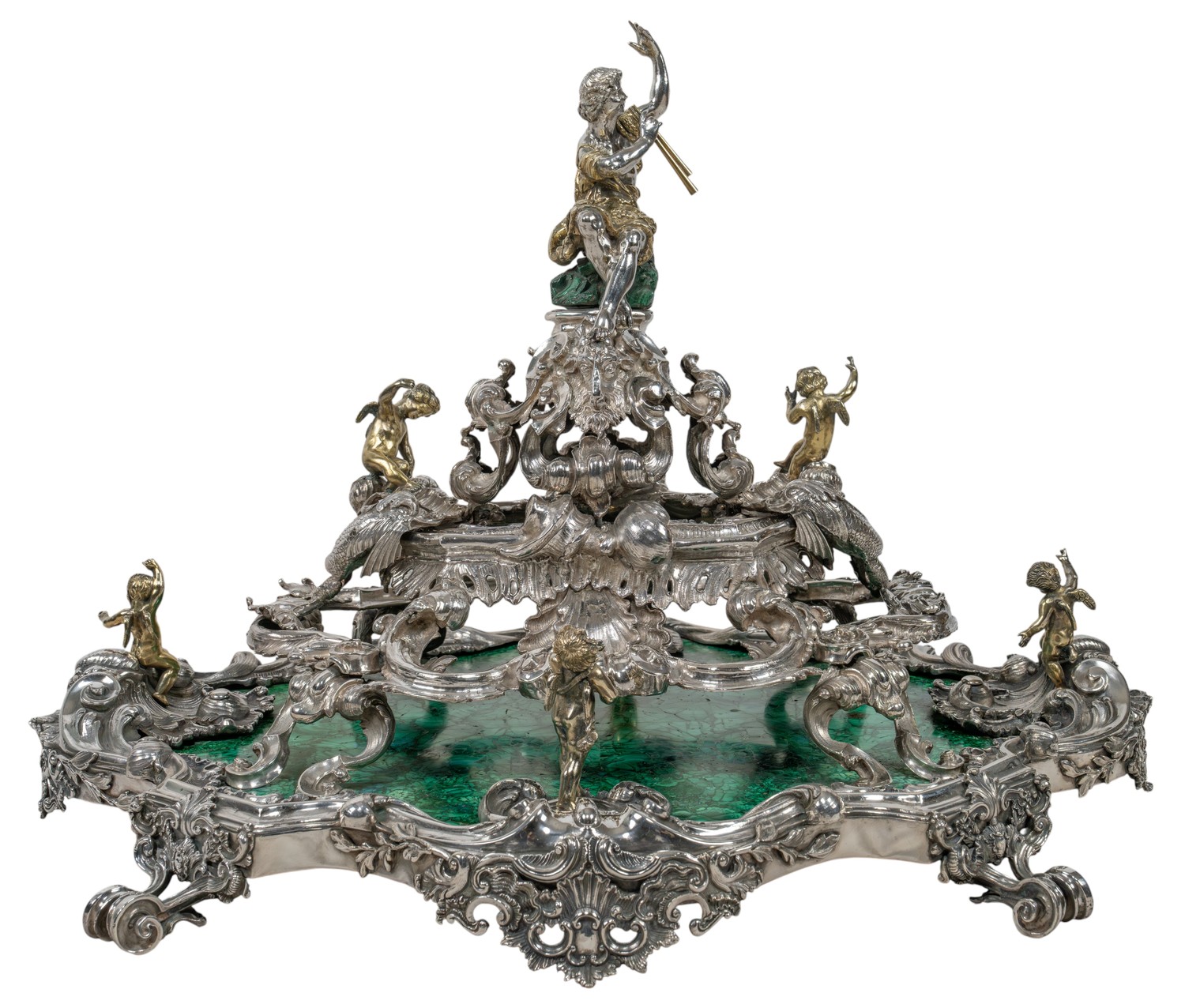
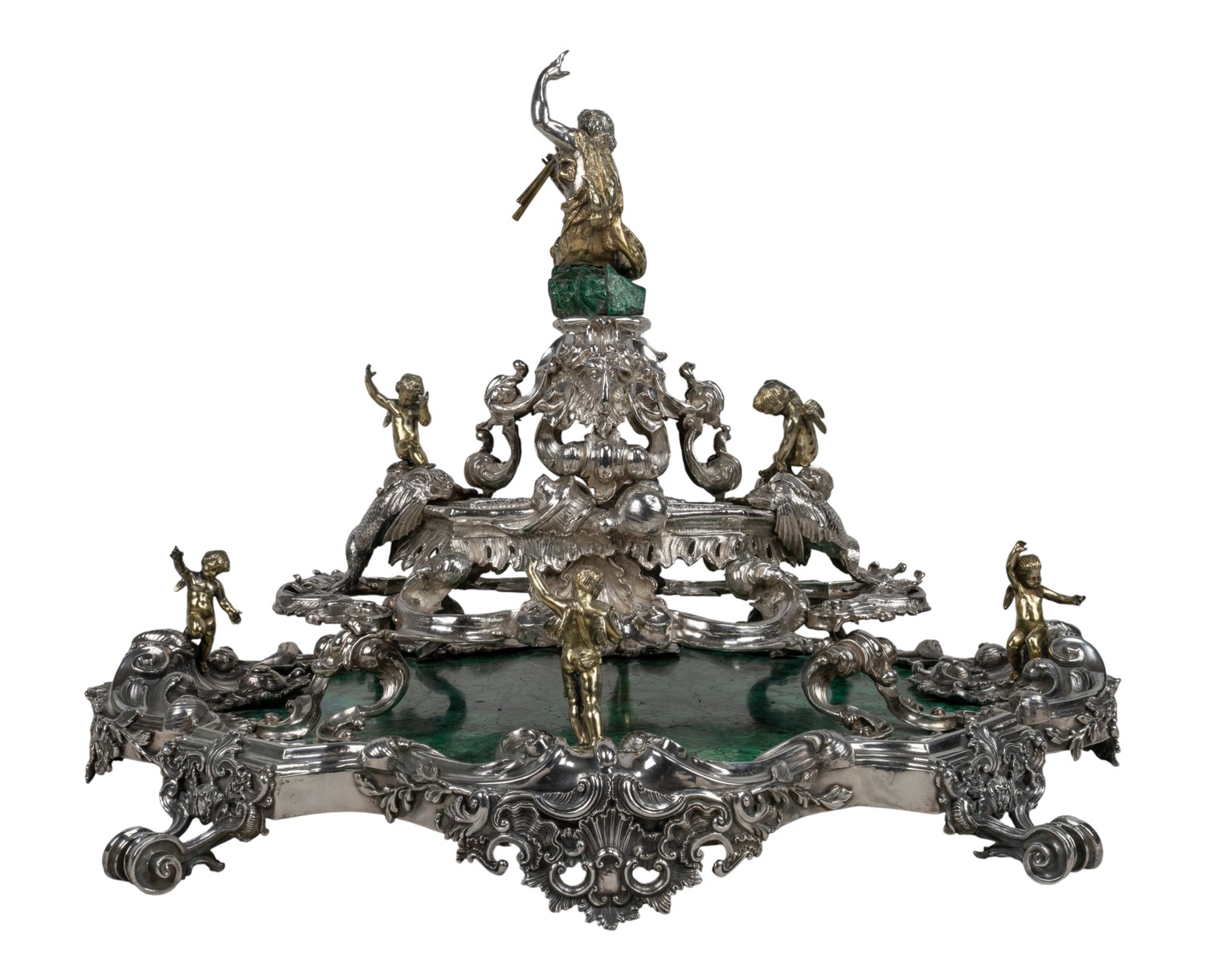
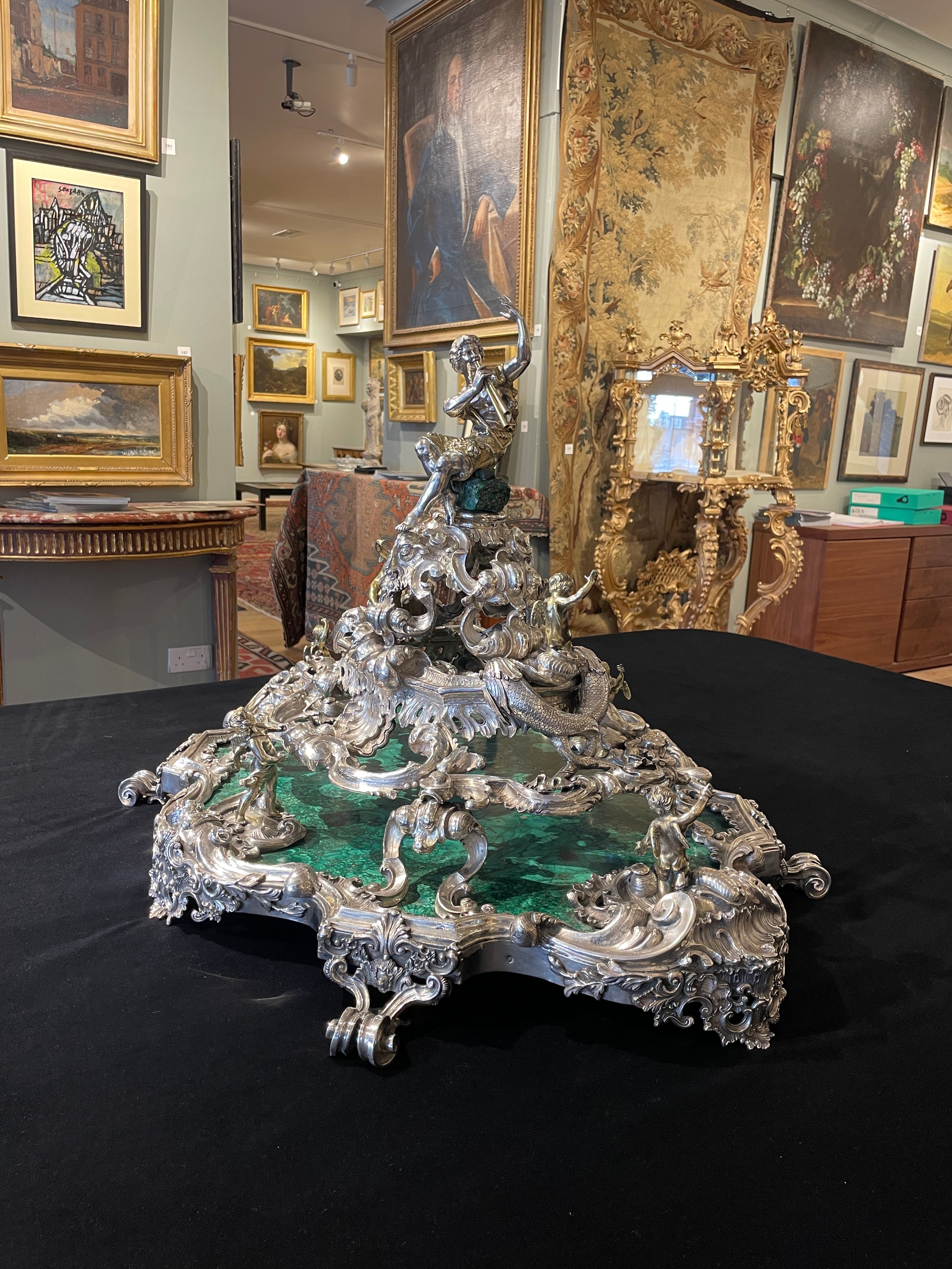
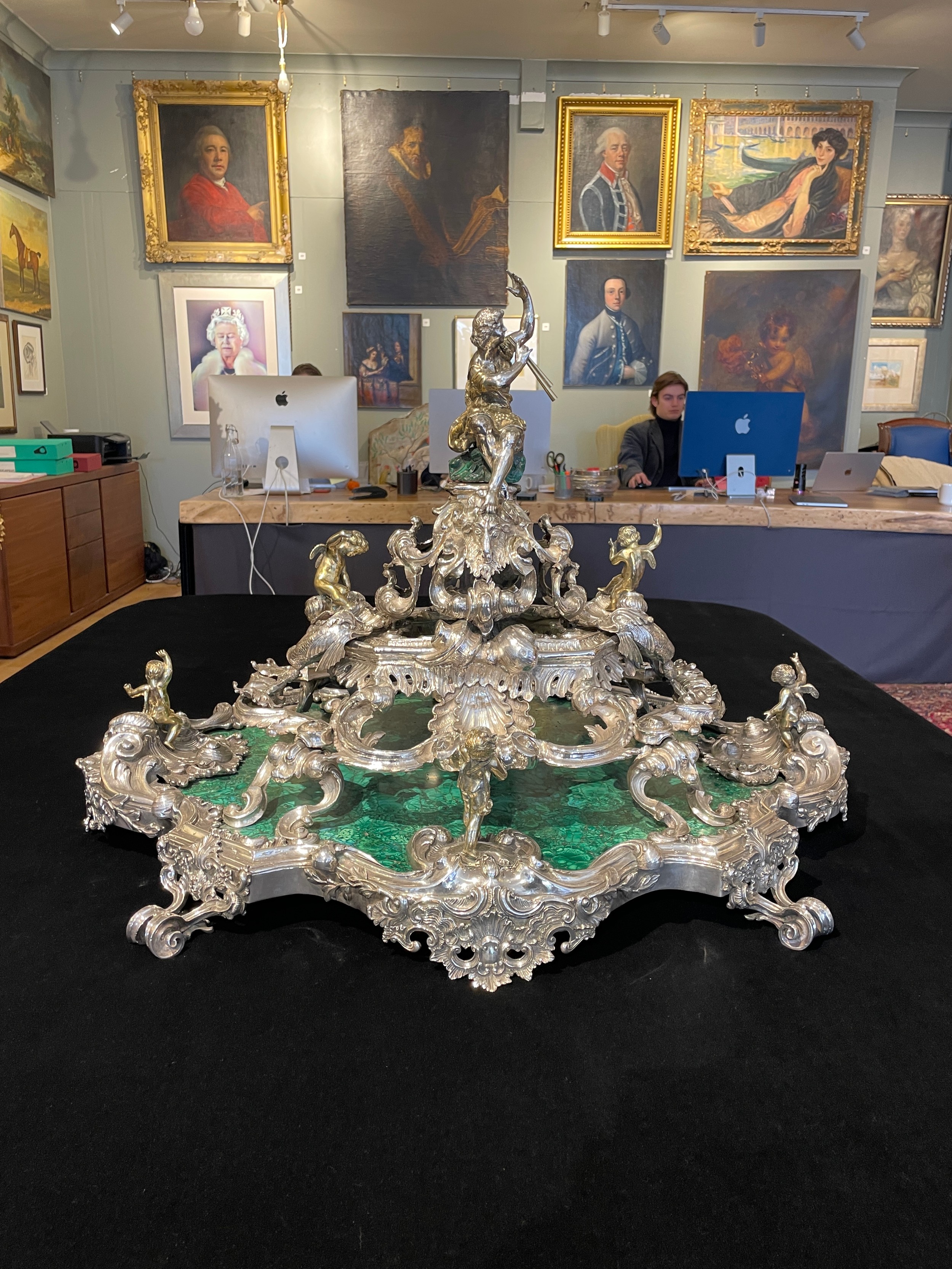
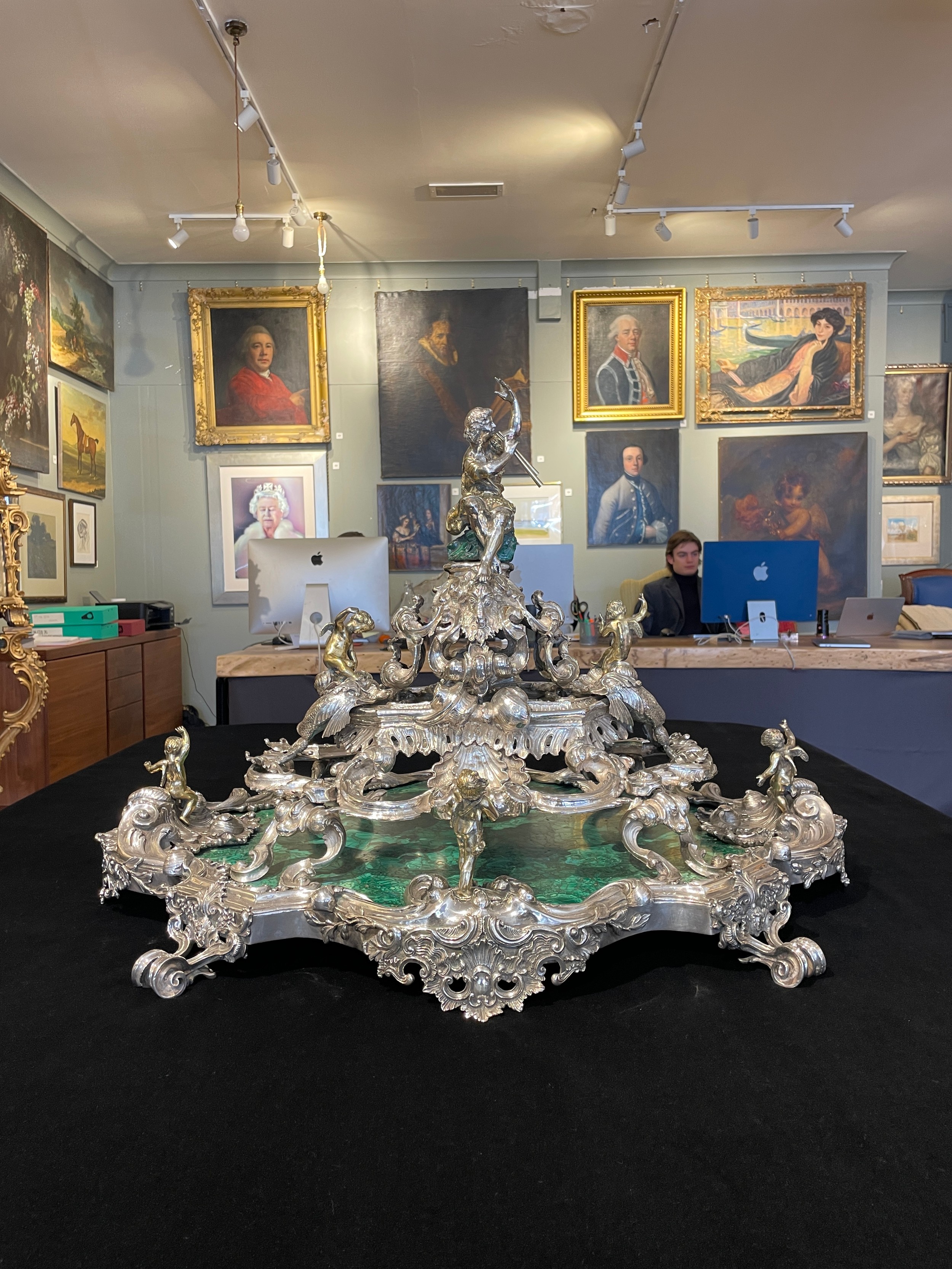
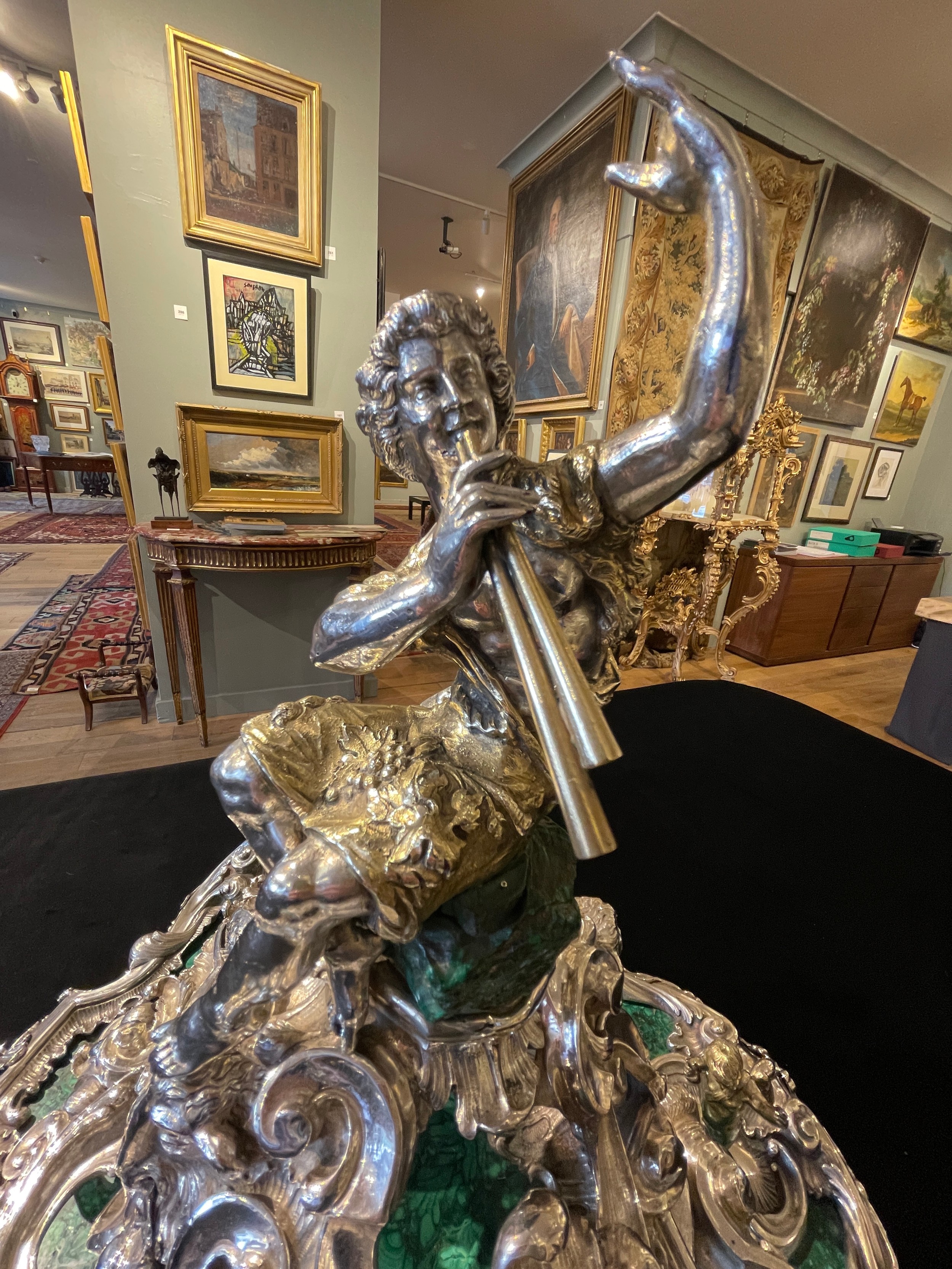
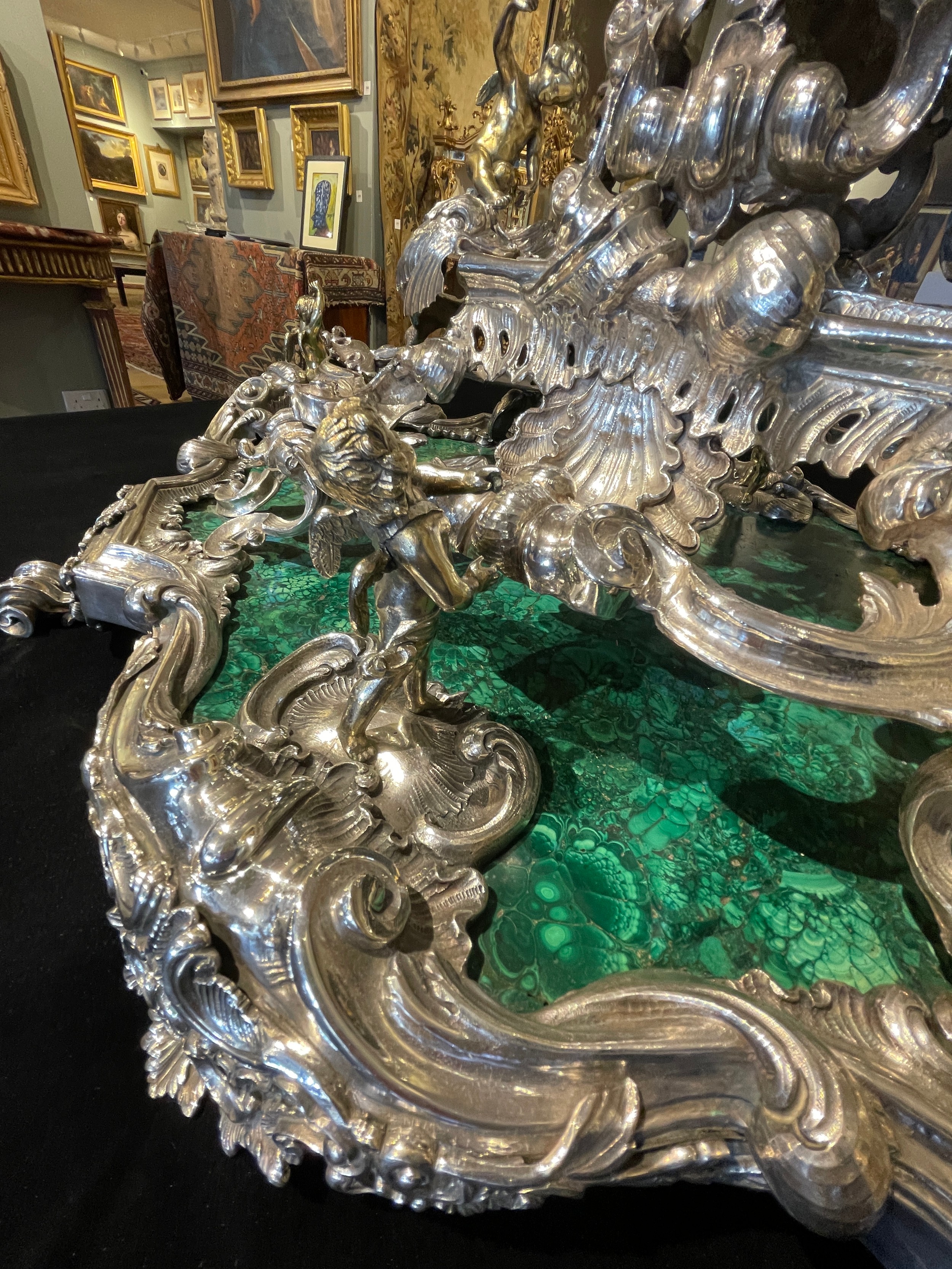
An important Italian silver, silver-gilt and malachite centrepiece
Rome, circa 1720, Attributed to Giovanni Giardini
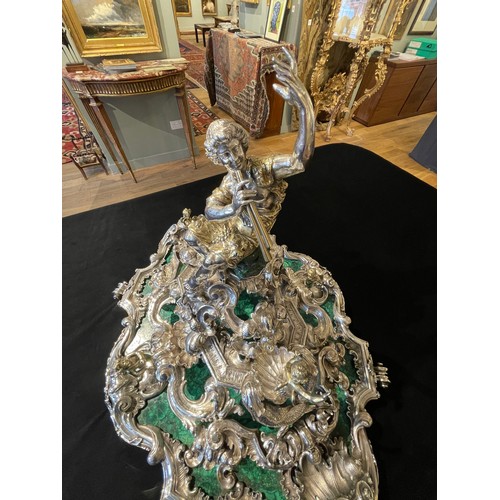
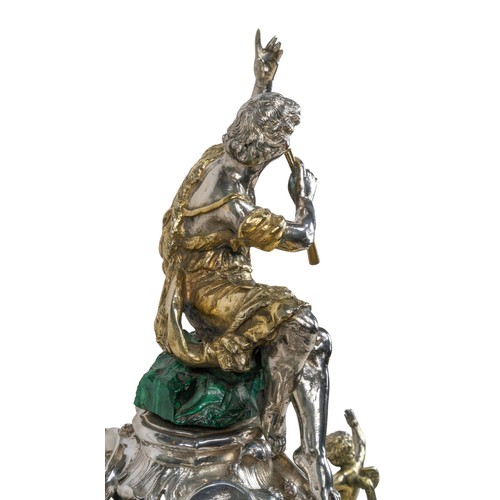
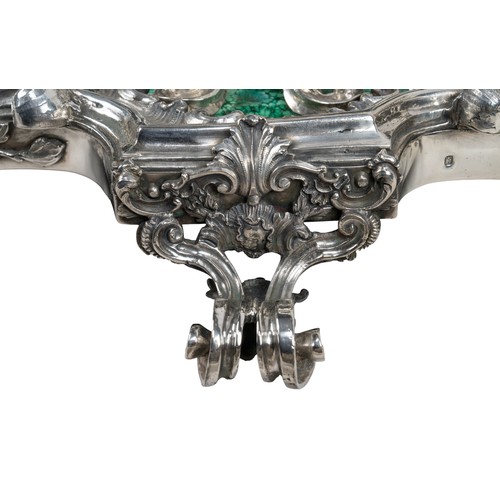
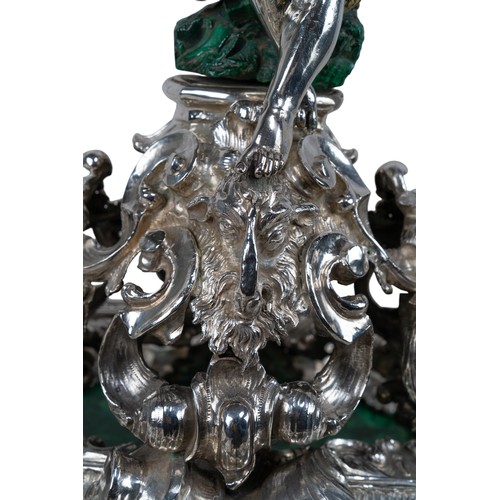
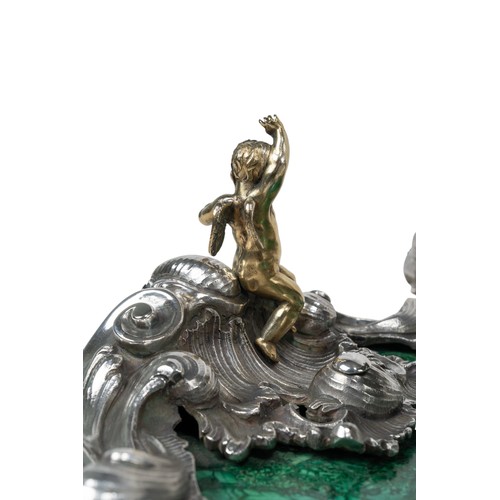
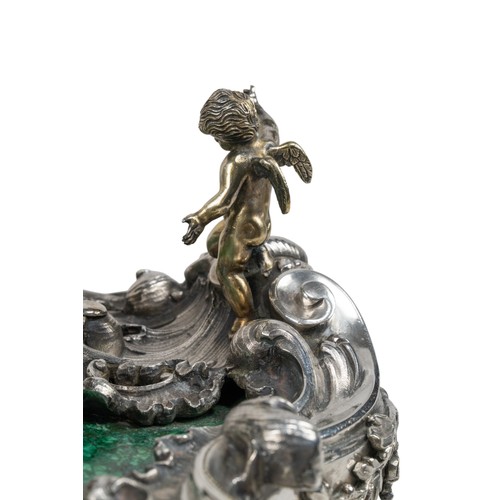
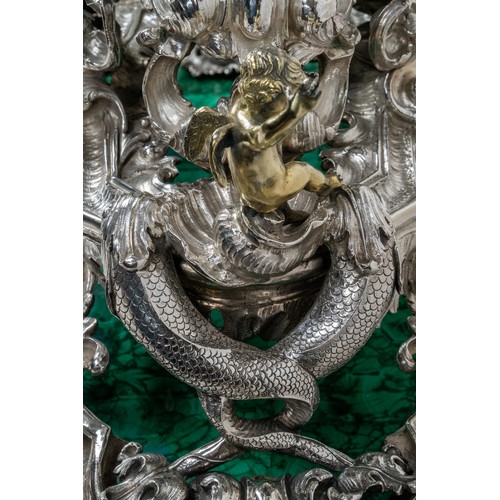
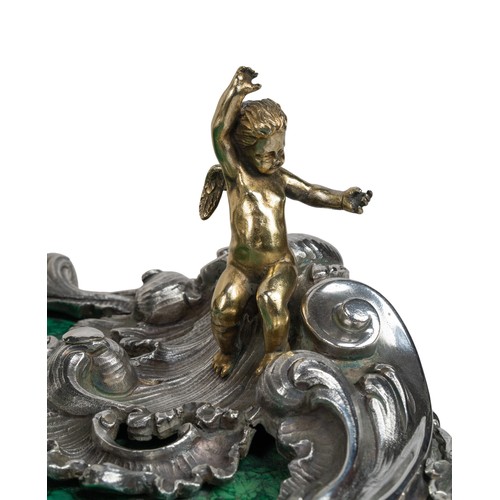
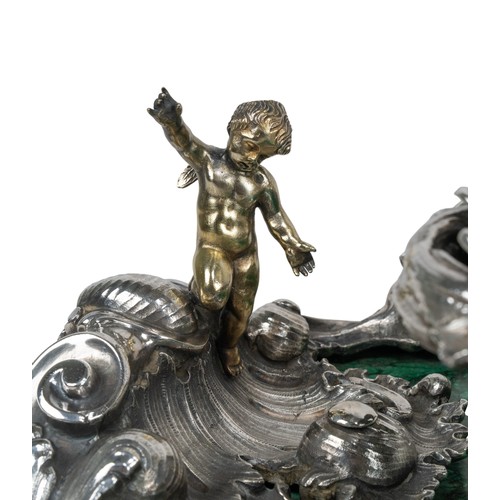
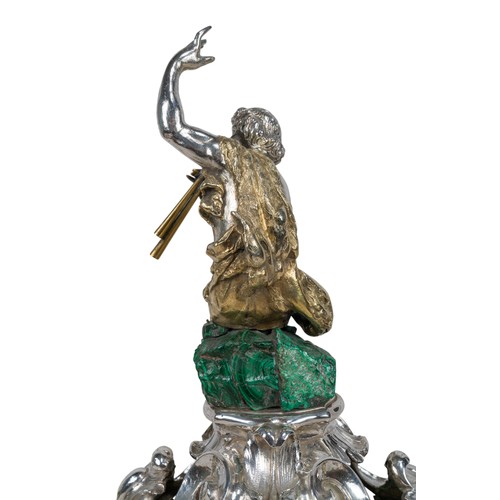
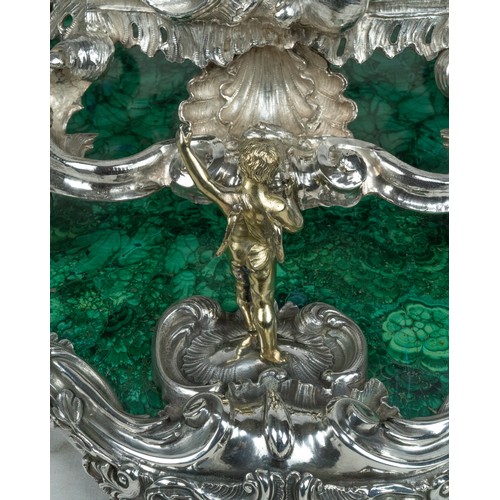
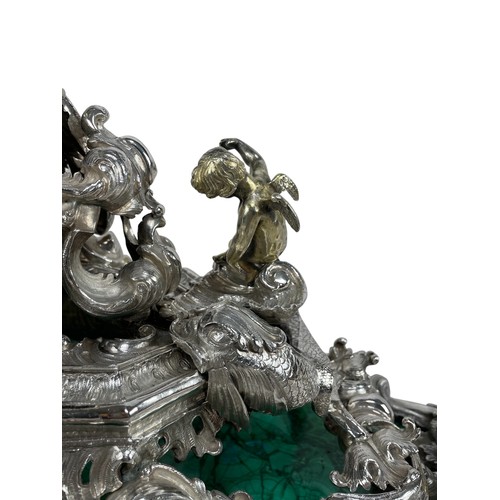
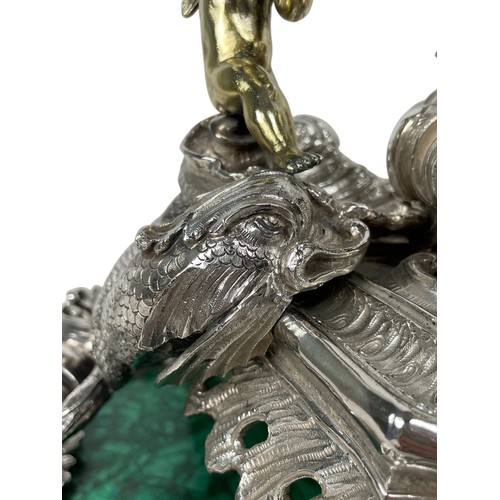
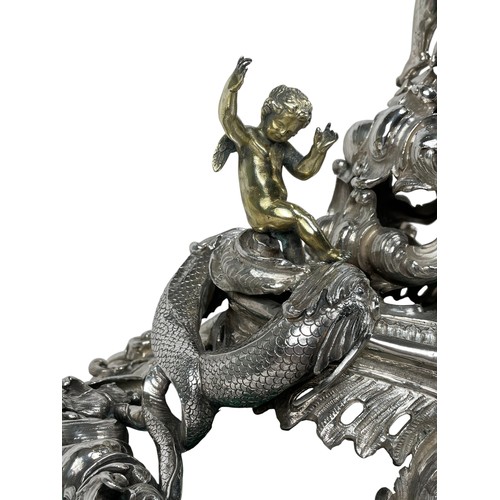
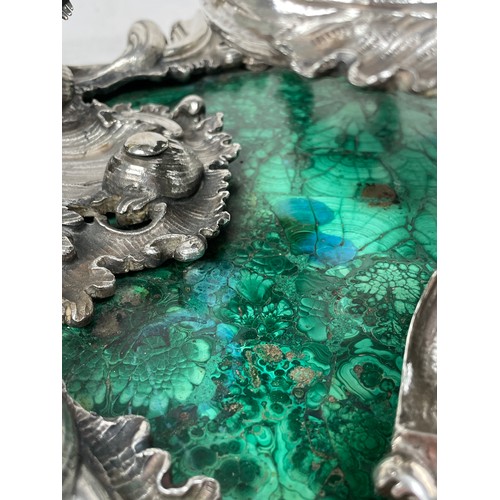
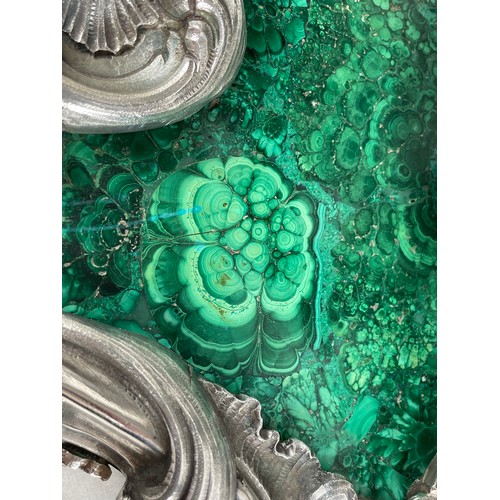
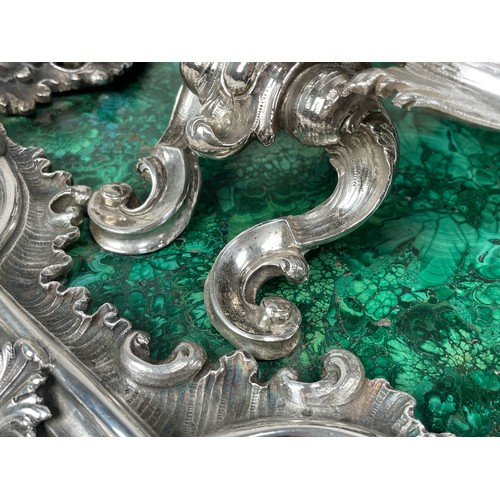
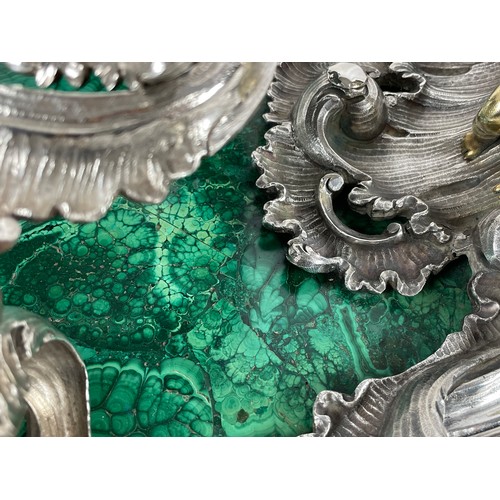
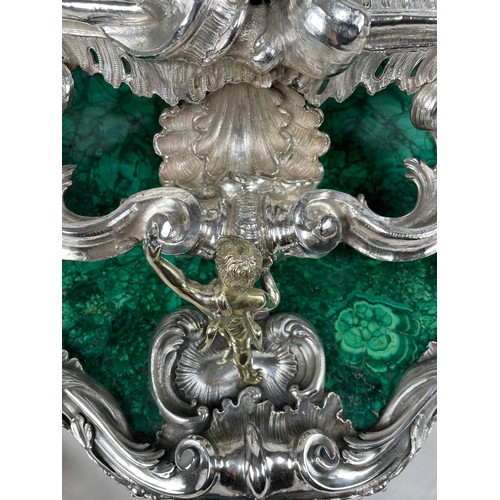
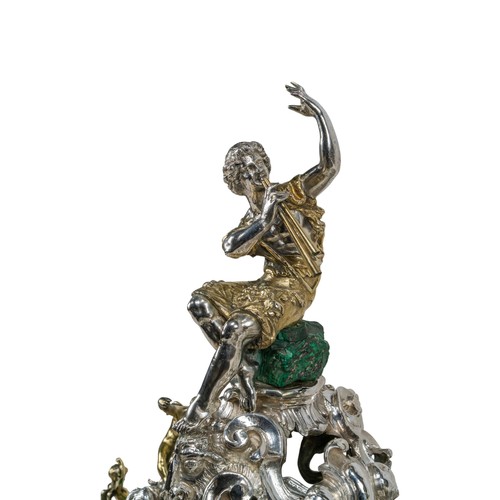
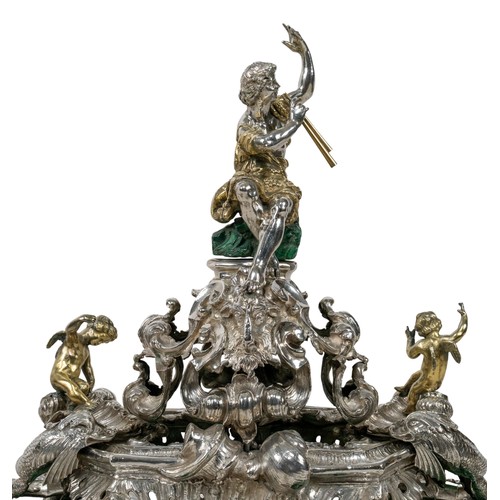
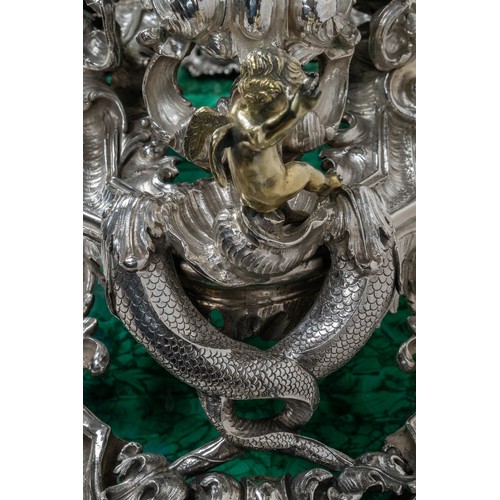
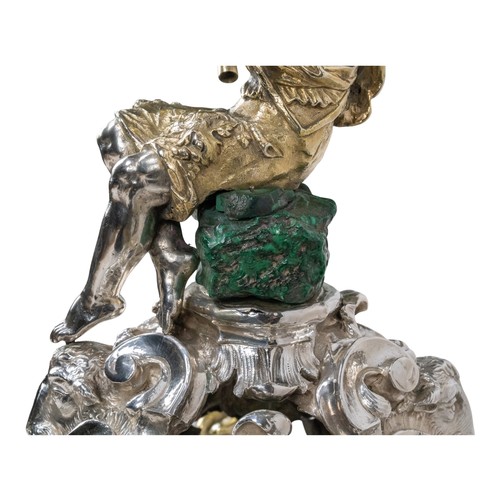
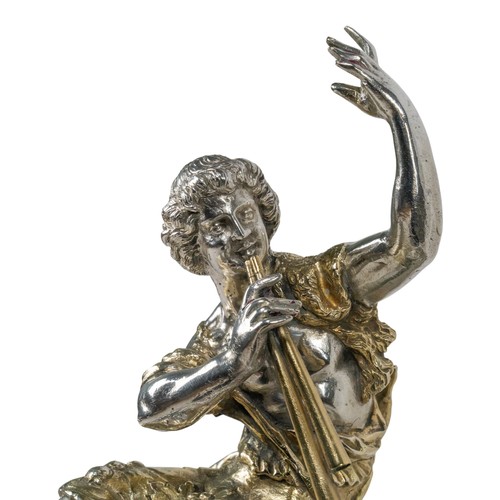
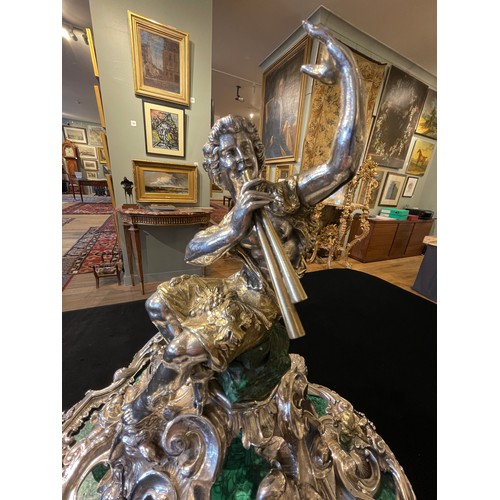
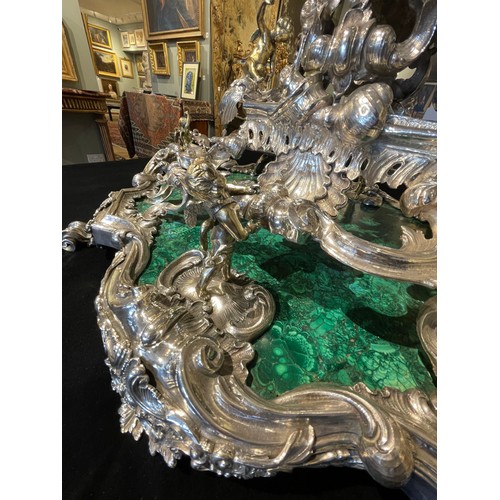
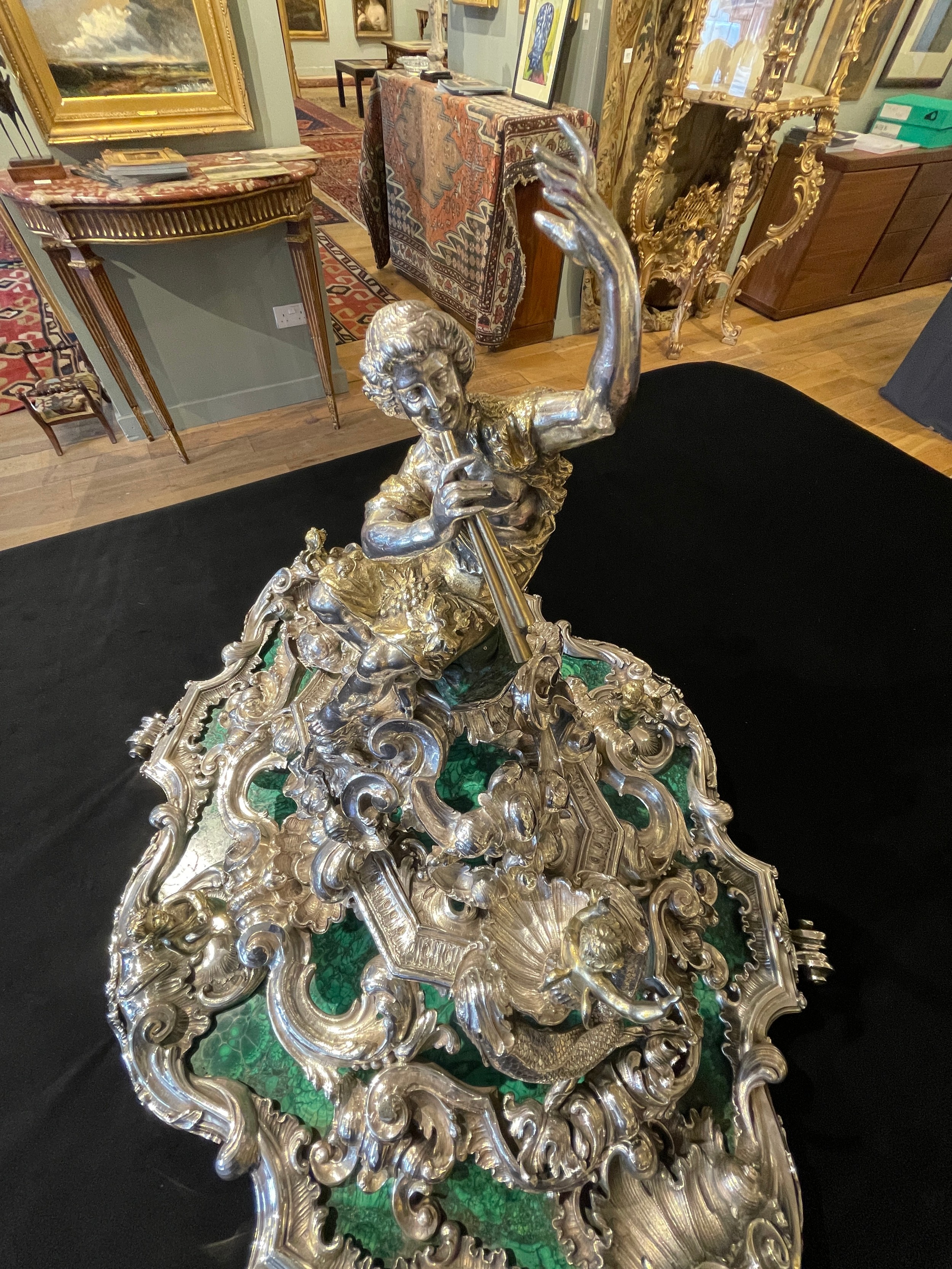
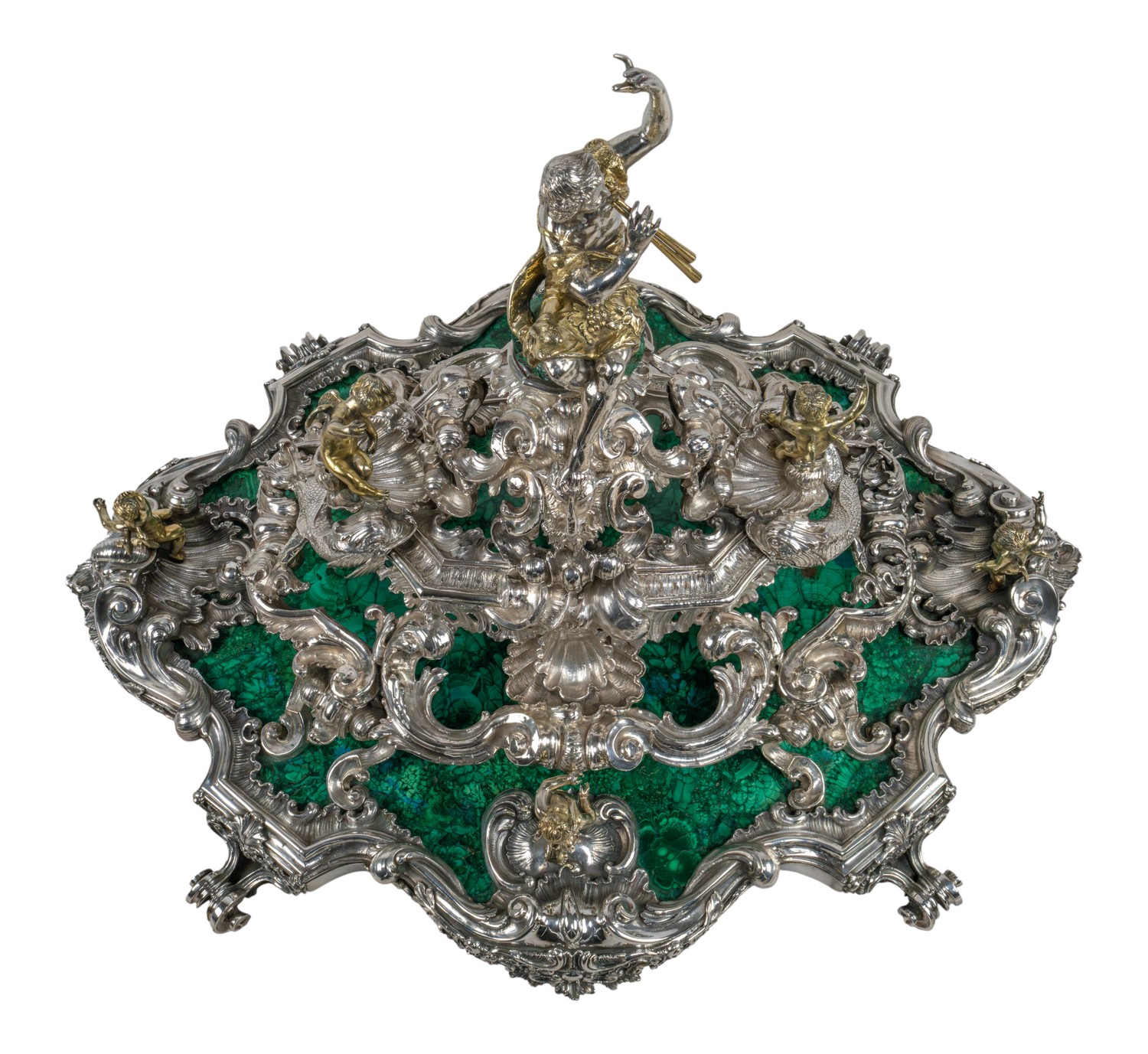
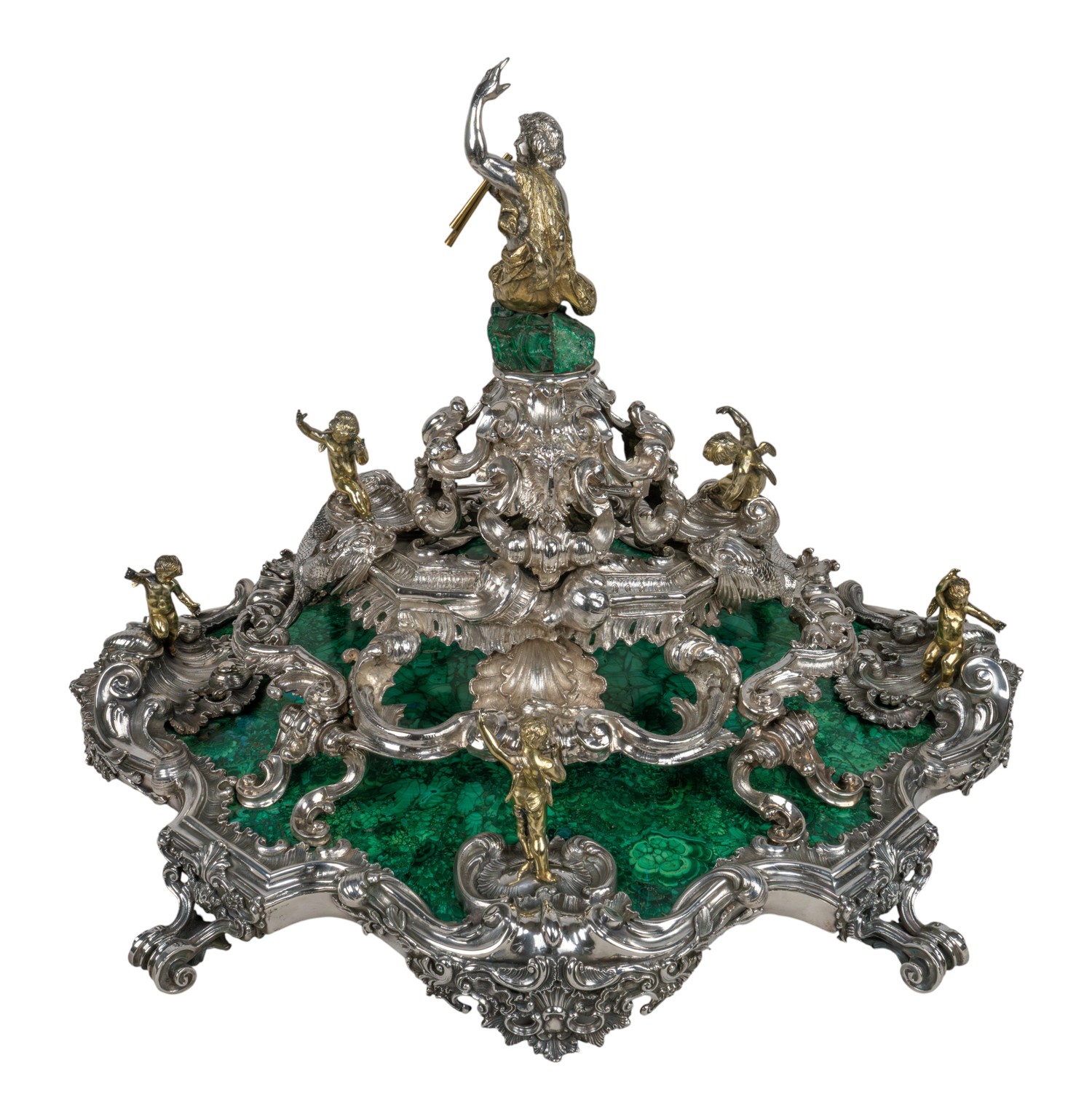
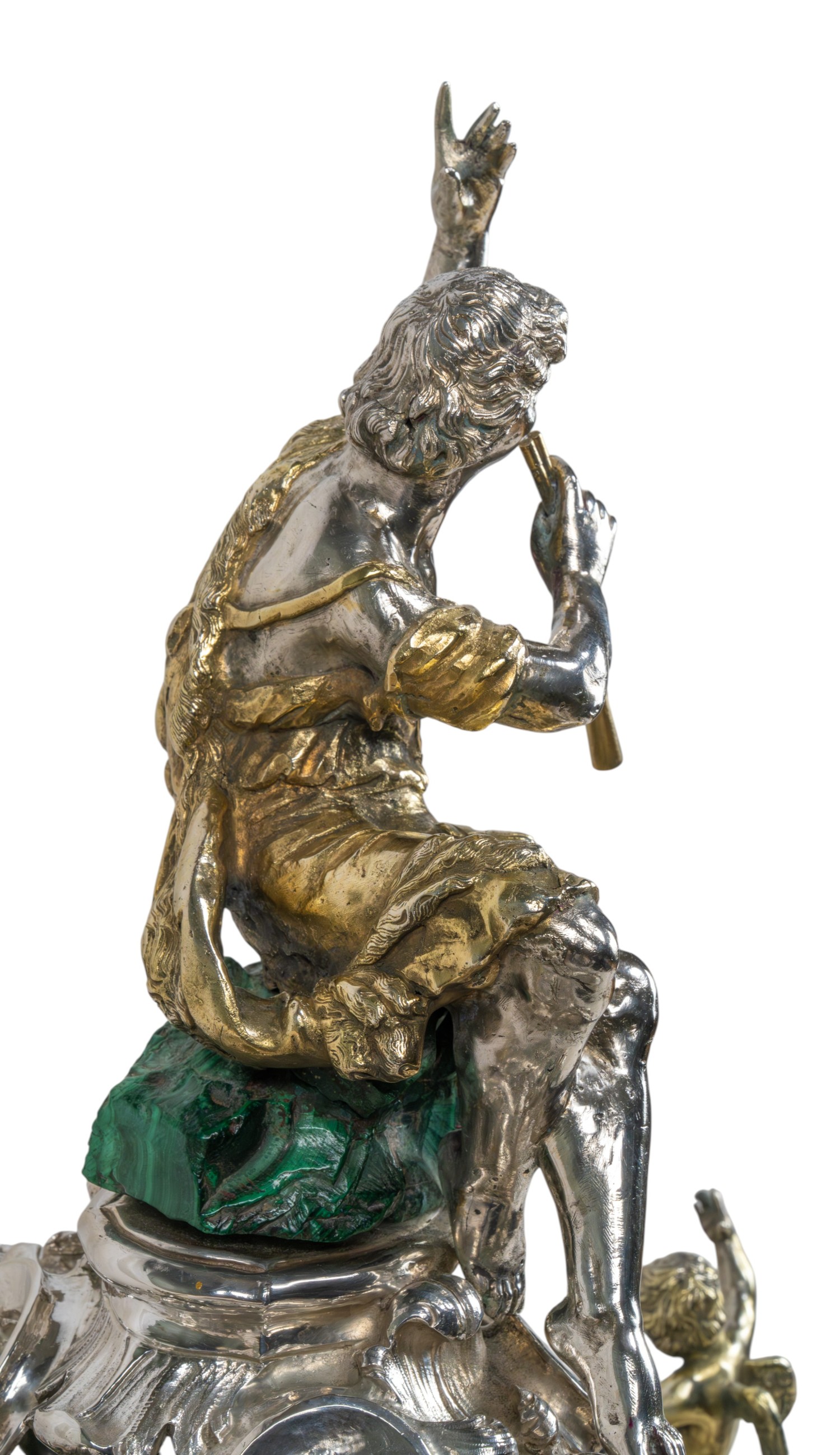
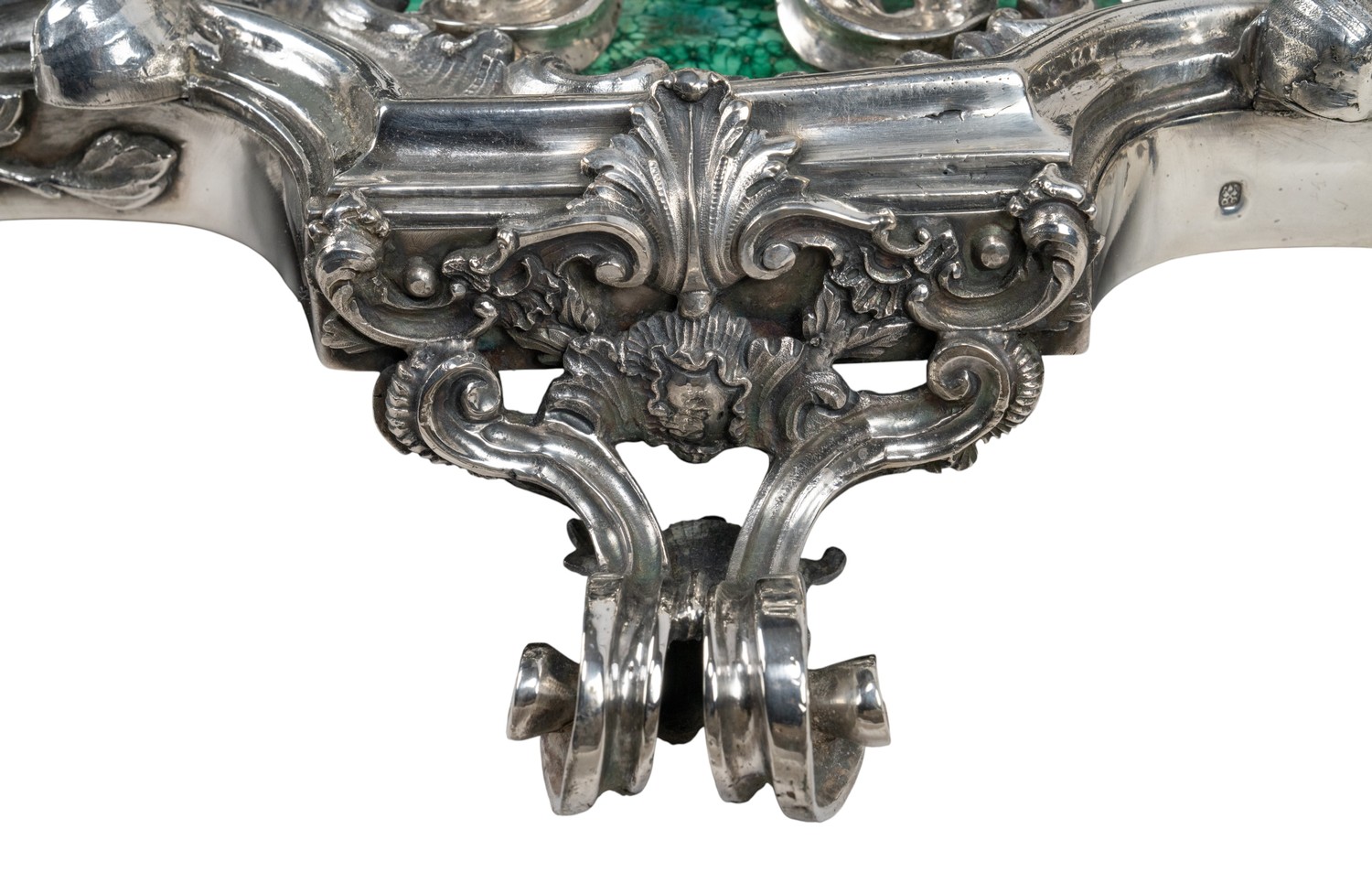
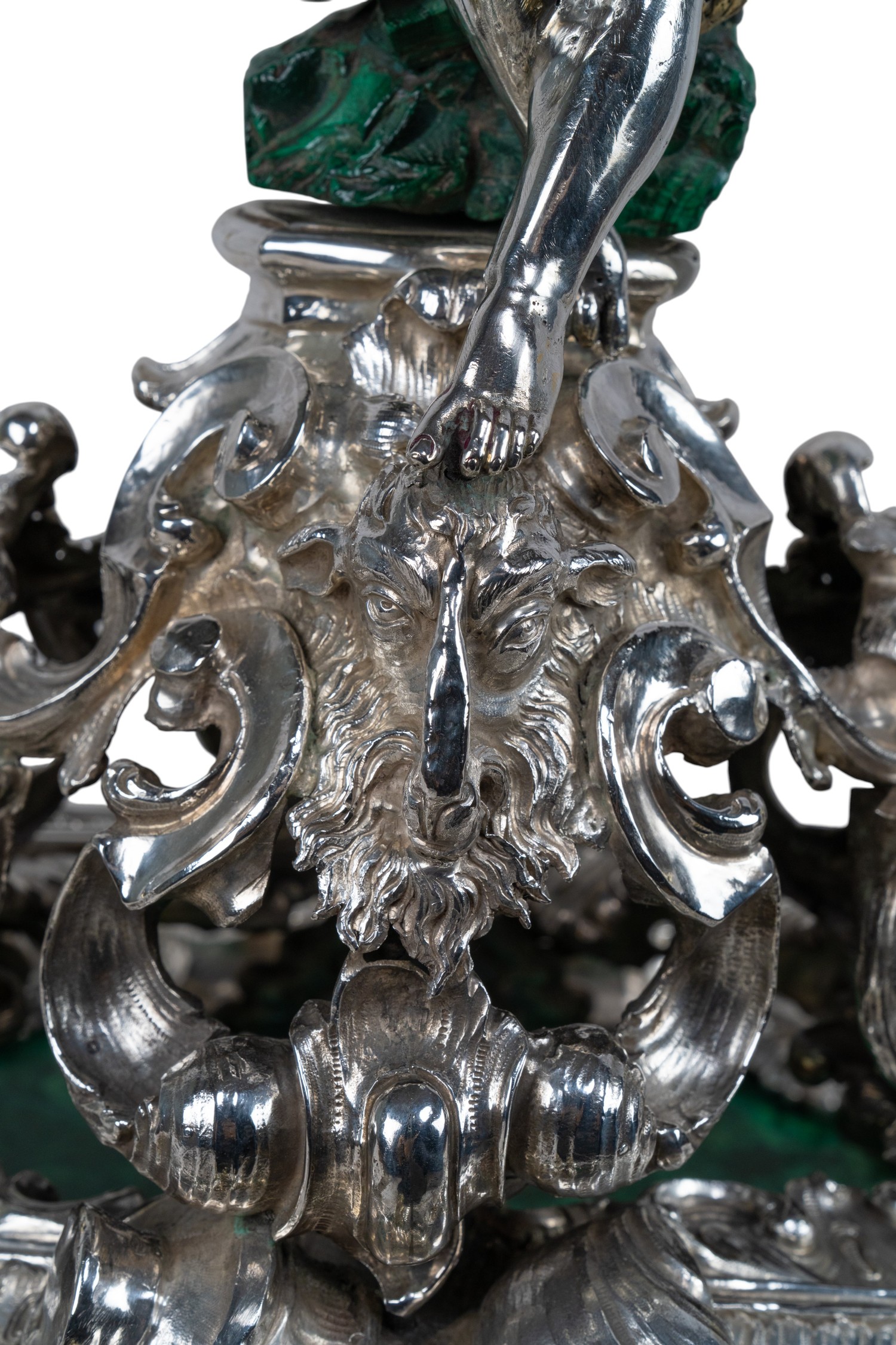
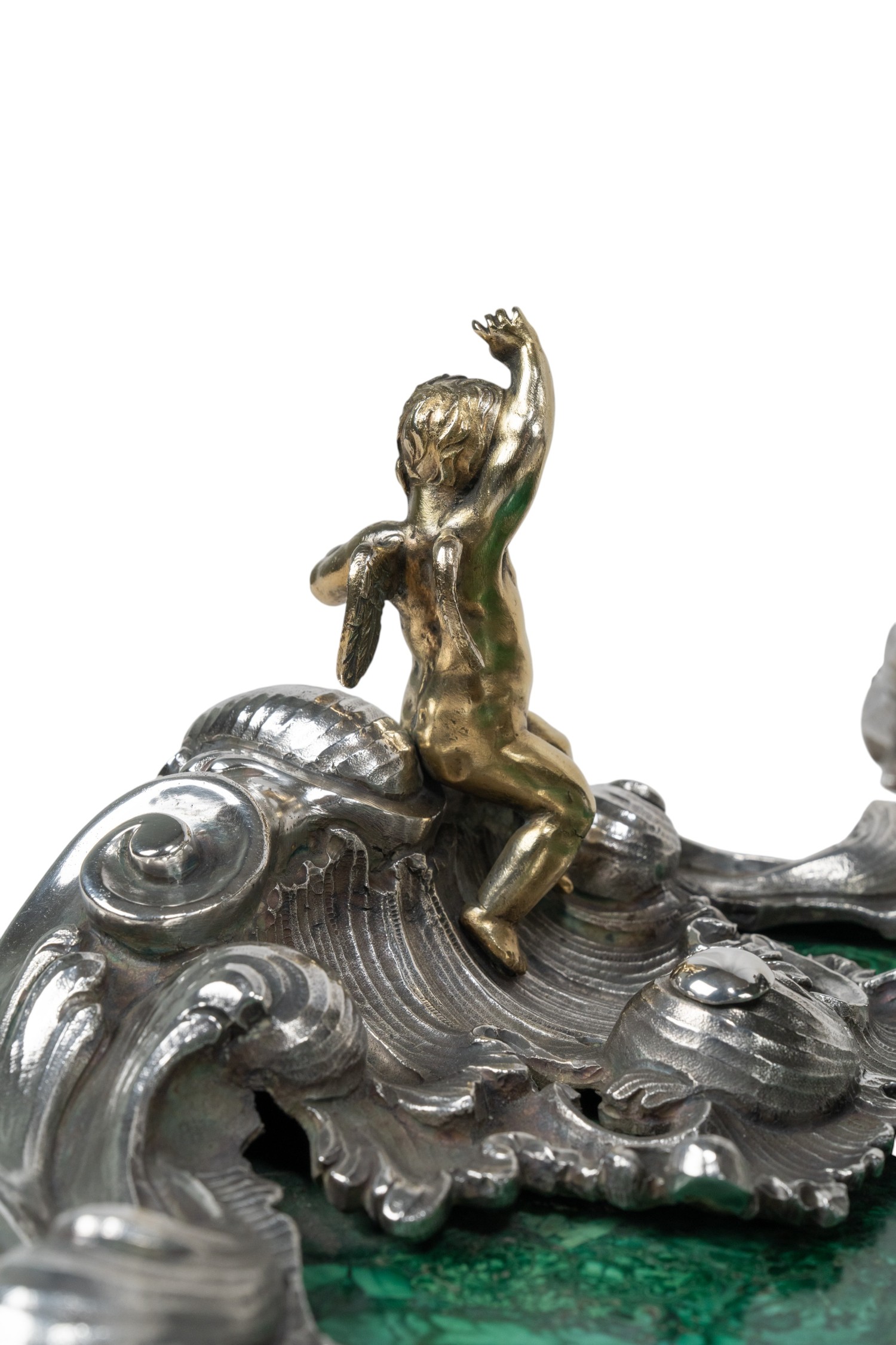
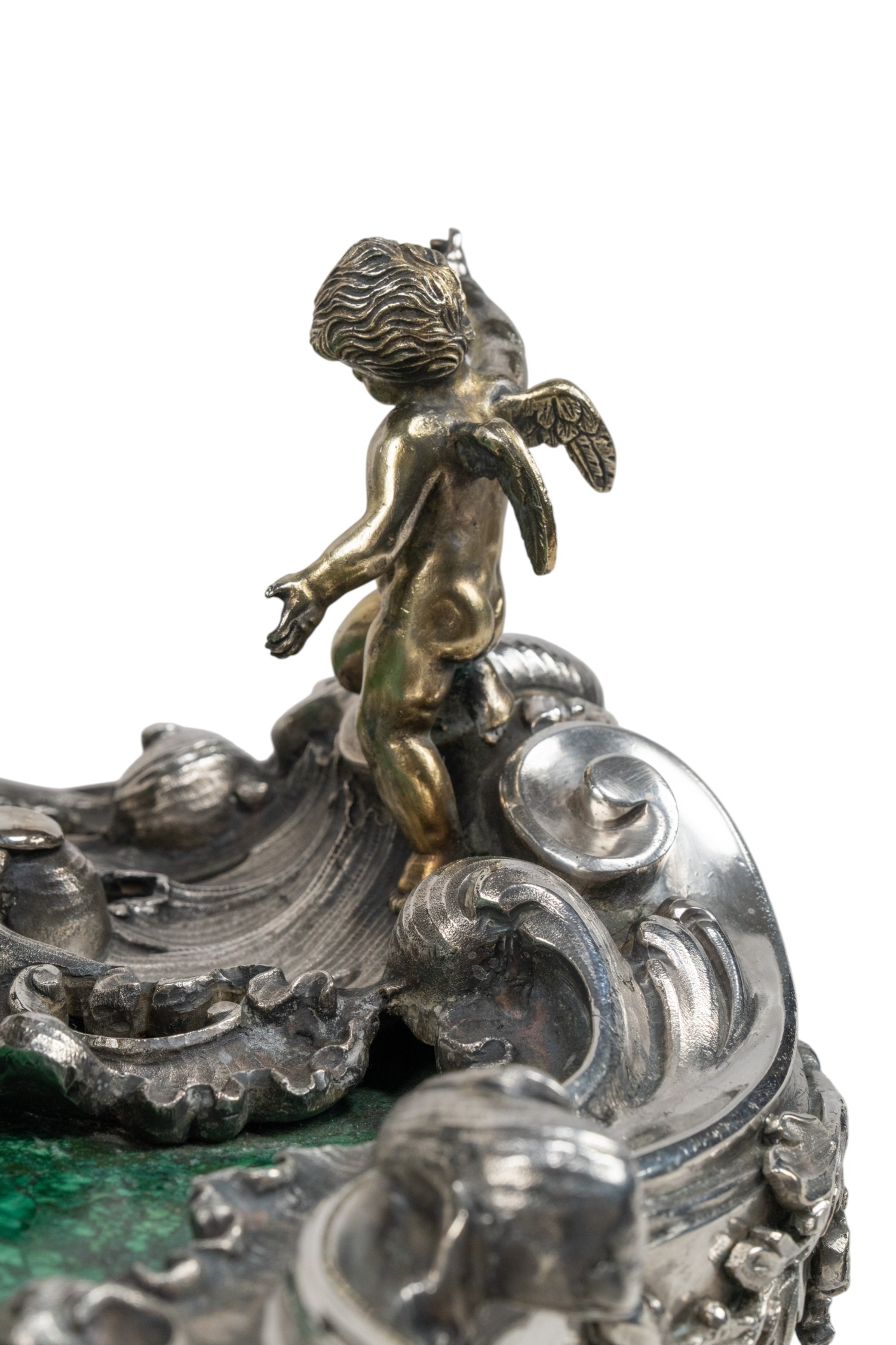
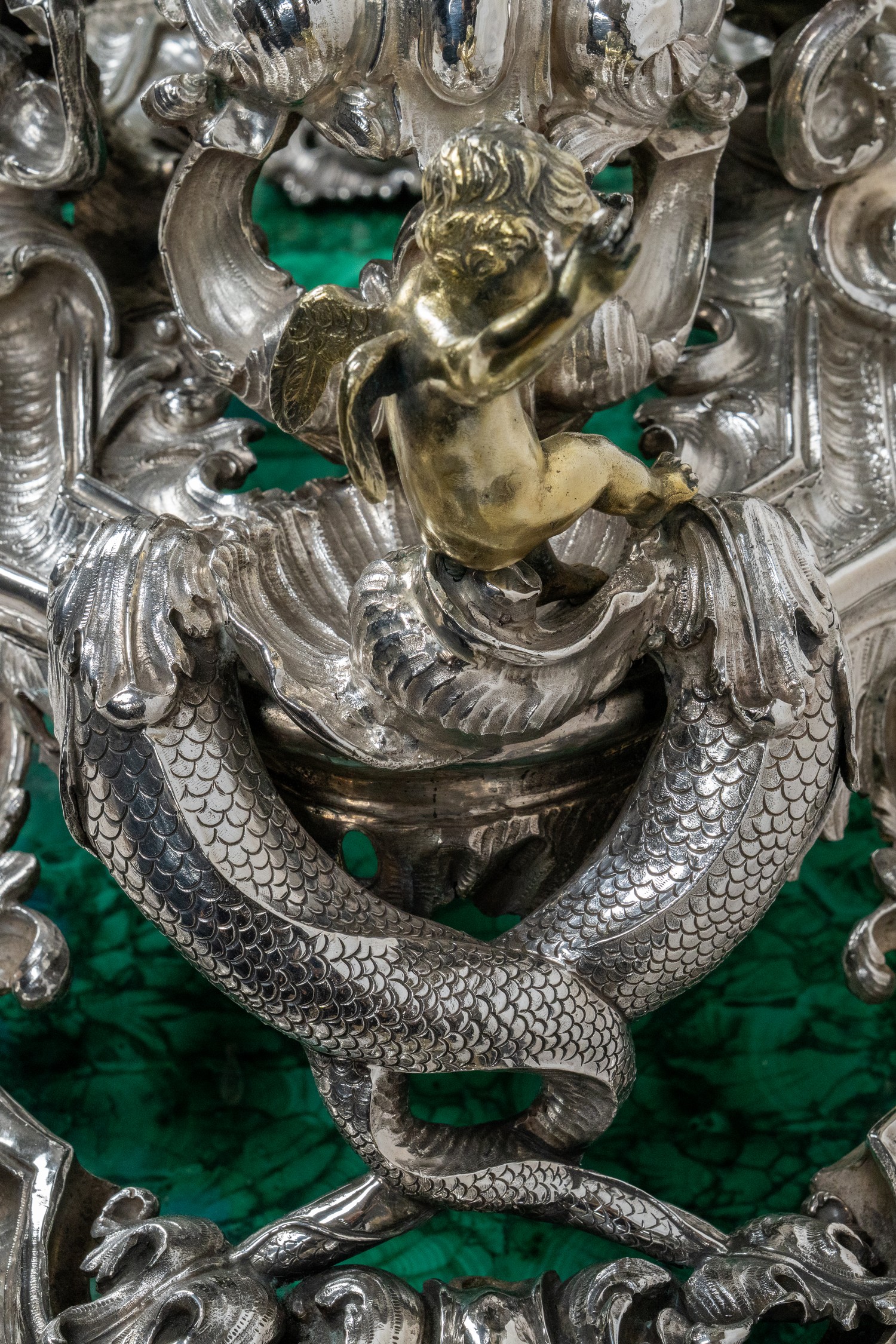
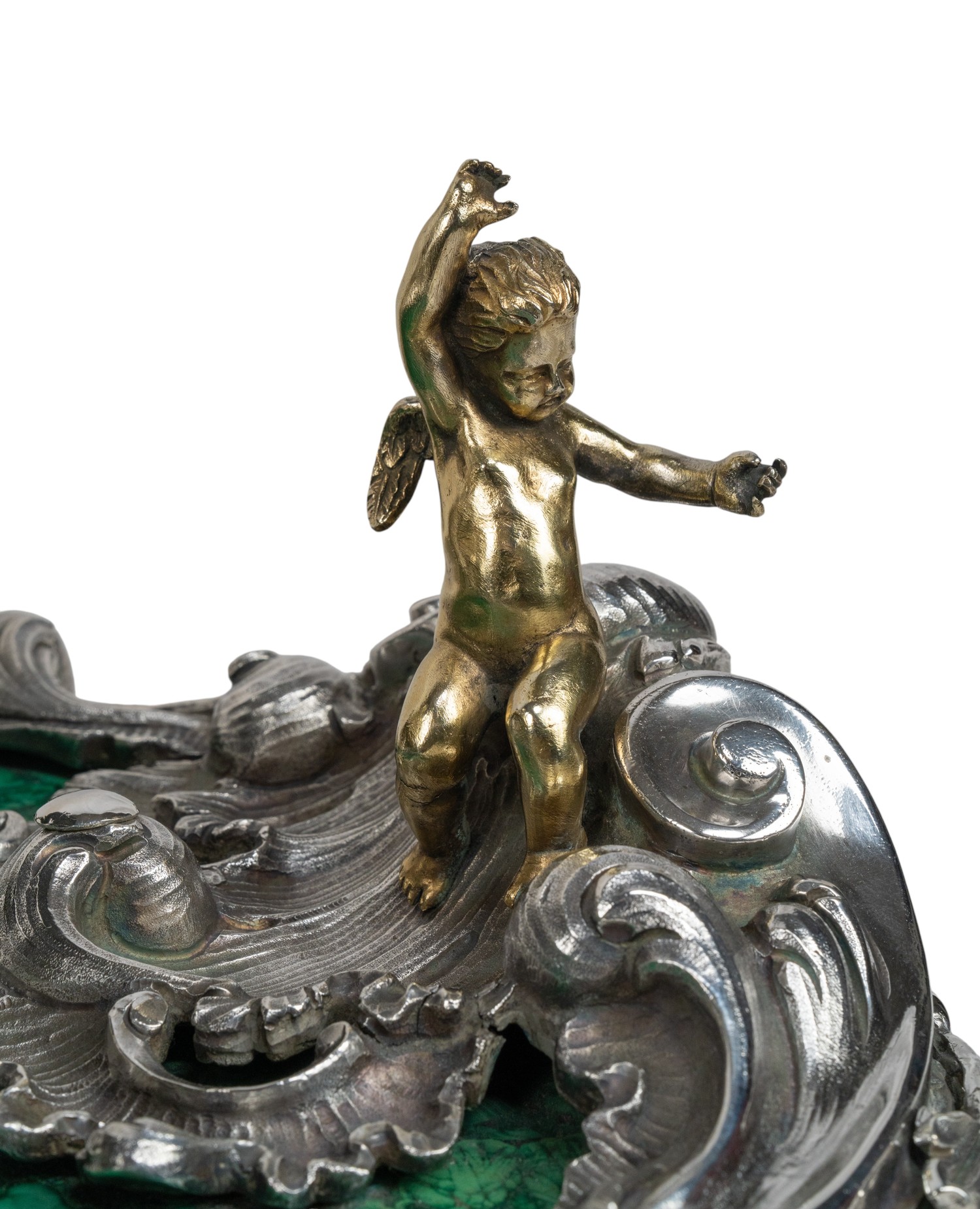
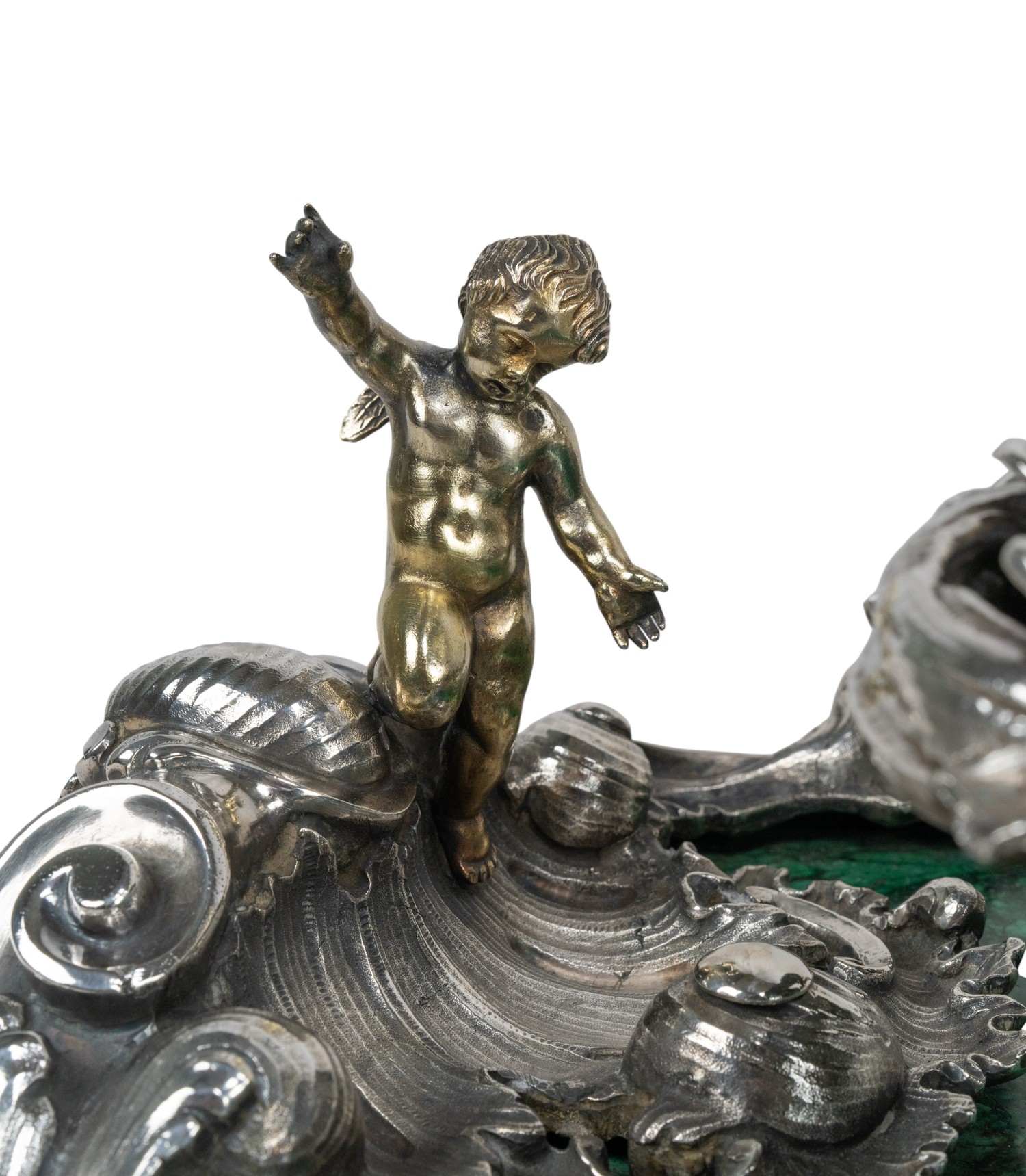
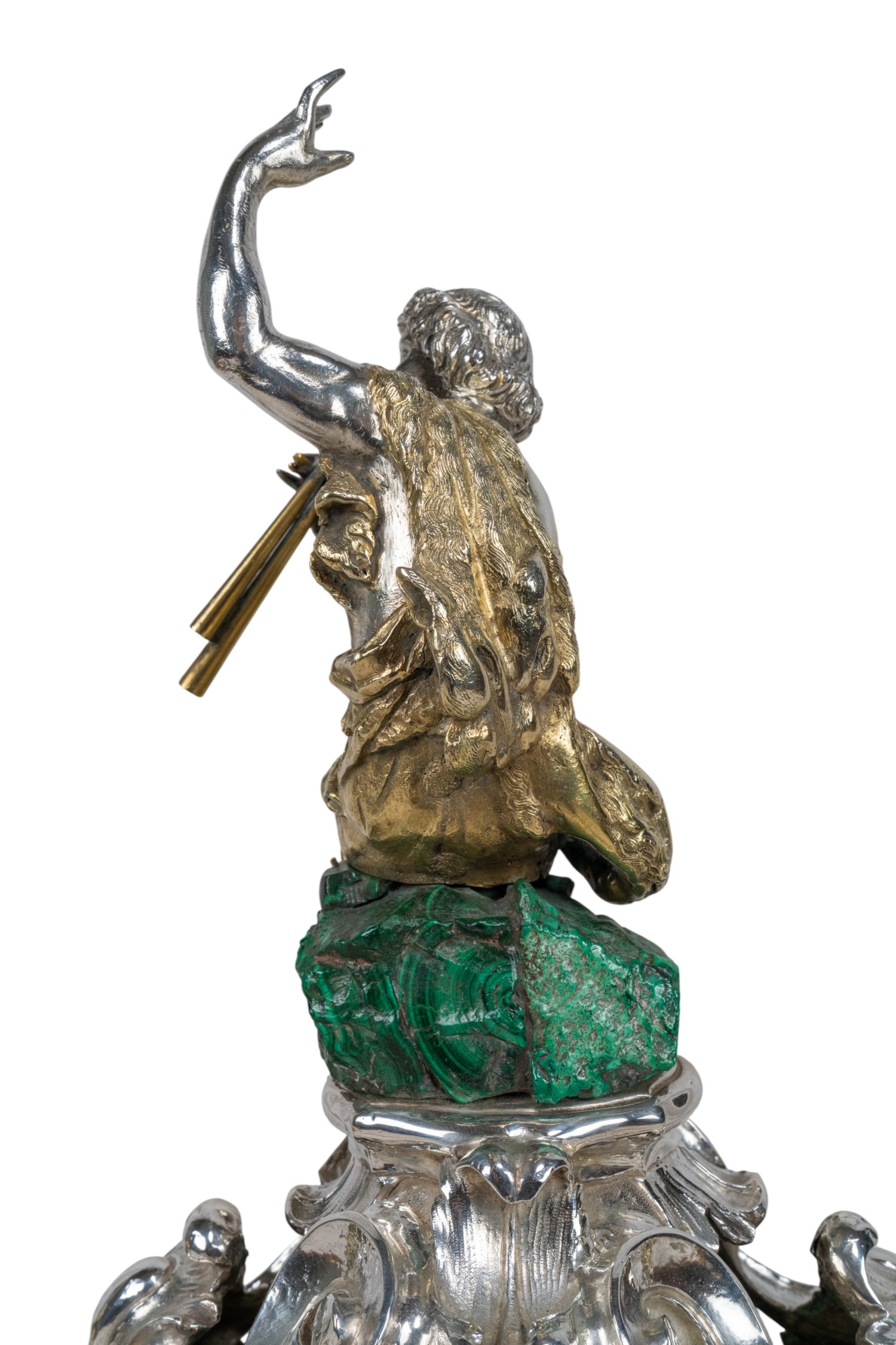
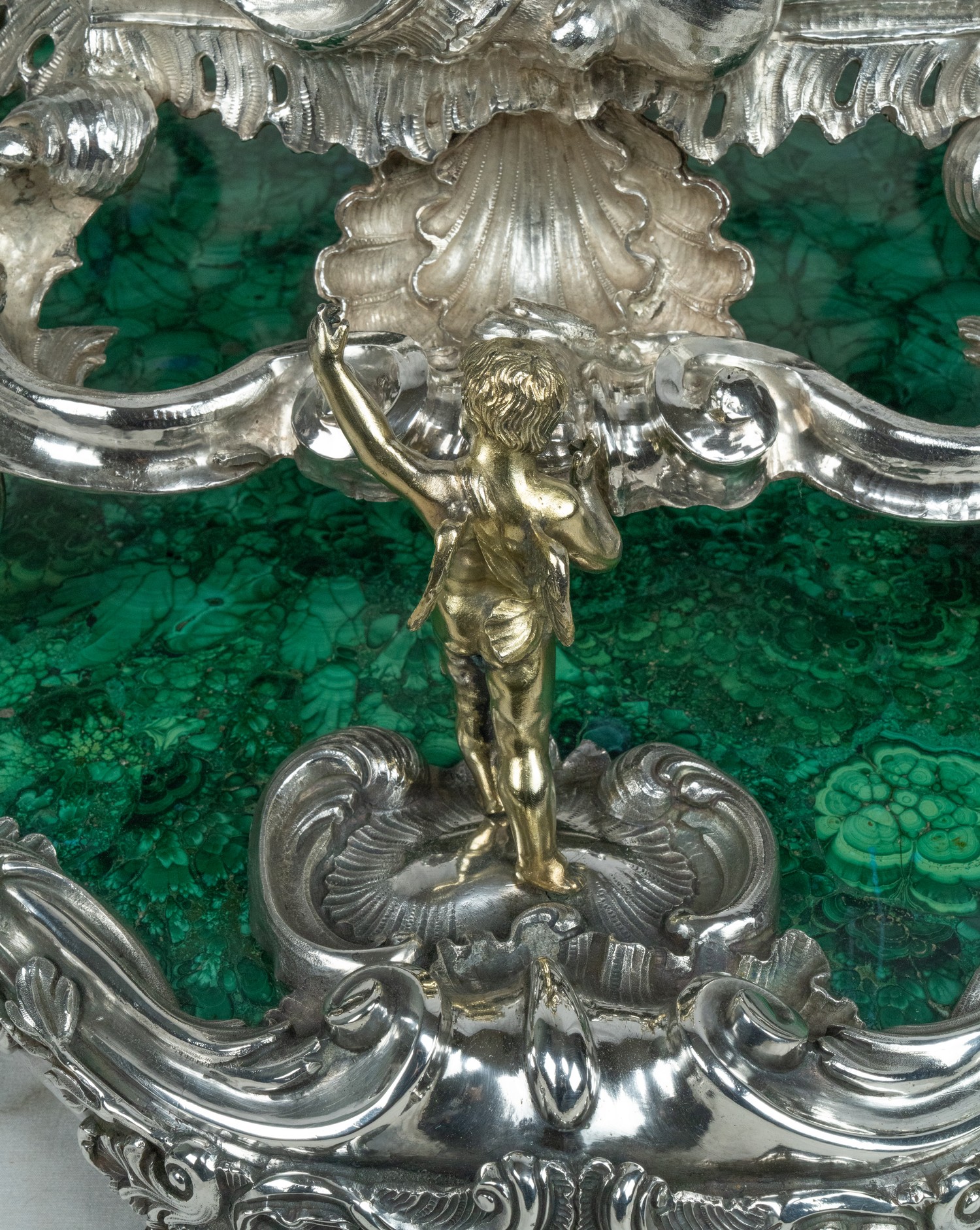
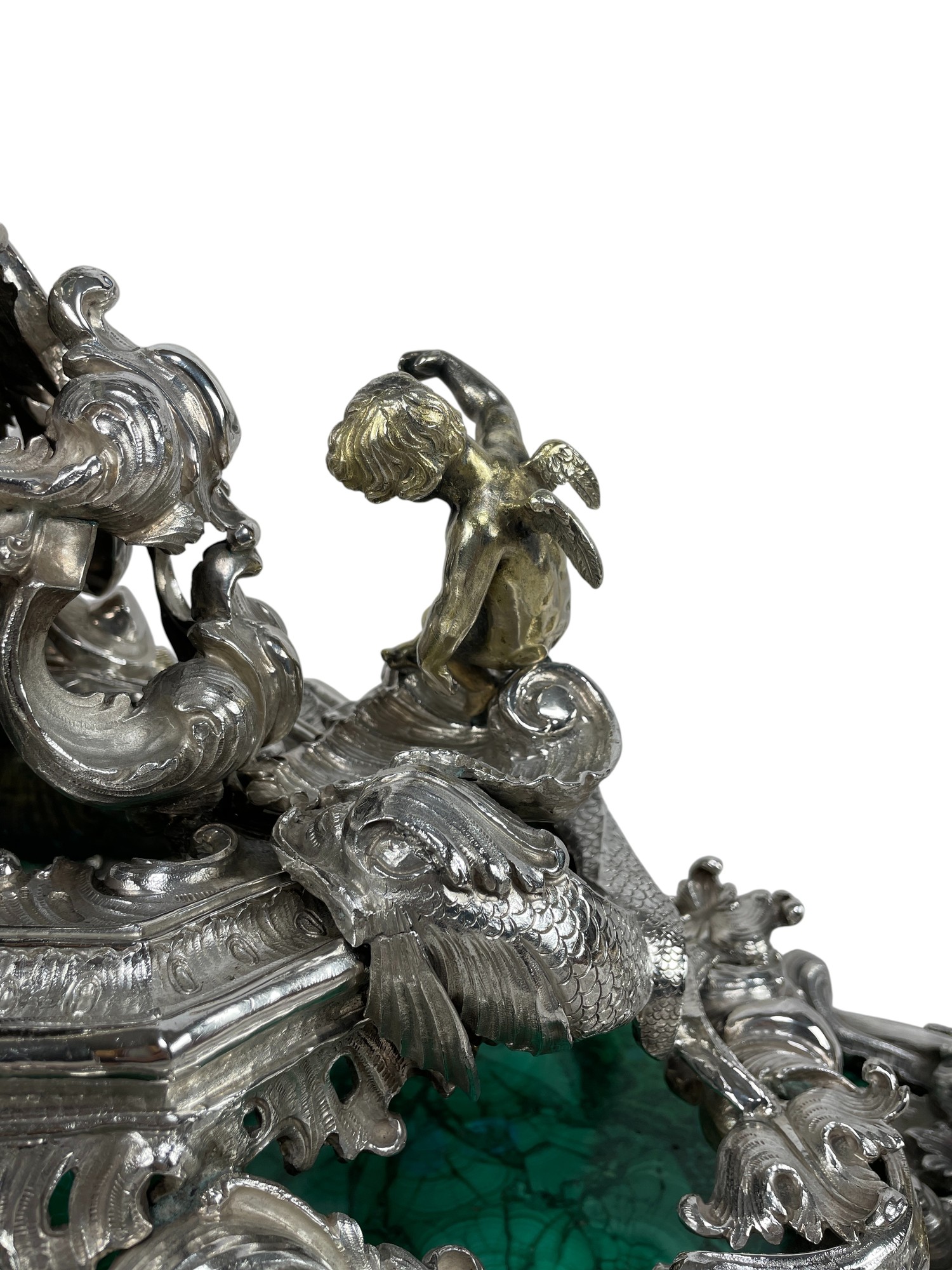
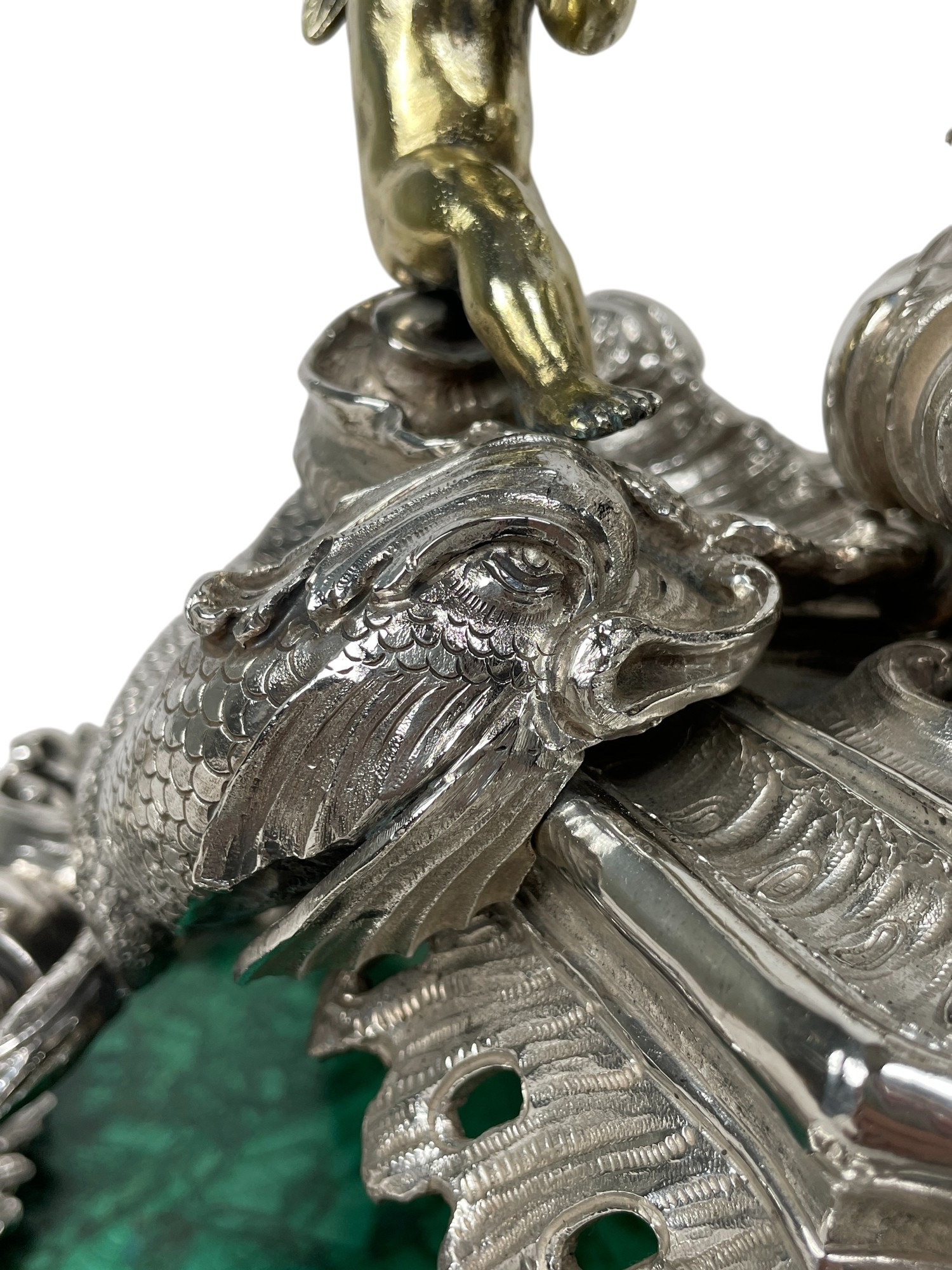
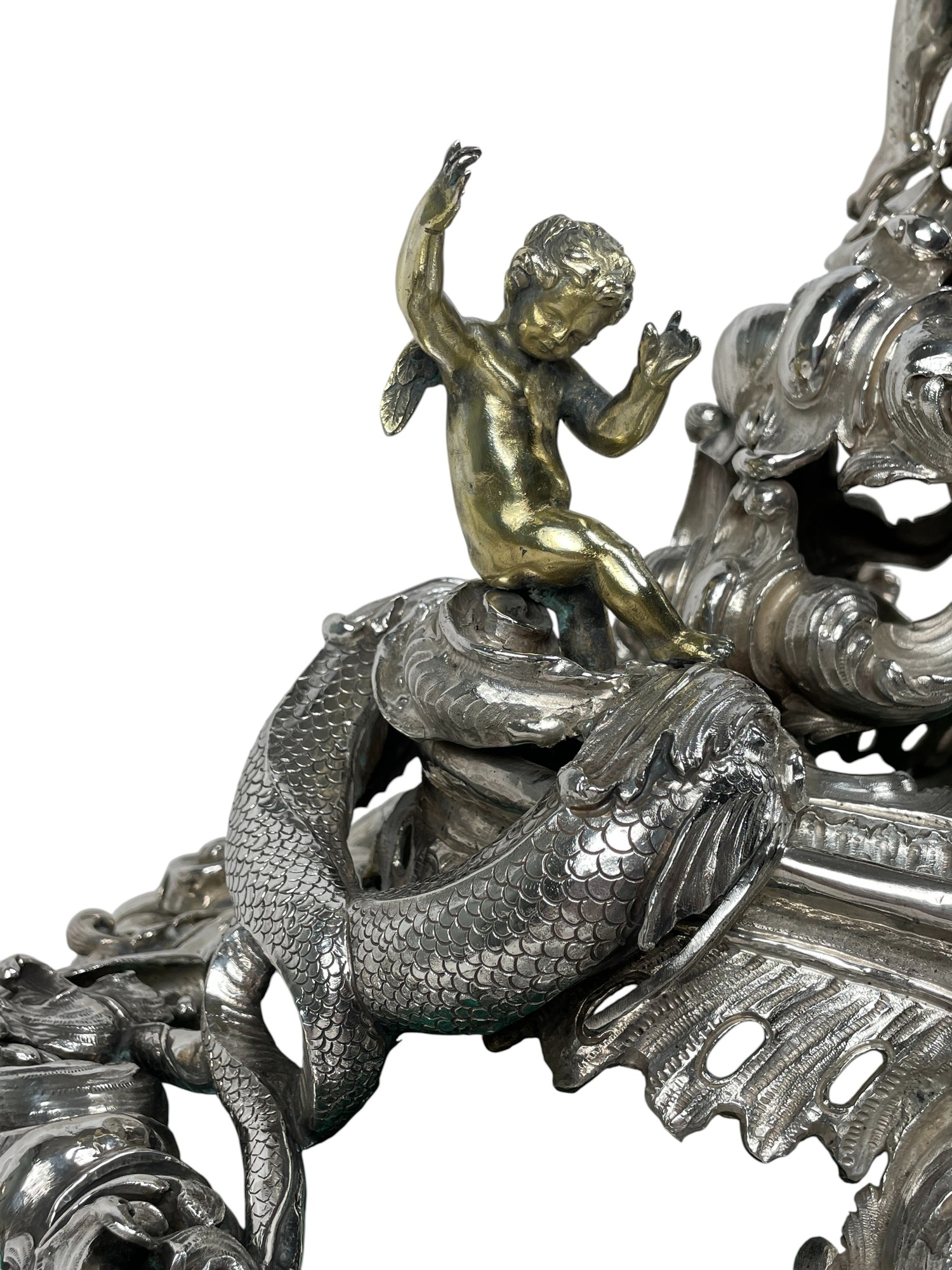
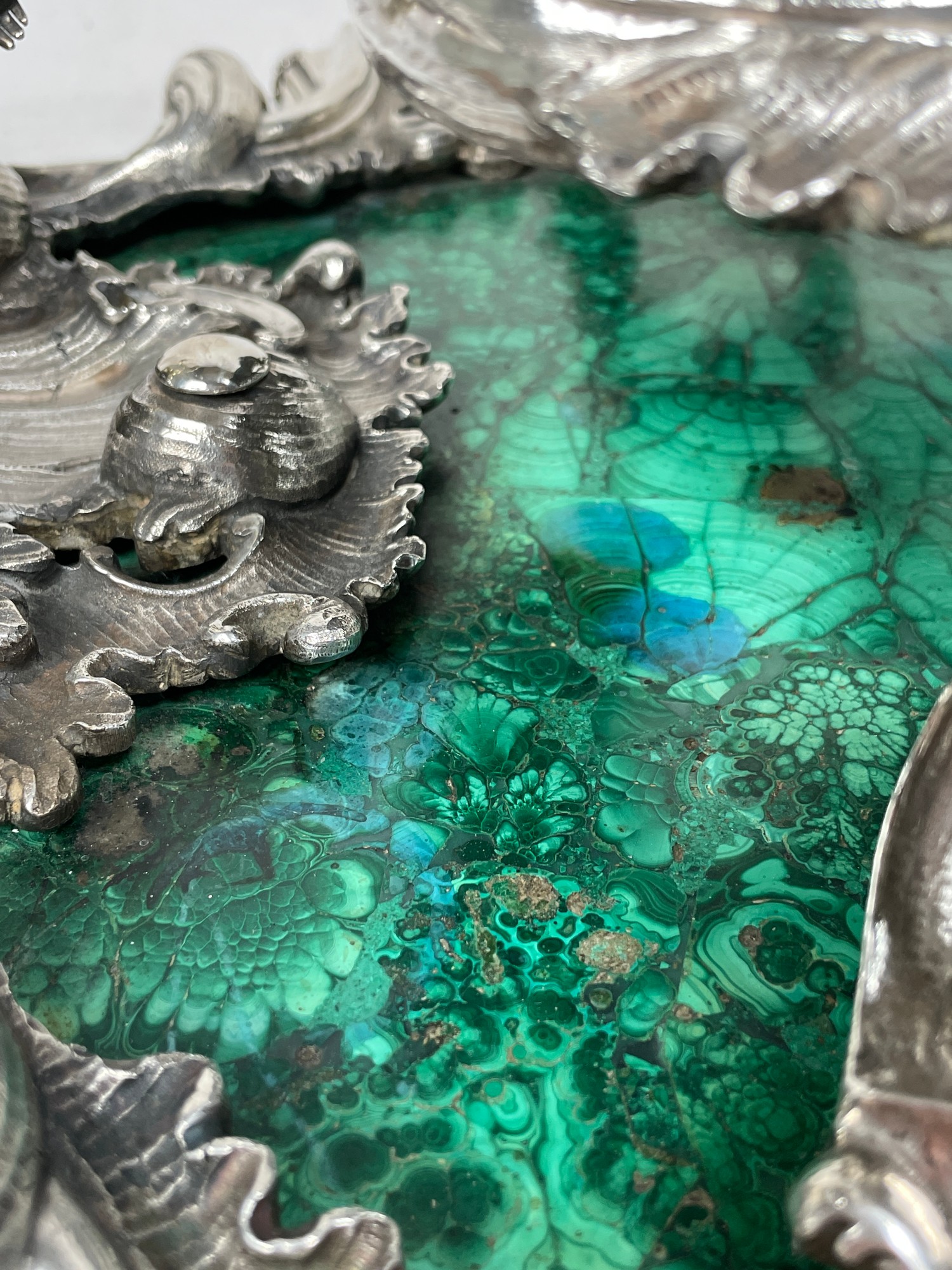
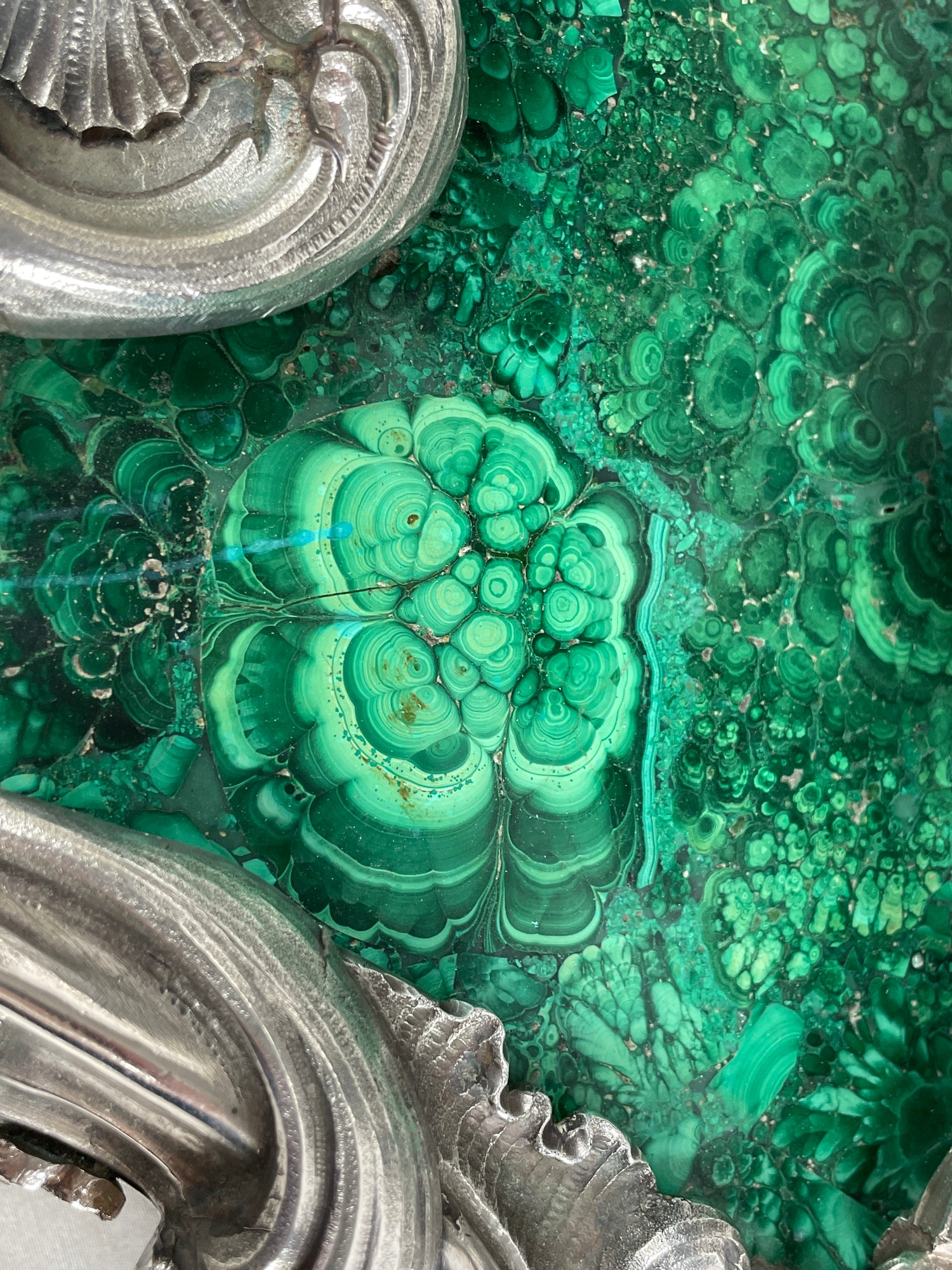
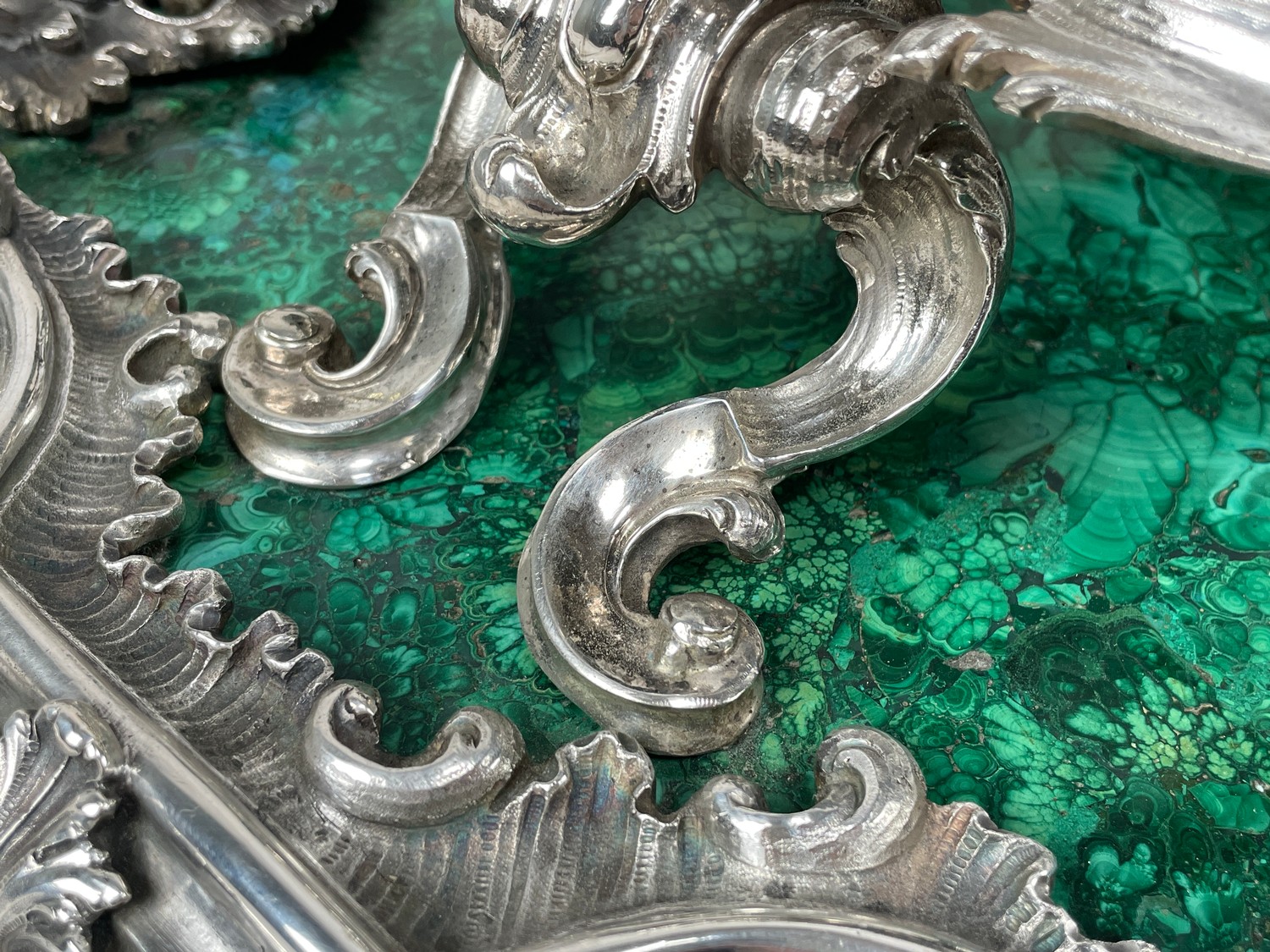
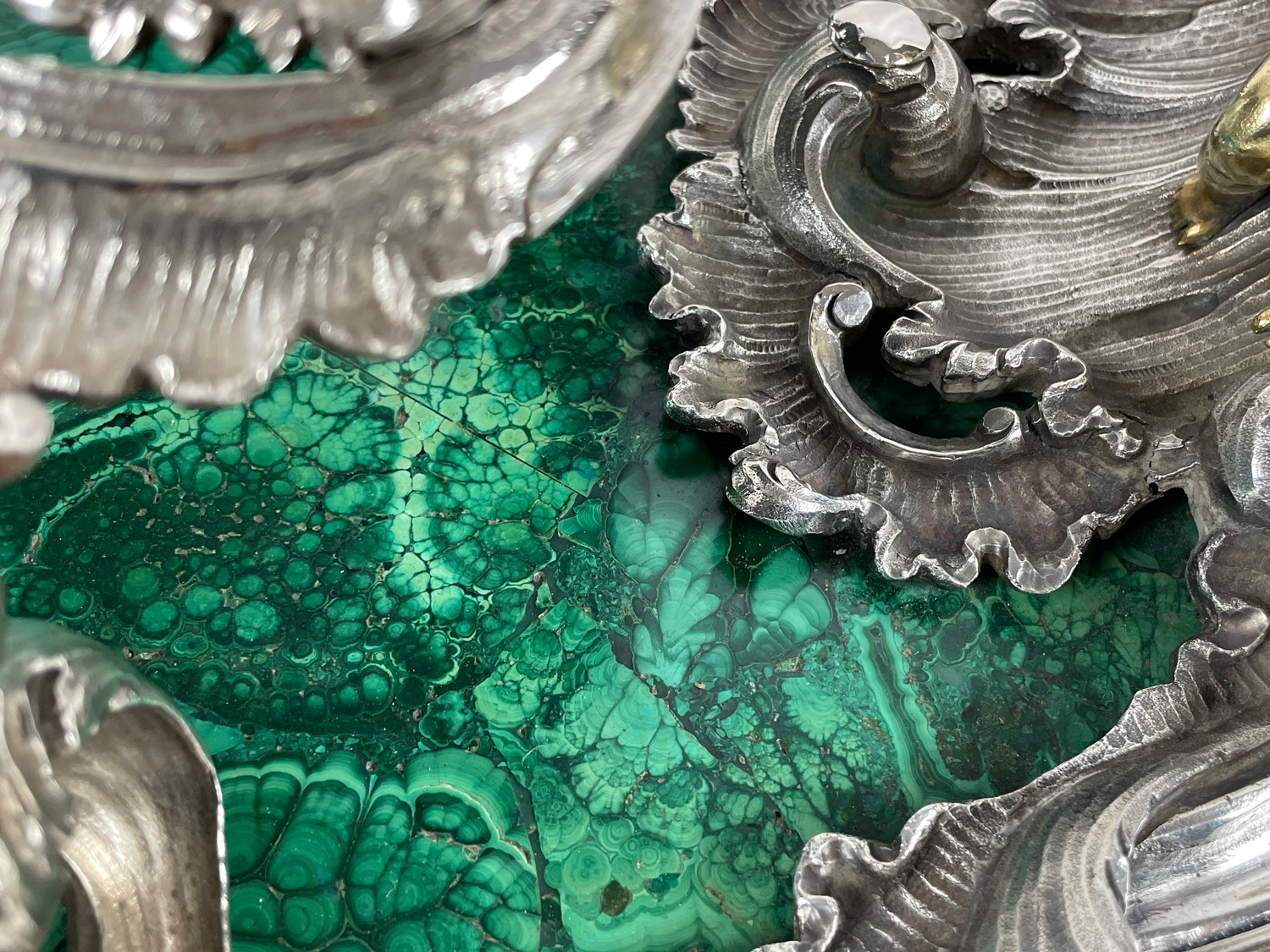
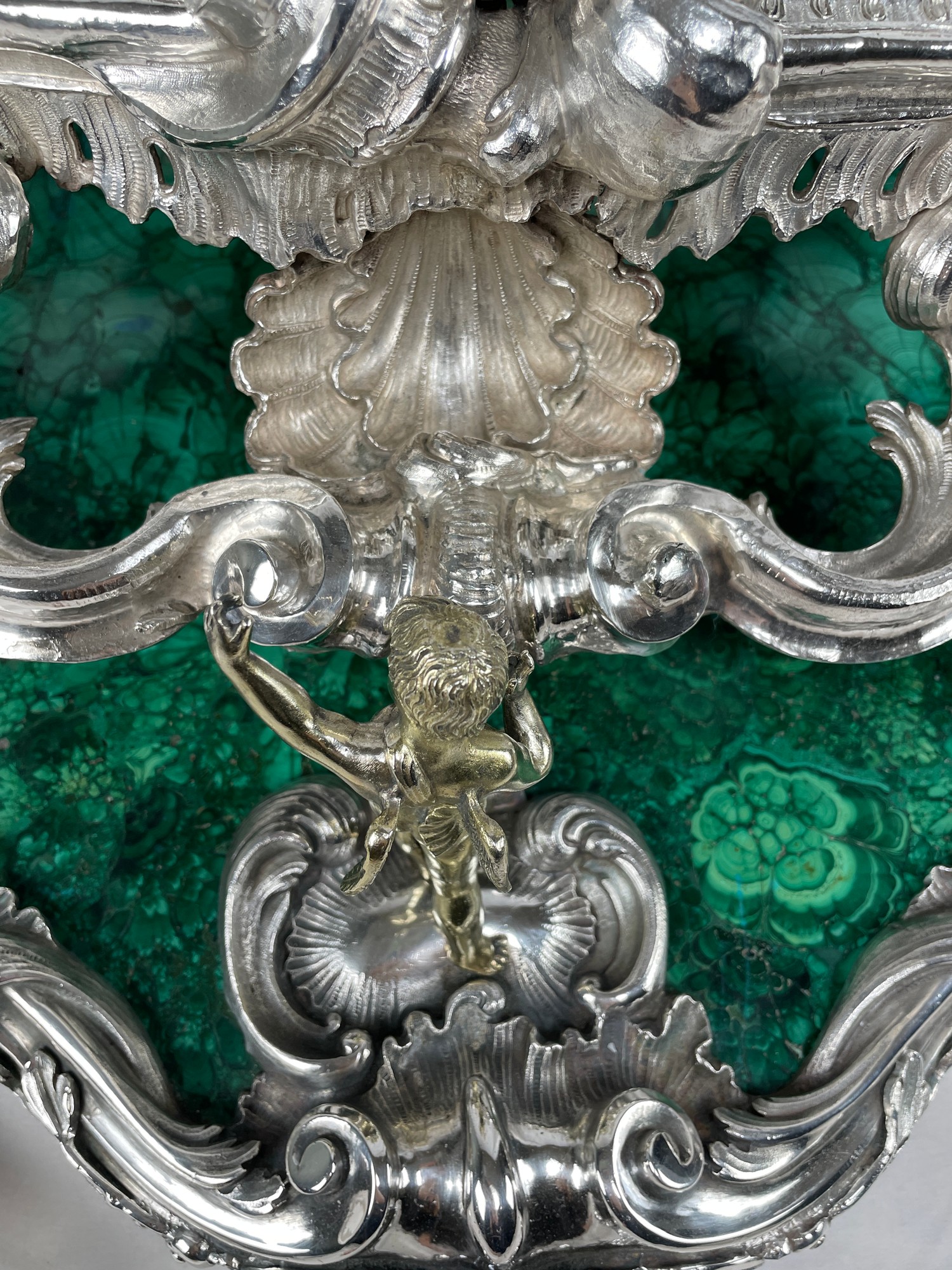
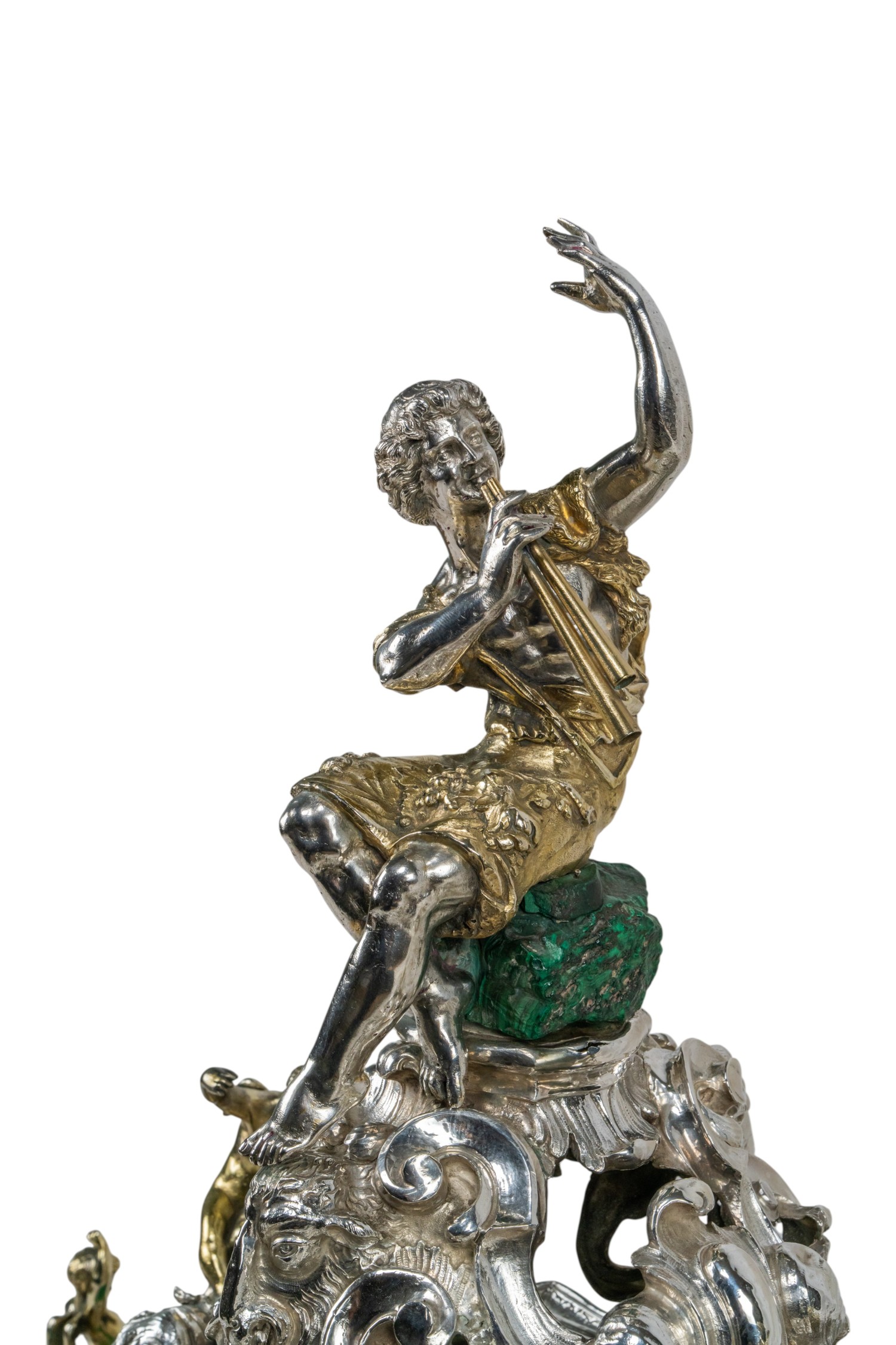
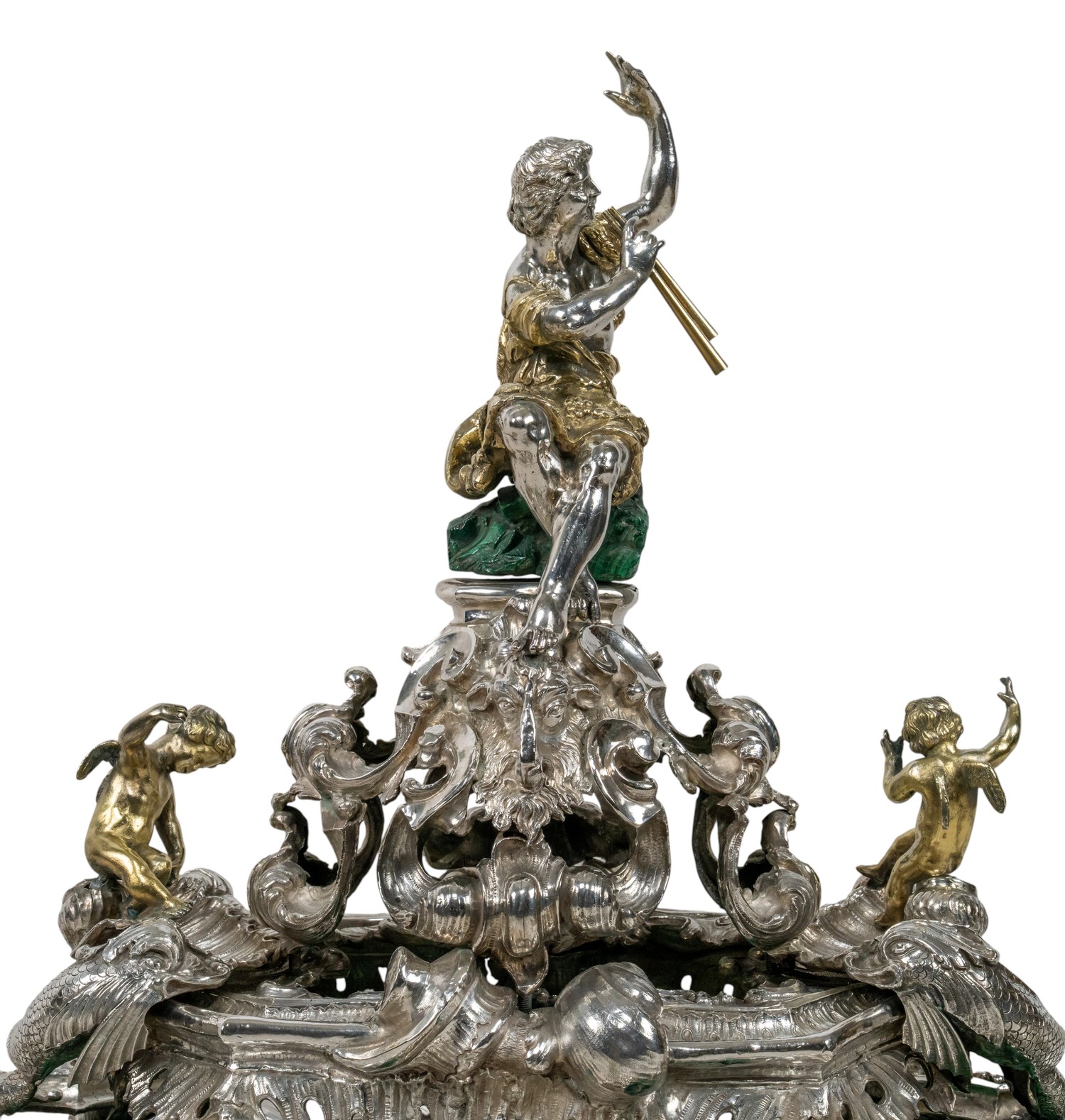
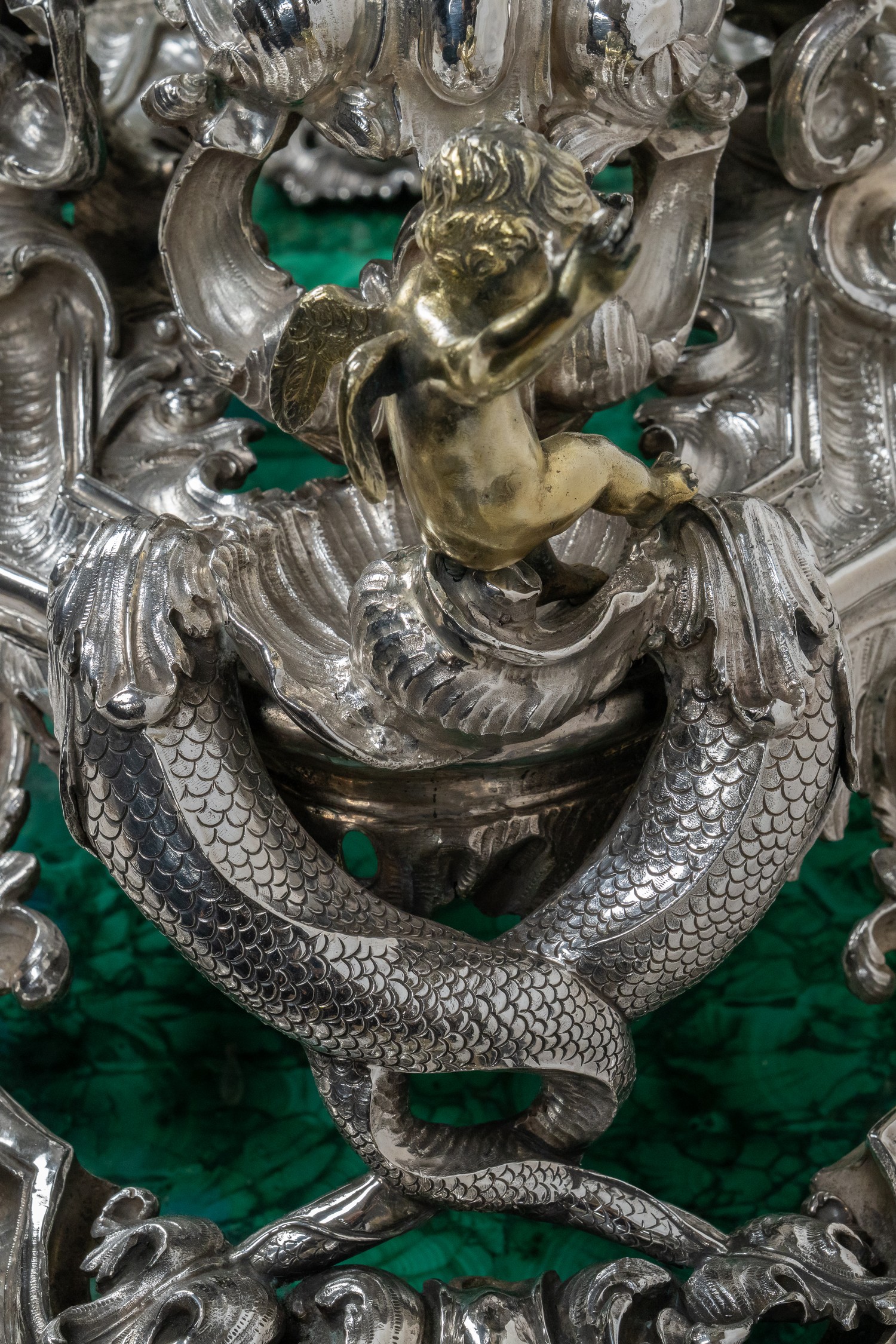
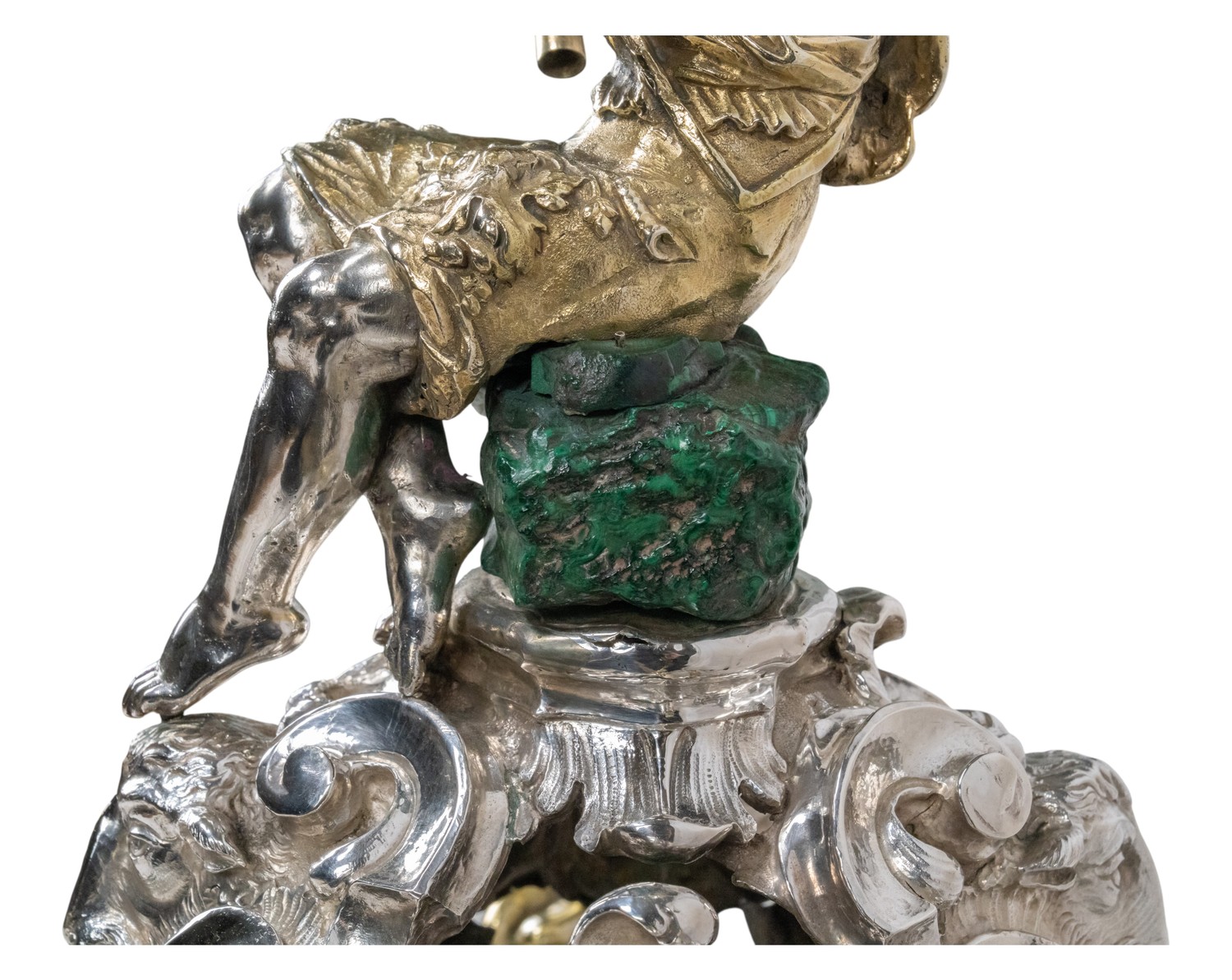
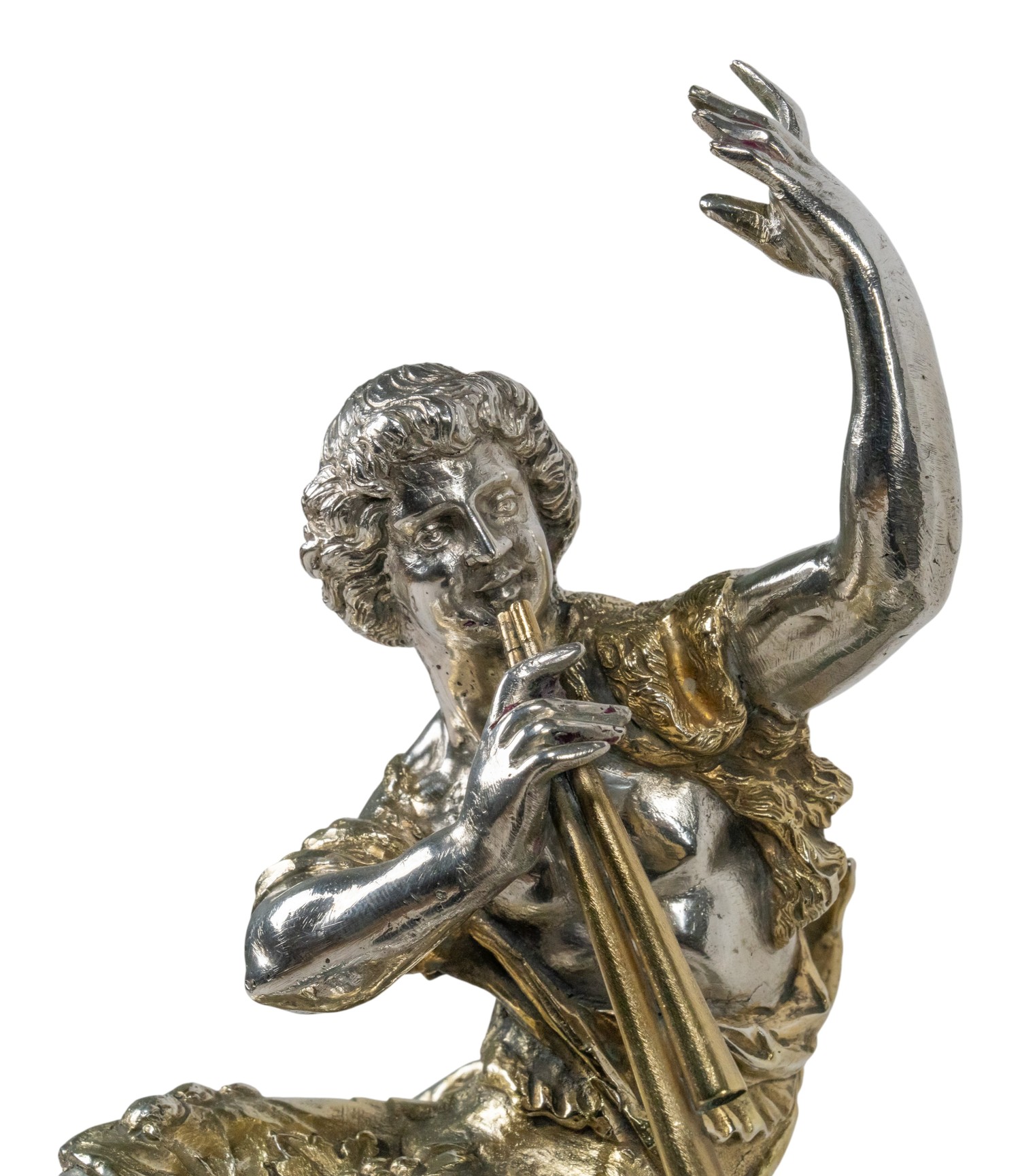
Shaped-oval and on four openwork scroll feet, the border applied with shells, scrolls and foliage in the baroque style and with six detachable winged putti, the base formed from segments of polished malachite, and above a detachable openwork frame incorporates foliate scrolls, shells, scaly dolphins, goats' masks and applied parcel-gilt vacant cartouches, surmounted by the figure of Bacchus wearing a lion pelt, playing pipes and seated on a malachite rock, the underside of the frame applied with pendant fish and waterleaves.
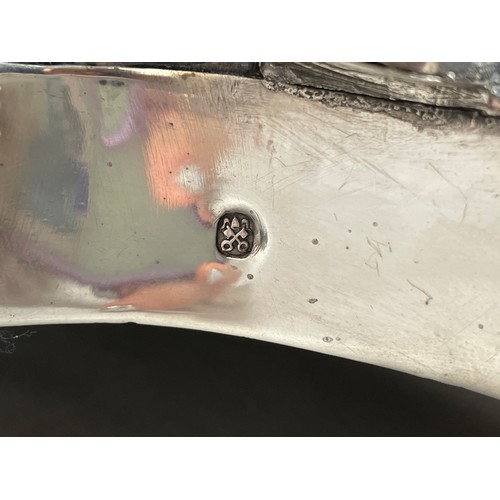
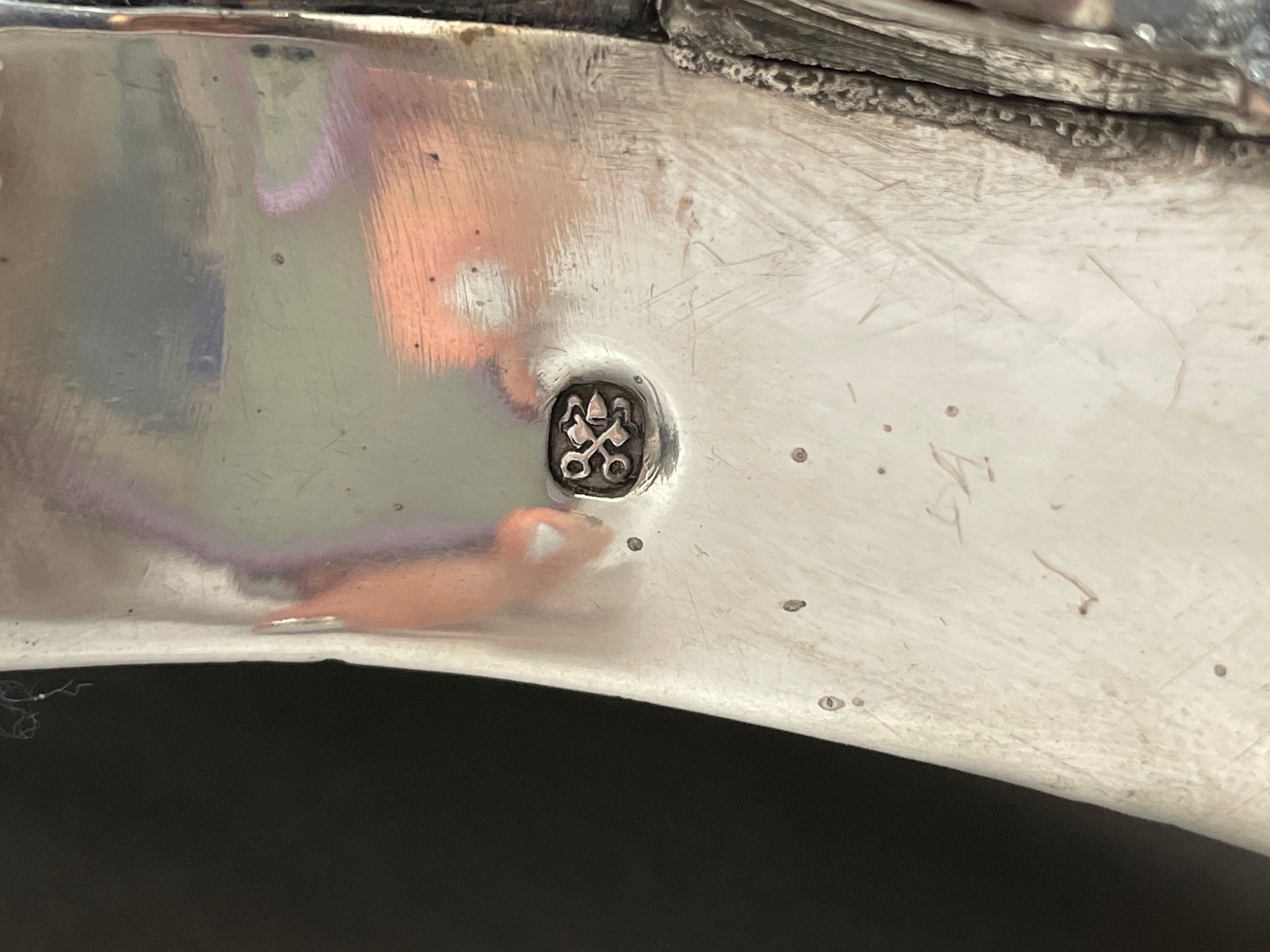
Marked on border.
Property of a gentleman
Provenance:
Christie's Important Silver and Objects of Vertu including Works of Art from Houghton, London, 8th December 1994, Lot 17
Dimensions:
44.5cm (H) x 82.5cm (W)
The mark on the border is recorded in C. Bulgari, Argentieri Gemmari E Orafi D'Italia, Rome, 1958, p.19, no. 80, on a silver and malachite cross and pair of altar candlesticks by Giovanni Giardini made for Cardinal Francesco Barberini. It is possible the piece was marked sometime after creation.
Giovanni Giardini (1646-1721) is acknowledged as the leading goldsmith in Rome during the late 17th and 18th centuries. His life is recorded in Hugh Honor, Goldsmiths and Silversmiths, London, 1971 pp. 114-121, along with several illustrations of his work.
Born at Forli on 24 June 1646 he was apprenticed to Marco Gamberucci in 1665, who had recently been appointed 'Argentieri di Nostro Signore' and supplied silver to the Vatican and Cardinal Barberini. In 1676 Giardini took over his master's workshop and continued to supply important commissions for the nobility and the church including a silver 'death' mask to cover the face of Queen Christina while lying in state in April 1689.
Although several of his ecclesiastical works survive, including a papal mace of about 1696, now in the Victoria and Albert Museum, and an altar set of silver and malachite, now in private collection, few secular pieces survive, principally because of the number of works destroyed during the Napoleonic Wars.
Although his mark and even his signature appear on most of his known surviving pieces, unmarked pieces are known, in particular a holy water stoup attributed to him by Hugh Honor (op. cit., p.117) now in the Art Institute of Minneapolis, made of silver, gilt-bronze and lapis-lazuli. It shows his command of the baroque style and the sculptural qualities of his work. Added to which it illustrates his love of combining precious metal with hardstone, as with the present lot.
In 1702 Giardini bought a large vineyard at Tor di Quinto and the inventory made after his death reveals a man of considerable wealth. It is likely that he influenced the work of Thomas Germain, who begun his career in Rome whilst Giardini was at the height of his career, and he was without doubt one of the leading European goldsmiths working during the late baroque period and a great influence on the first generation of great rococo exponents such as Germain.
Fees apply to the hammer price:
Free Registration
| 1 to 1000000: | 35.4% inc VAT* |
| 1000001+: | 27.6% inc VAT* |
Flat Fee Registration
| 1 to 1000000: | 31.80% inc VAT* |
| 1000001+: | 24% inc VAT* |