€20,000 - €30,000
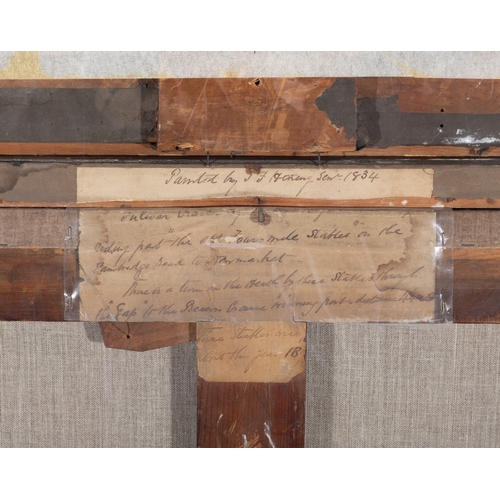
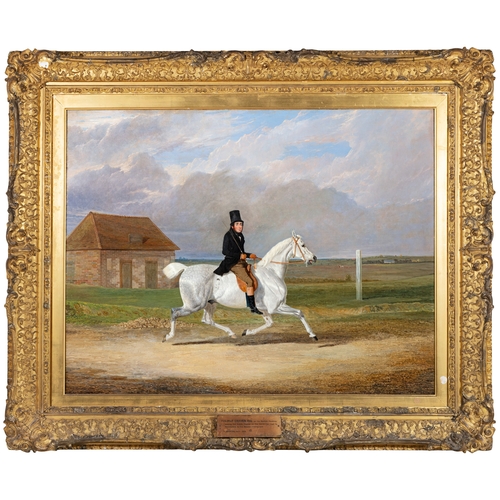
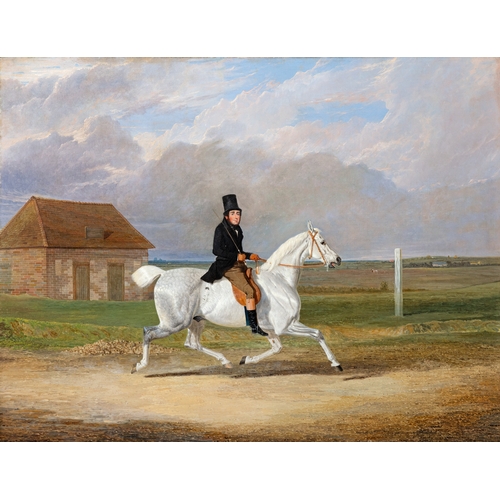
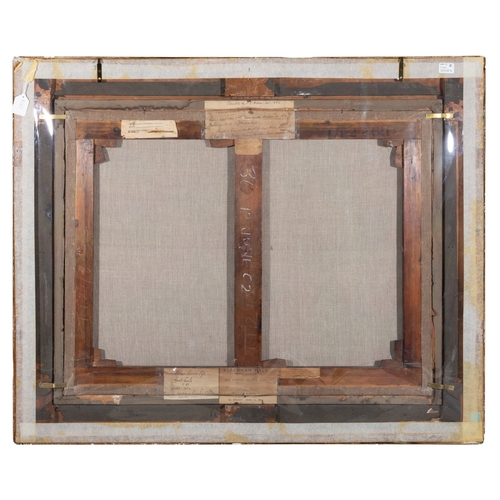
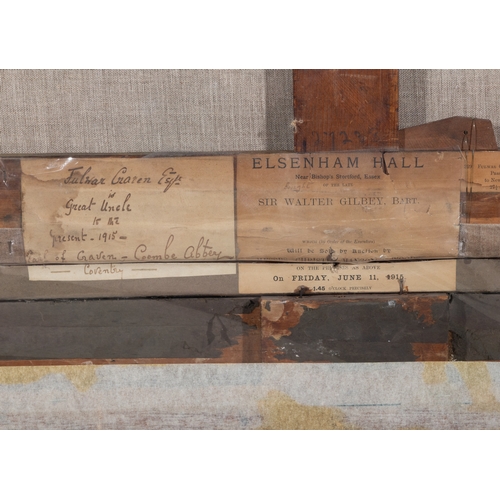
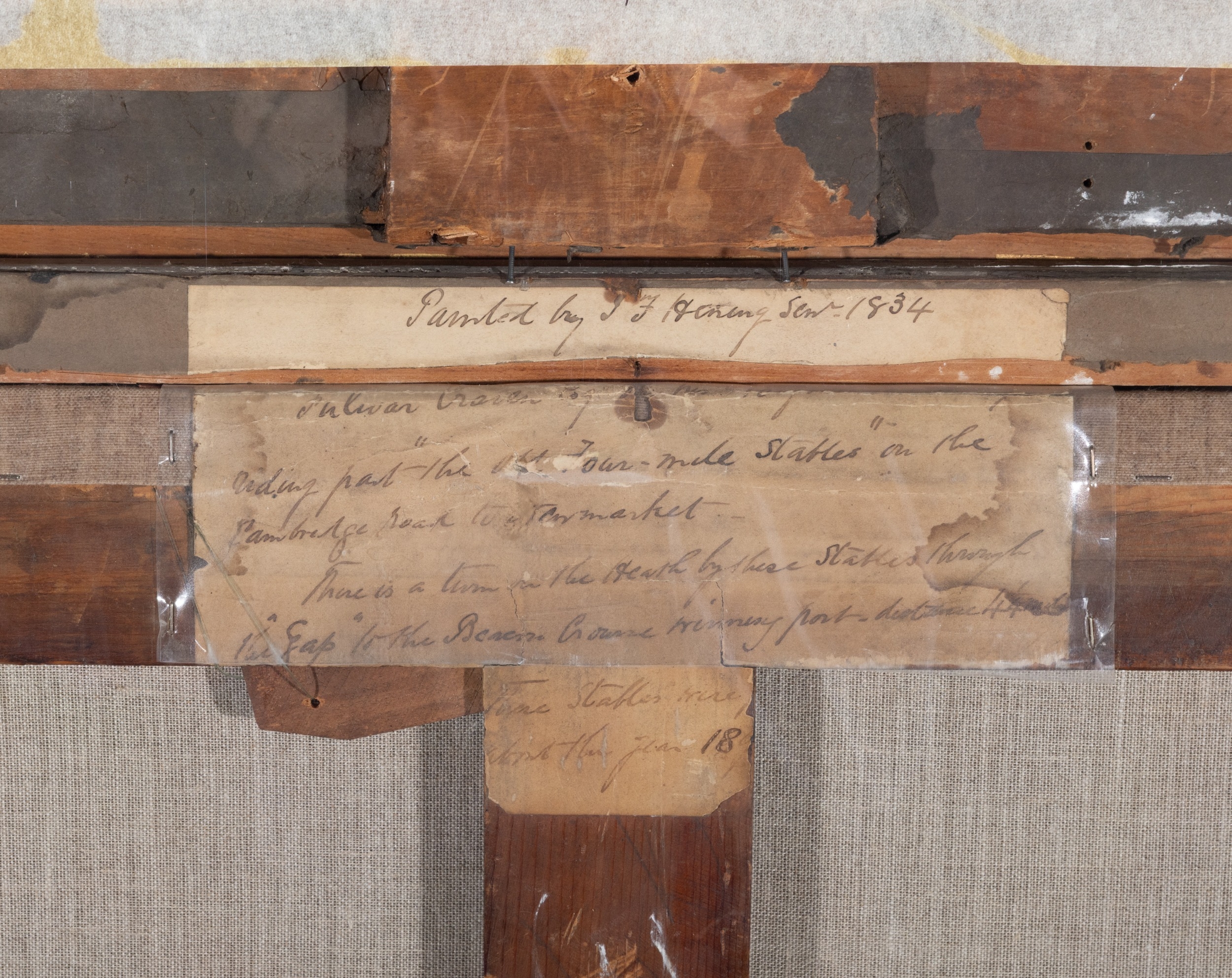
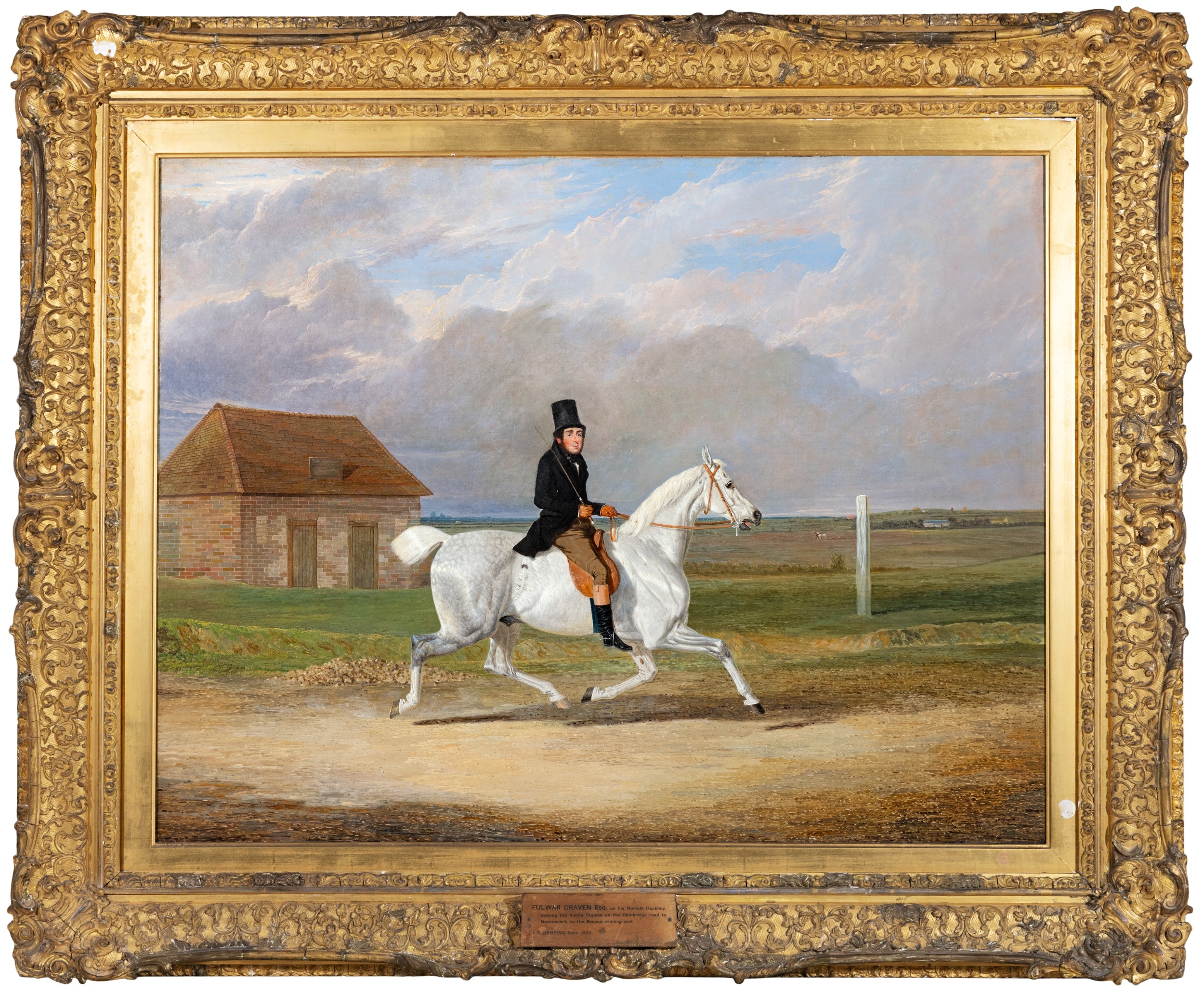
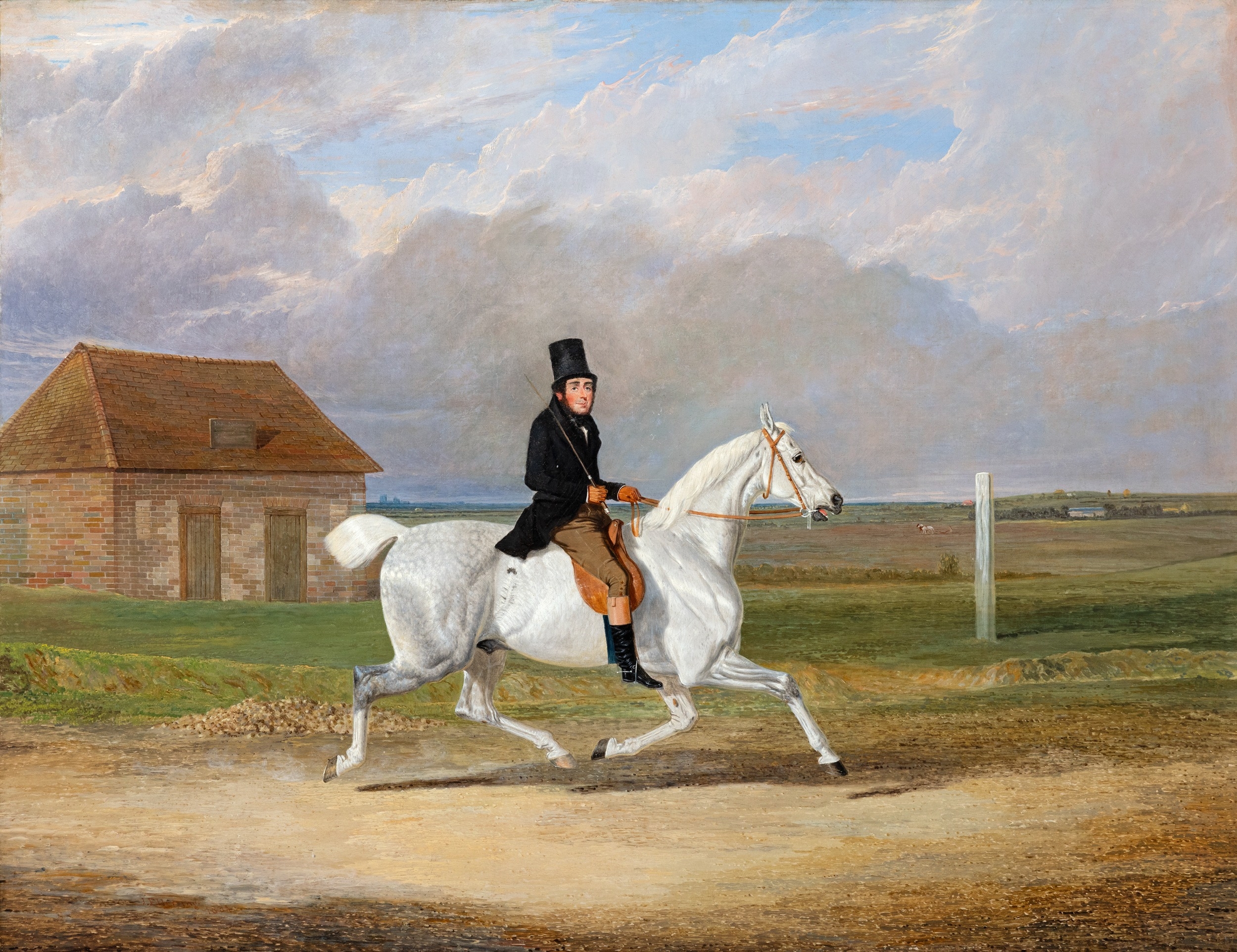
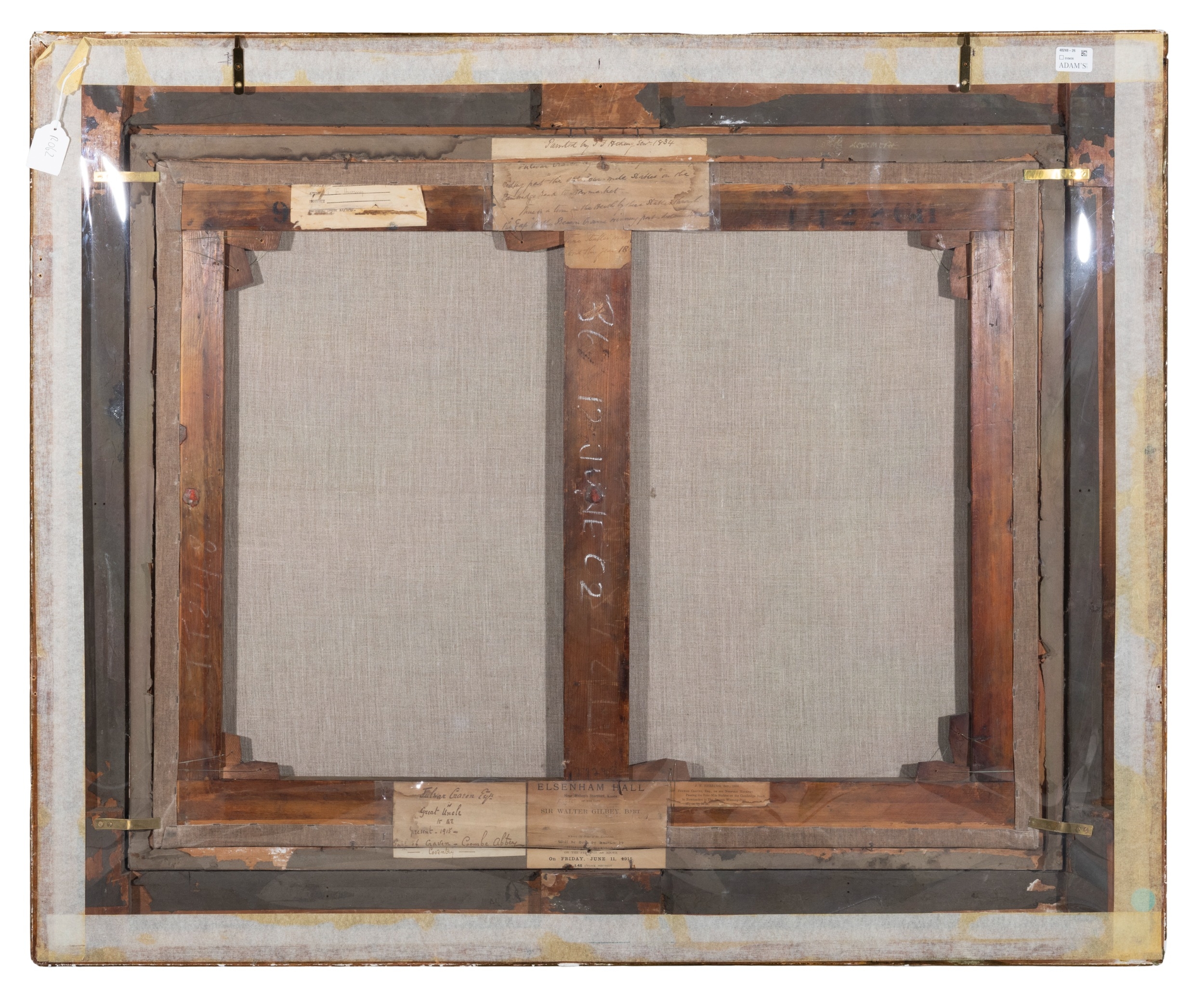
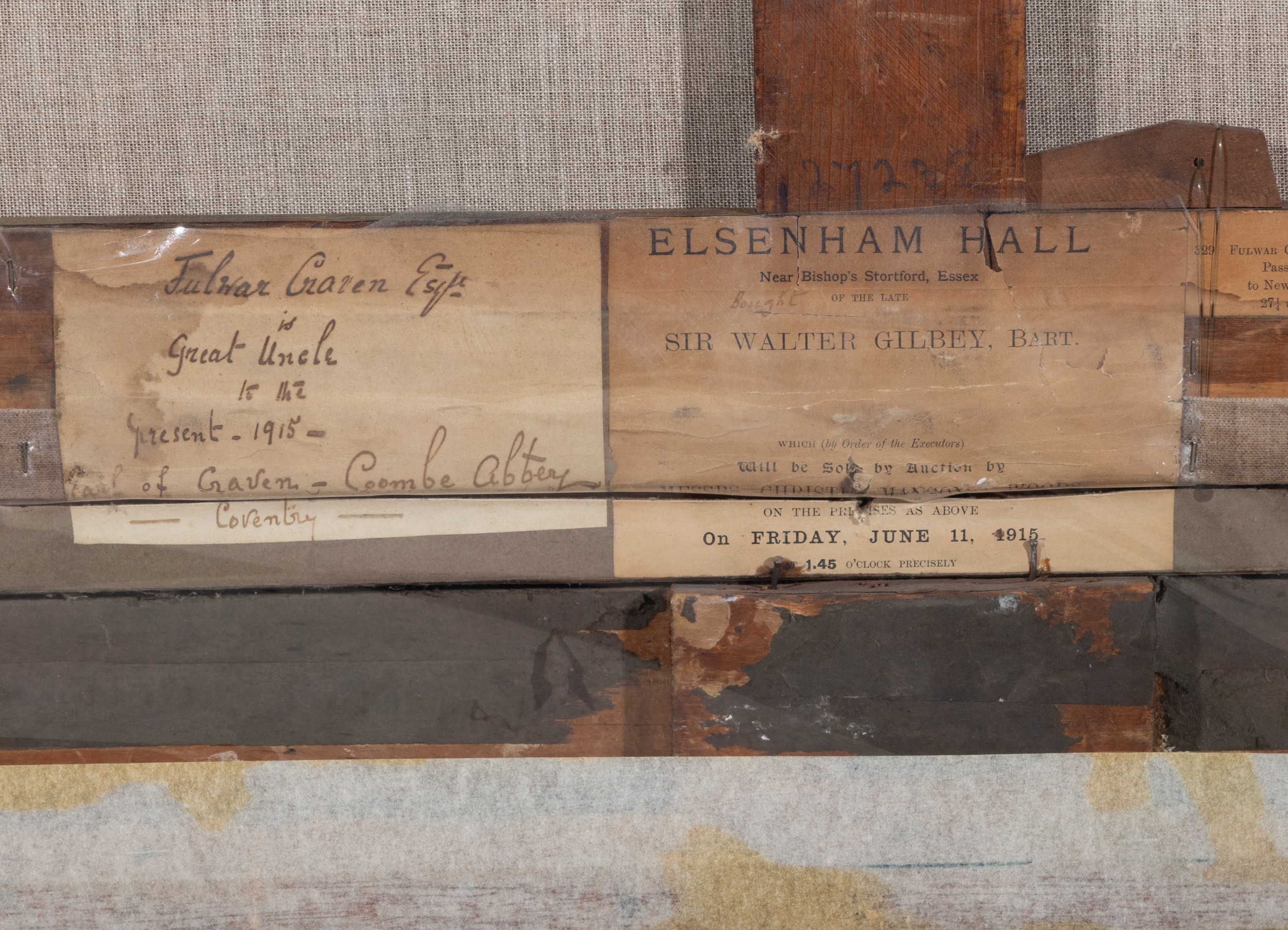
JOHN FREDERICK HERRING, SEN. (1795-1865) Fulwar Craven Esq. (1782-1860), mounted on his Norfolk Hackney, passing the Four Mile Stables on the Cambridge Road to Newmarket, to the beacon winning post signed and dated 'J.F. Herring./ 1834'. (lower left) Oil on canvas 69 x 89.5 cm Provenance: Sir Walter Gibney, 1st Bt., of Elsenham Hall, Essex; Christies's, London, 11 June 1915, lot 329 (75 gns. to Ackerman); almost certainly William Westenra, 6th Baron Rossmore (1892-1958), Rossmore Castle, Co. Monaghan, moved to Camla Vale, Co. Monaghan in the 1940s, thence by descent The subject of this portrait, a Mr Fulwar Craven Esq. of Brockhampton Park held an assured position in aristocratic English society as a well-connected, landed gentleman. Regarded however as a sportsman first and foremost, Craven is depicted astride his grey Norfolk Hackney against the backdrop of the 4-miles stables on the road to Newmarket. Craven was immensely proud of his horses, having sketched a portrait of of his mare Bess, better known as 'The Cow', a portrait currently held in the Royal Collection Trust. Fulwar Craven appears himself as a foppish raven-haired and pigeon-chested bloodstock owner 'The Craven' in a series by Richard Dighton (1795-1880) – a depiction that when seen alongside Dighton's other lithographs, portrays a man of considerable ostentatious flair and swagger as noted in Taunton's book 'Portraits of Celebrated Racehorses' In all that he did, and all that he said, there was a dry, eccentric humour, which was peculiarly his own, but which never overstepped the bounds of good breeding and kindly feeling…[…]…The tout-ensemble of the man was so remarkable, that it could not fail to attract the general attention of visitors on the course. The careless cock of his battered white hat was in itself all character Taunton, Thomas Henry. Portraits of Celebrated Racehorses of the Past and Present Centuries. Searle & Rivington, London, 1883. Page 422 In Herring's lively portrait here presented, our subject exudes a more restrained appearance, excepting his recognisable tall top-hat. This encourages the viewer to instead admire the profile and muscle tone of his steed in keeping with equine portraits of the time. Craven's commissioned painting was intended to advertise the quality and presentation of the horse as seen in the glossy flank, muscular tone and cropped tail of the animal. The horse is depicted mid-canter during the fleeting moment of suspension where all four hooves are above the ground at once. Herring's depiction of the horse and rider in canter rather than in a stationary posed portrait is an interesting one as it presents Craven as a high society sportsman rather than a gentleman bloodstock owner. In this sense, the horse is presented as of equal importance to its rider, a impressive feat when compared to a man of such an electric impression.
Fees apply to the hammer price:
Free Registration
33.6% inc VAT*
Flat Fee Registration
30.00% inc VAT*